Includes but not limited to Maris, McDonald, Platt, Sheely, Smith.
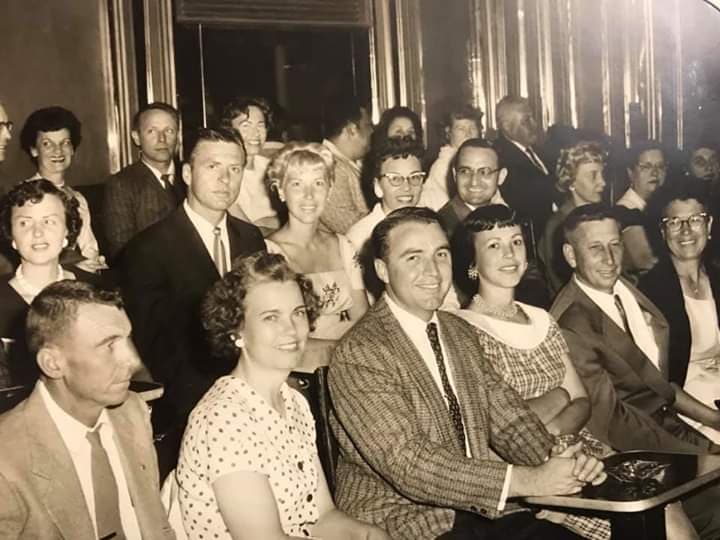
Front row: Wayne & Ruby Young McDonald, Dale & Nancy McDonald Middleton, Kurt & Eleanor McDonald Annis
Behind them: Don (staring with a blank face at the camera) & Donna Annis Miller, Margie & Tony Cavestri
Taken about 1967
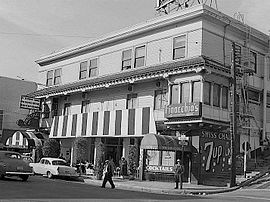
Finocchio’s Club
From Wikipedia, the free encyclopediaJump to navigationJump to searchA picture taken in 1958 of Finocchio’s club in San Francisco, California
Finocchio’s was a nightclub and bar in San Francisco. The history of the club started as a speakeasy called the 201 Club in 1929, located at 406 Stockton Street.[1] In 1933, with the repeal of prohibition, the club moved upstairs and started to offer female impersonation acts; after police raids in 1936 the club relocated to the larger 506 Broadway location.[1][2] Finocchio’s night club opened June 15, 1936 and was located in San Francisco, California, above Enrico’s Cafe at 506 Broadway Street in North Beach. The term “Finocchio” is Italian for fennel but is often a negative term for homosexual.[1]
Contents
History[edit]
Joseph “Joe” Finocchio, the creator of the club,[3] had the idea of a nightclub with female impersonators in costumes when a patron jokingly went on the stage of his club and did a routine that the crowd enjoyed. The club was not advertised as a gay club; it was advertised as a place for entertainment and fun. Both gay and straight performers worked there. The acts included varying ethnic-inspired performances such as geisha-style performances, which may have helped encourage tourists and contributed to the diverse, often racially diverse crowds, which was unusual during this time of segregation.[1][2] In the days before gay liberation, female impersonator clubs provided semi-public social spaces for sexual minorities to congregate.[2]
Finocchio’s often featured traditional drag, with performers in gowns singing or lip-synching to top 40 ballads.[4]
Finocchio’s was “off limits” during World War II, not due to the entertainment, but rather for selling liquor to the military outside the authorized hours of sales. On December 31, 1943 the ban was lifted after Joe Finocchio and other bar owners signed an agreement to limit liquor sales to military personnel between 5 pm and midnight.[5]
Finocchio’s was a huge favorite with tourists from the 1930s to the early 1990s. Joe Finocchio died in January 1986.[6] Eve Finocchio, Joe’s widow, decided to close the club on November 27, 1999 because of a significant increase in the monthly rent and dwindling audience attendance.[5]
Influence[edit]
A 14-page program, “Finocchio’s: America’s Most Unusual Nightclub”, was published by Zevin-Present, circa 1947. The Finocchio shows published playbills.
Celebrities who attended shows at Finocchio’s throughout their many years of operation included Judy Garland, Marilyn Monroe, Bette Davis, Lena Horne, Joan Crawford, Barbra Streisand, Mae West, Carol Channing, William Haines, Elizabeth Taylor, Montgomery Clift, Roddy McDowall, Liza Minnelli, Cher and Bette Midler among others.
After the closure, another San Francisco establishment called Harry Denton’s Starlight Room started a drag show in 2006 called “Sunday’s a Drag,” a female impersonation show modeled after Finocchio’s.[4] These shows are hosted by Donna Sachet.[4]
The above scenes are not in chronological order because they were not developed in that order. They were developed September 2011 in American Fork, Utah. Where possible, the people are identified to the best of one’s memory. In some cases, this is 55 years later. Most of them have passed away.
The old Winchester House, San Jose, California. Vicki and Len on vacation. “It once was the personal residence of Sarah Winchester, the widow of gun magnate William Wirt Winchester. It was continuously under construction for 38 years and is reported to be haunted. It now serves as a tourist attraction. Under Winchester’s day-to-day guidance, its “from-the-ground-up” construction proceeded around the clock, without interruption, from 1884 until her death on September 5, 1922, at which time work immediately ceased. The cost for such constant building has been estimated at about US $5.5 million (if paid in 1922; this would be equivalent to over $71 million in 2010).
The Queen Anne Style Victorian mansion is renowned for its size and utter lack of any master building plan. According to popular belief, Winchester thought the house was haunted by the ghosts of the people who fell victim to Winchester rifles, and that only continuous construction would appease them. It is located at 525 South Winchester Blvd. in San Jose, California” (http://wikipedia.org).
Alcatraz Island, San Francisco, California. “Alcatraz Island is an island located in the San Francisco Bay, 1.5 miles (2.4 km) offshore from San Francisco, California, United States. Often referred to as “The Rock” or simply “Traz“, the small island was developed with facilities for a lighthouse, a military fortification, a military prison, and a Federal Bureau of Prisons federal prison until 1963” (http://wikipedia.org).
Woman with scarf is “Pud” LaWayne McDonald. She was Wayne & Ruby’s daughter. Wayne was Bunny’s oldest brother. They are on the boat tour of Alcatraz Island. Pud was born January 1, 1943 and died from the effects of a stroke May 25, 1976.
Kelli in Encino, Los Angeles, California. They were living on Eaton Avenue in Canoga Park, California in a house they bought.
House at 7544 Eaton Avenue, Canoga Park, California. On this particular day they had been “sealed” in the Los Angeles LDS Temple. This ceremony meant that they were now an eternal family. September, 1964.
Kelli’s 1st birthday. Kenny & Keith Maris trying to help unwrap the gifts.
Keith Maris wearing the striped shirt. He was the son of Dean & Darla Maris. Dean was Vicki’s older brother.
Vicki’s ear rings. Her trademark.
Nanna, (pronounced Nau-na) “Pat” Pauline Thompson, Vicki’s mother.
Christmas tree that Vicki loved so much.
Kelli’s 2nd Christmas, 1964, California
“Nanna” with Kelli
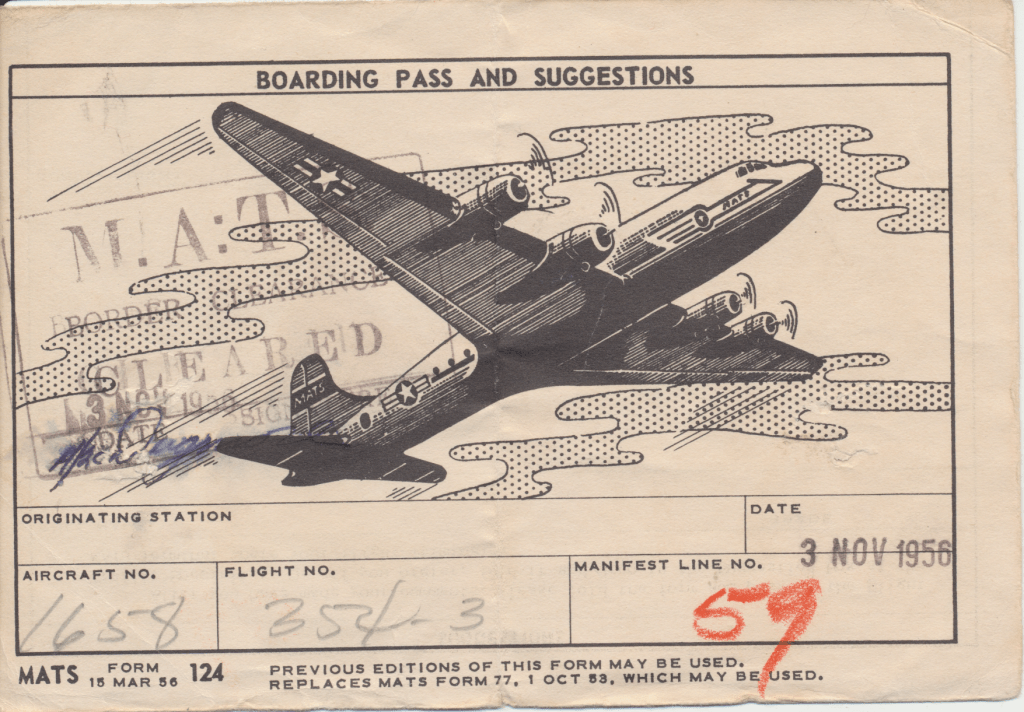
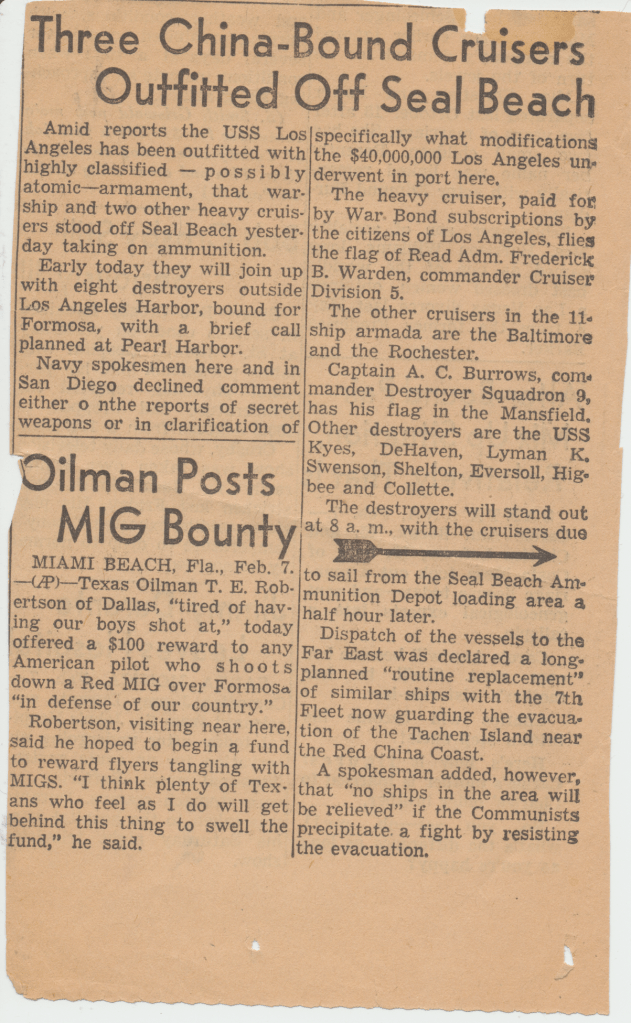
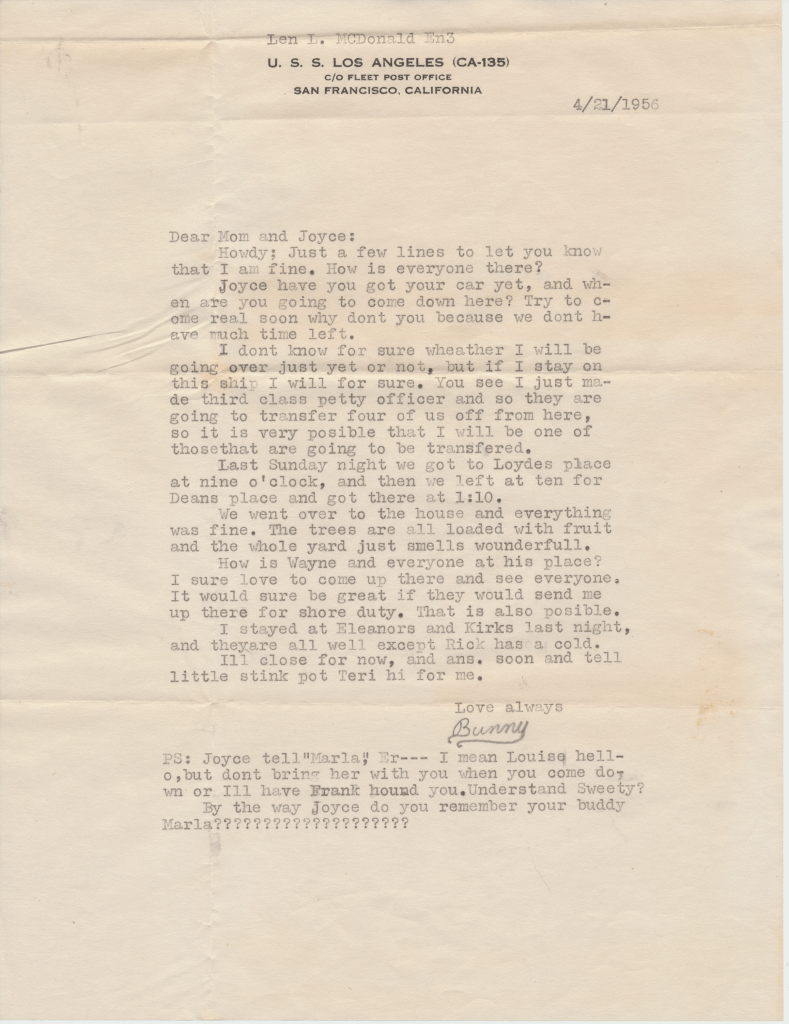
Far East Tour 1956
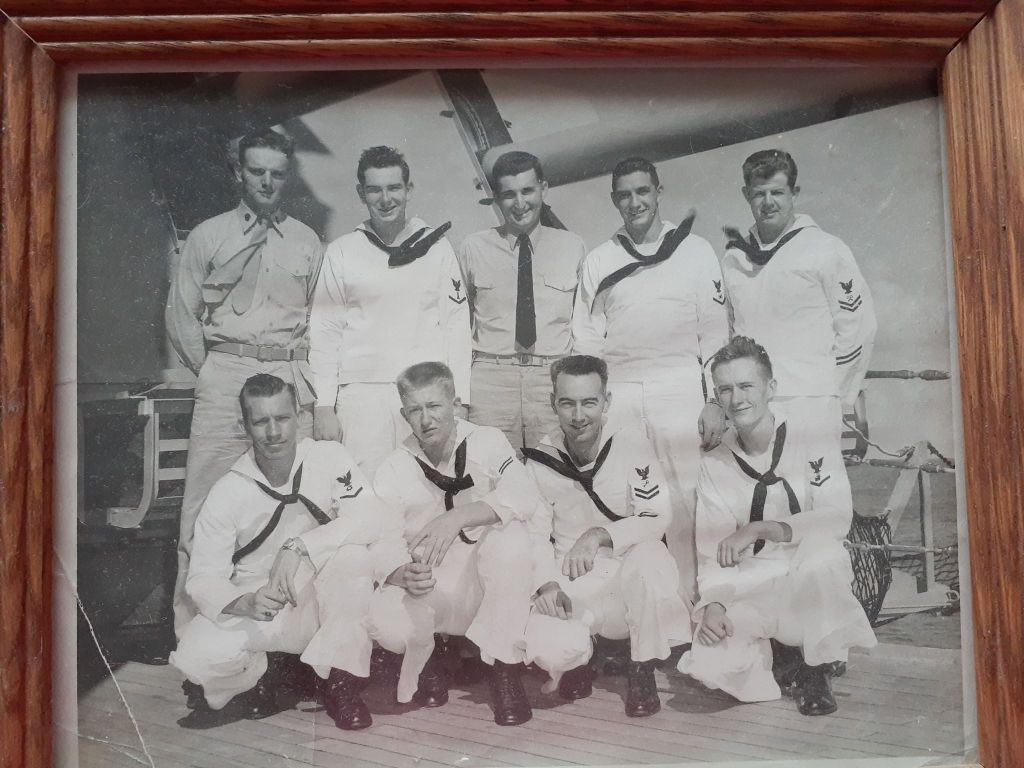
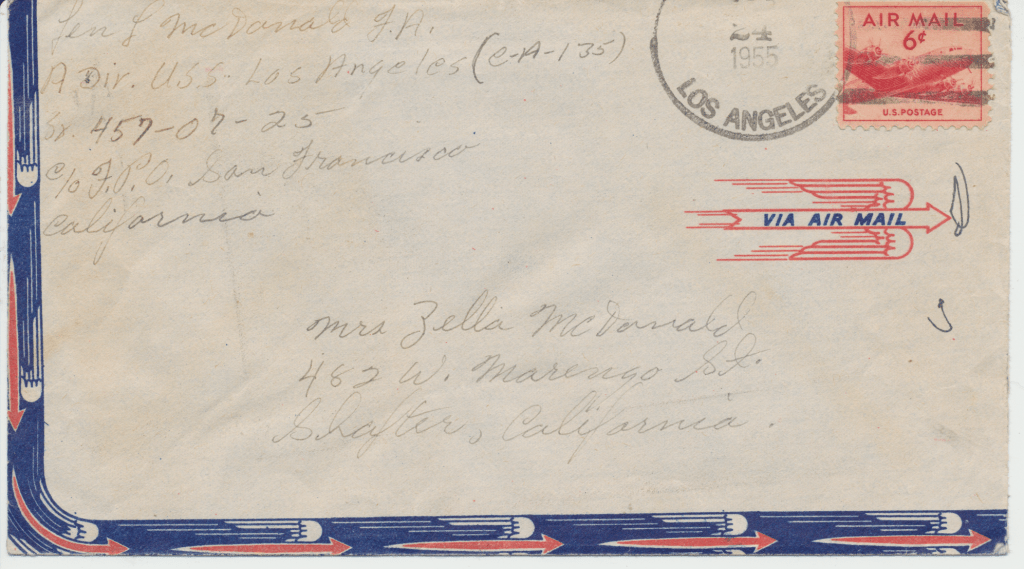
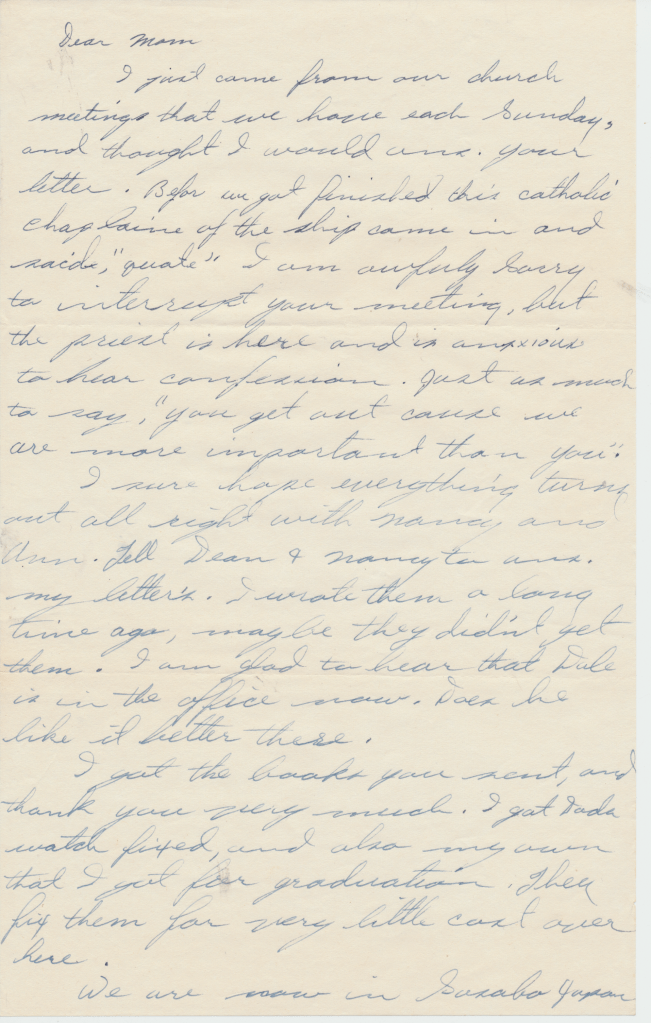
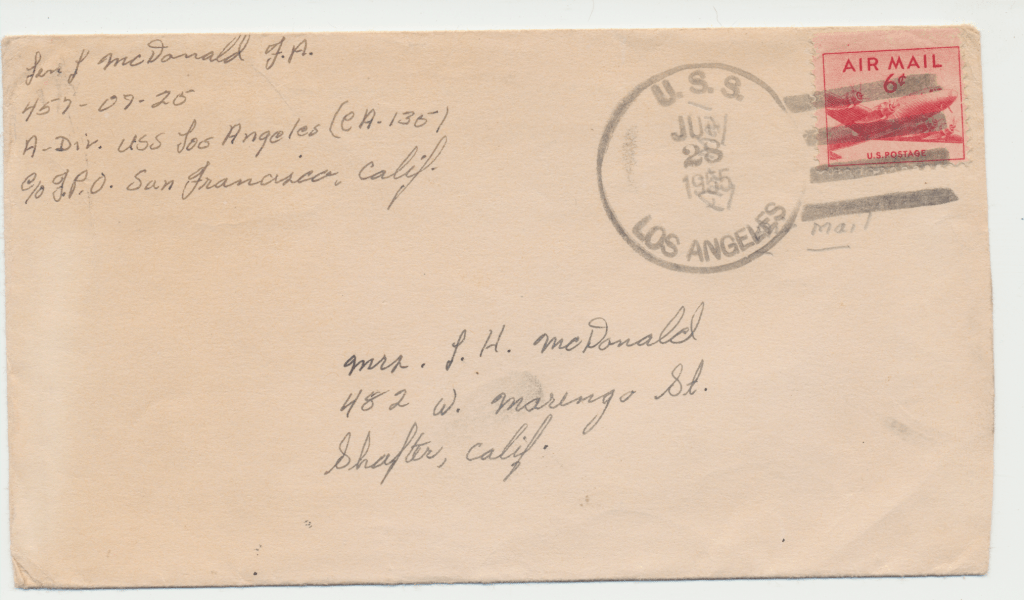
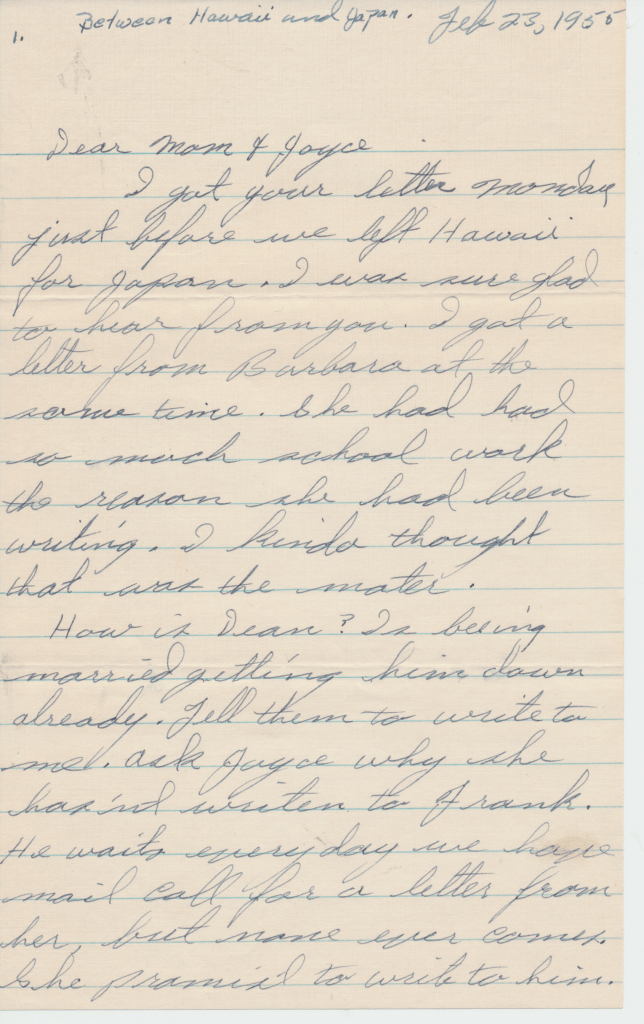
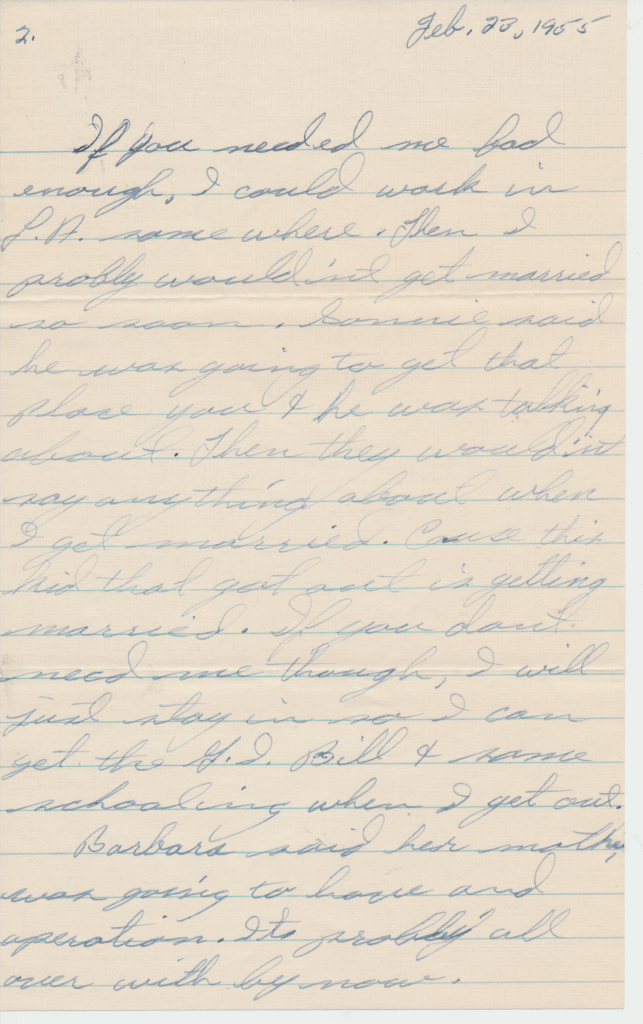
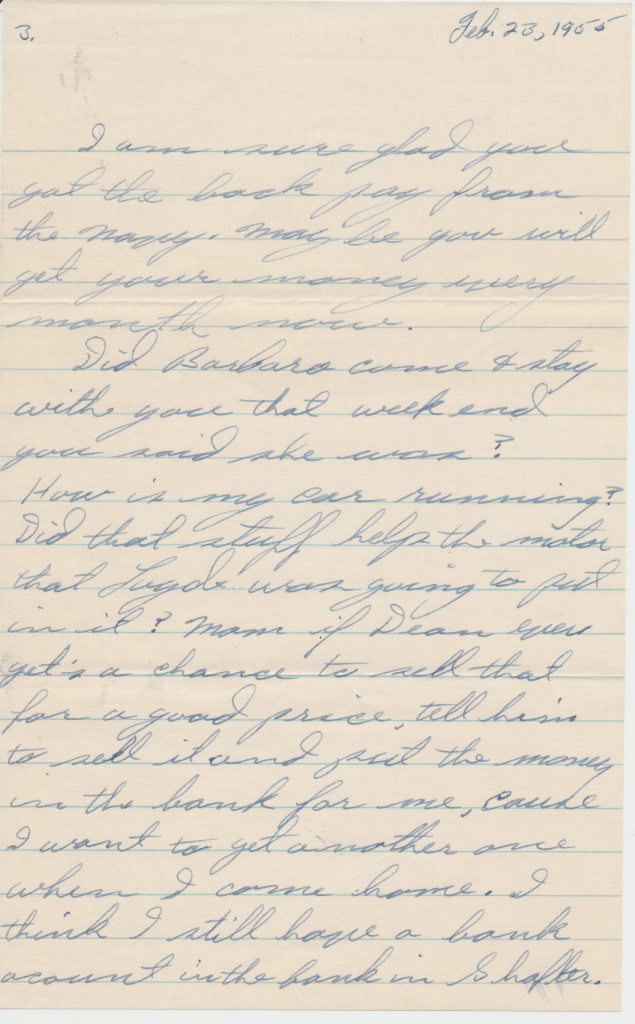
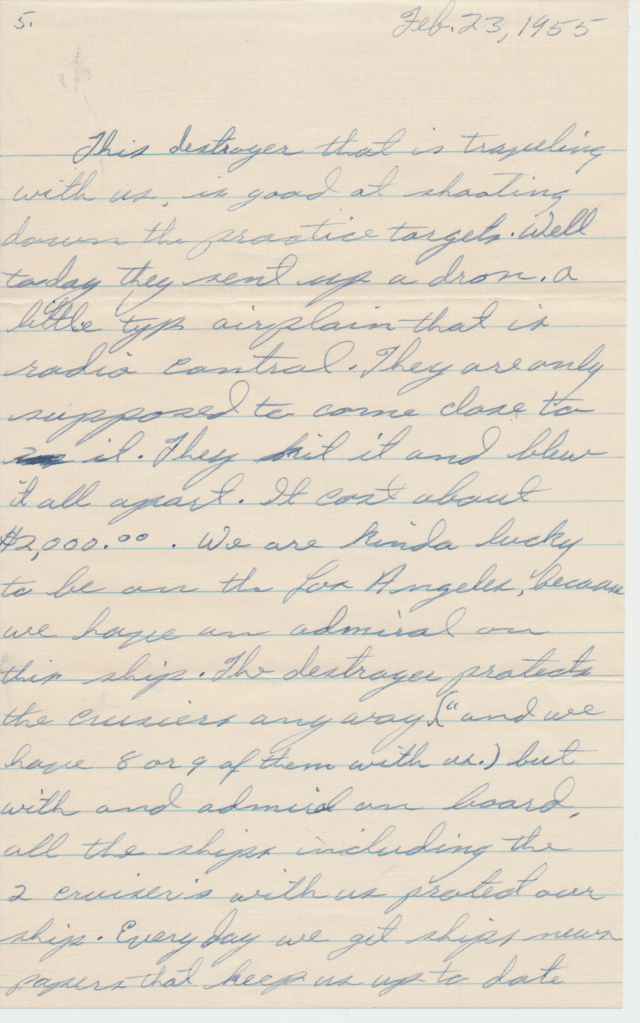
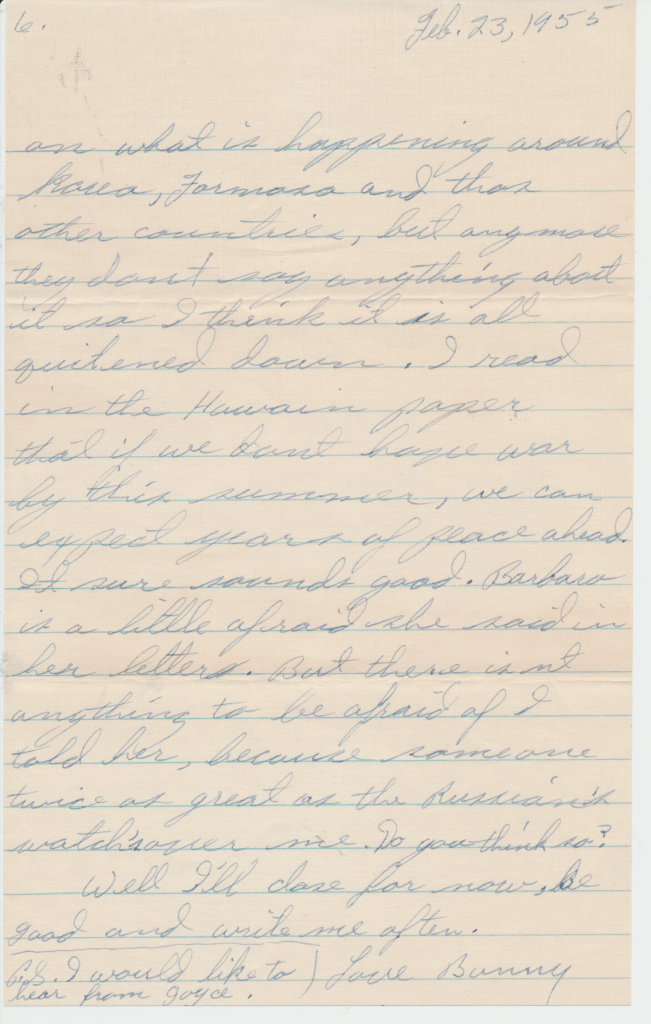
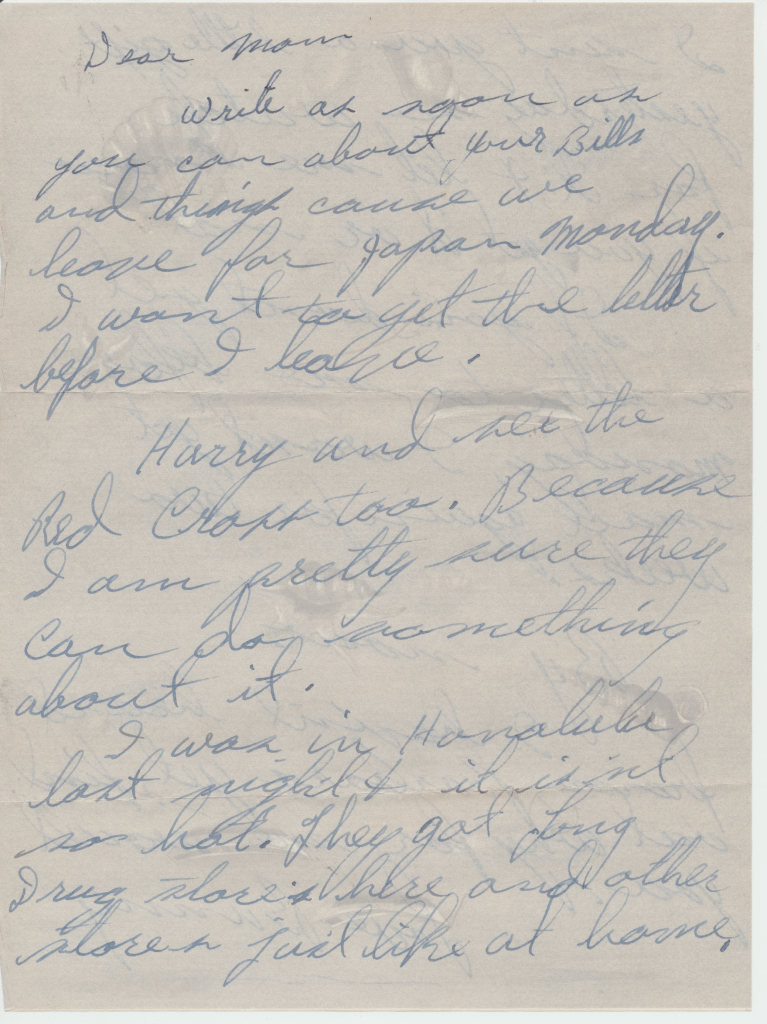
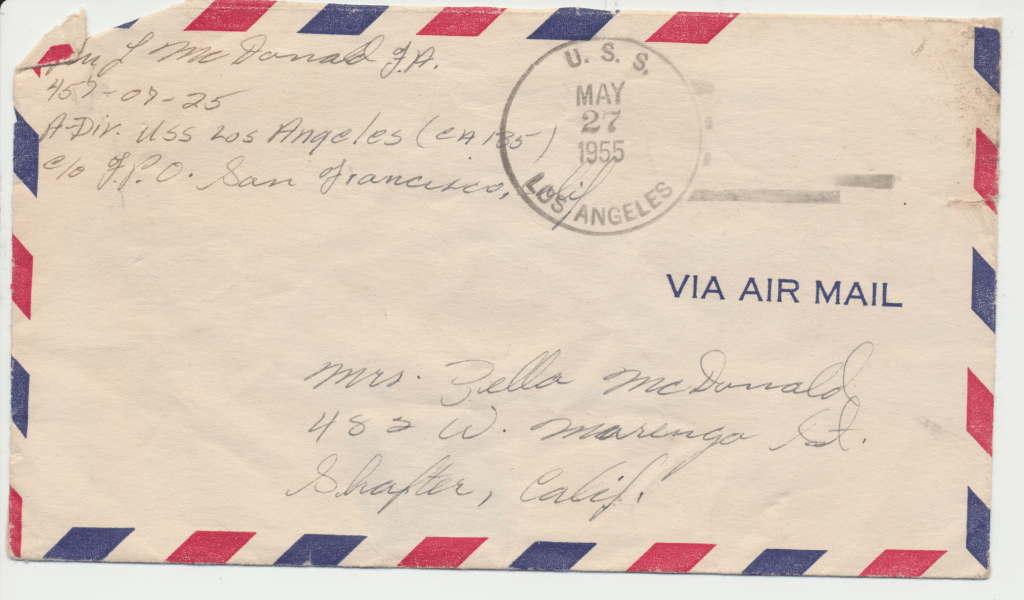
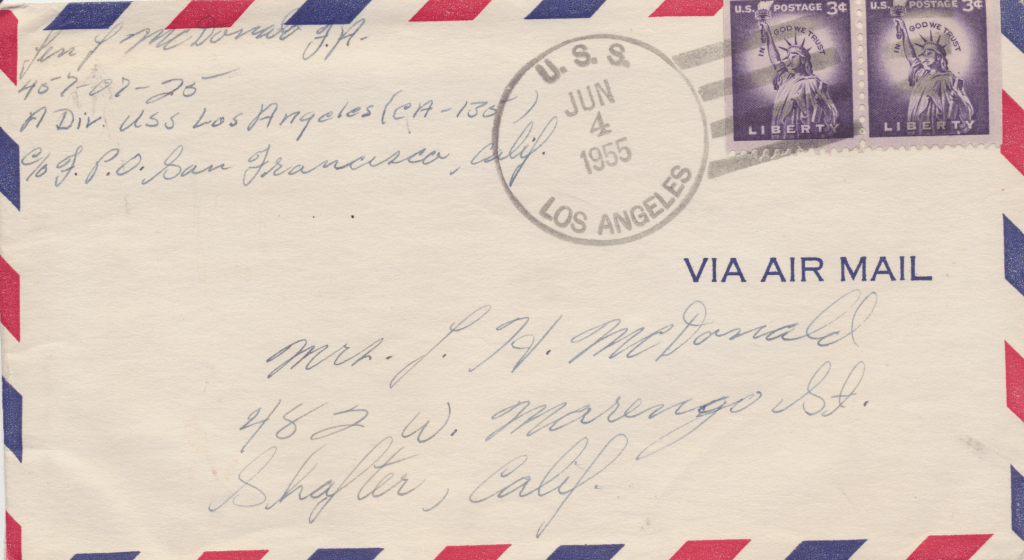
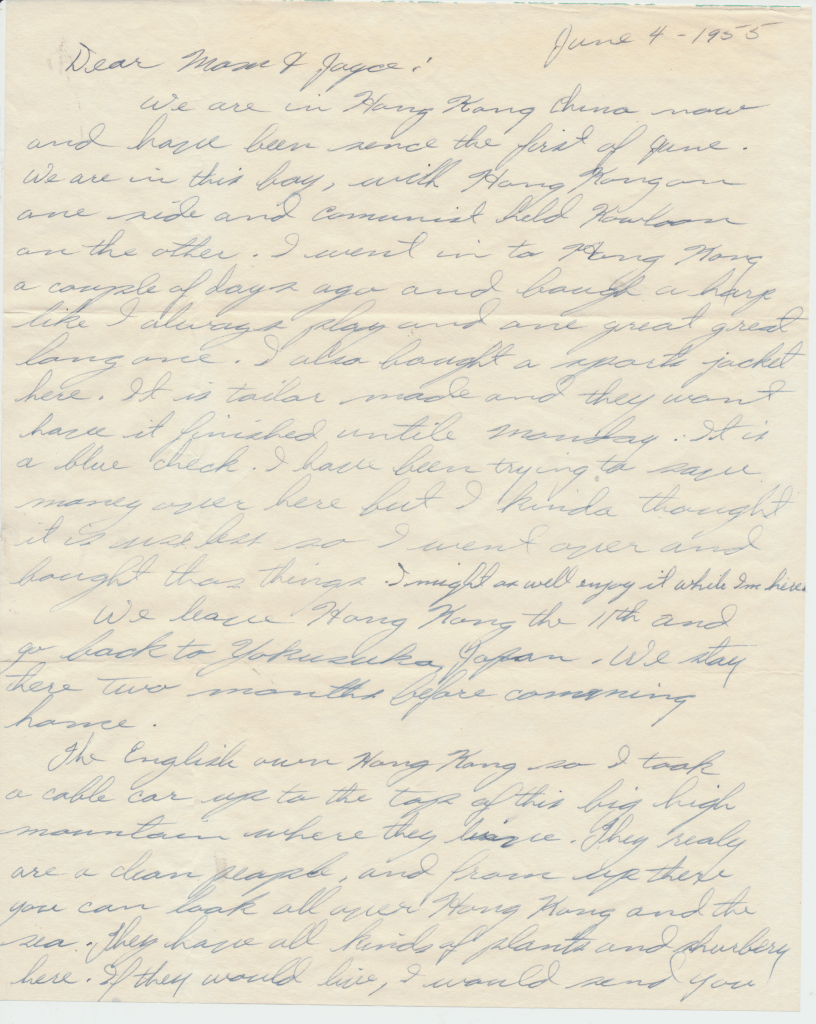
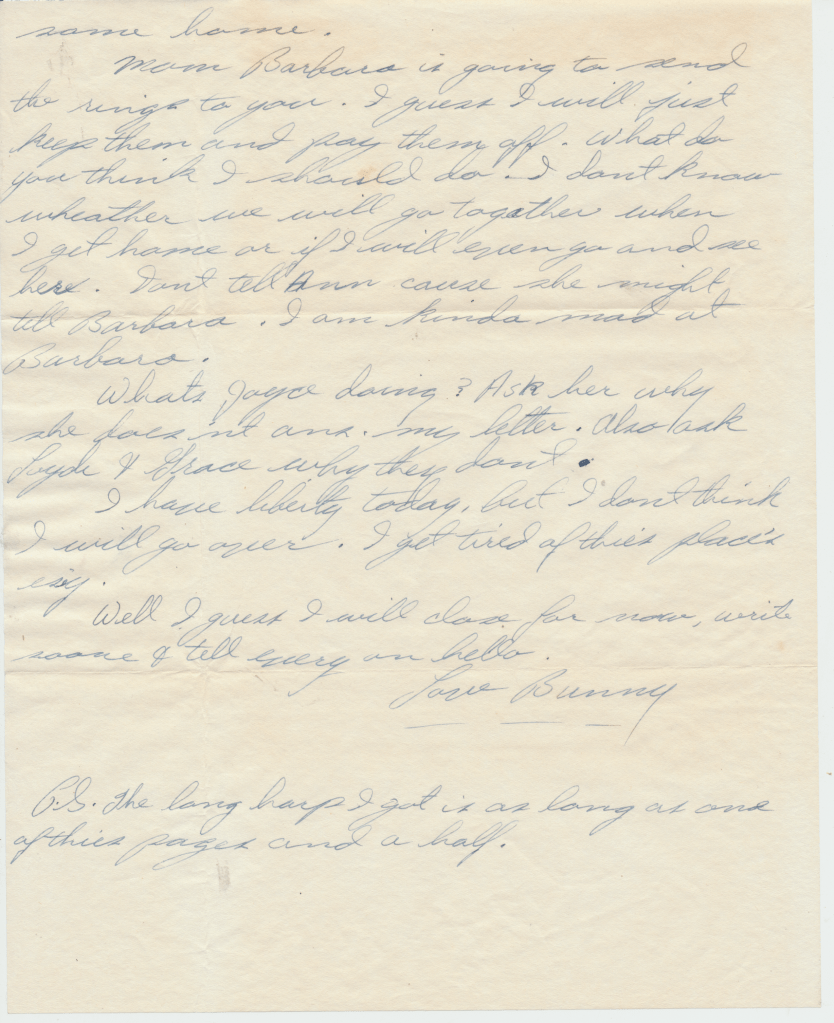
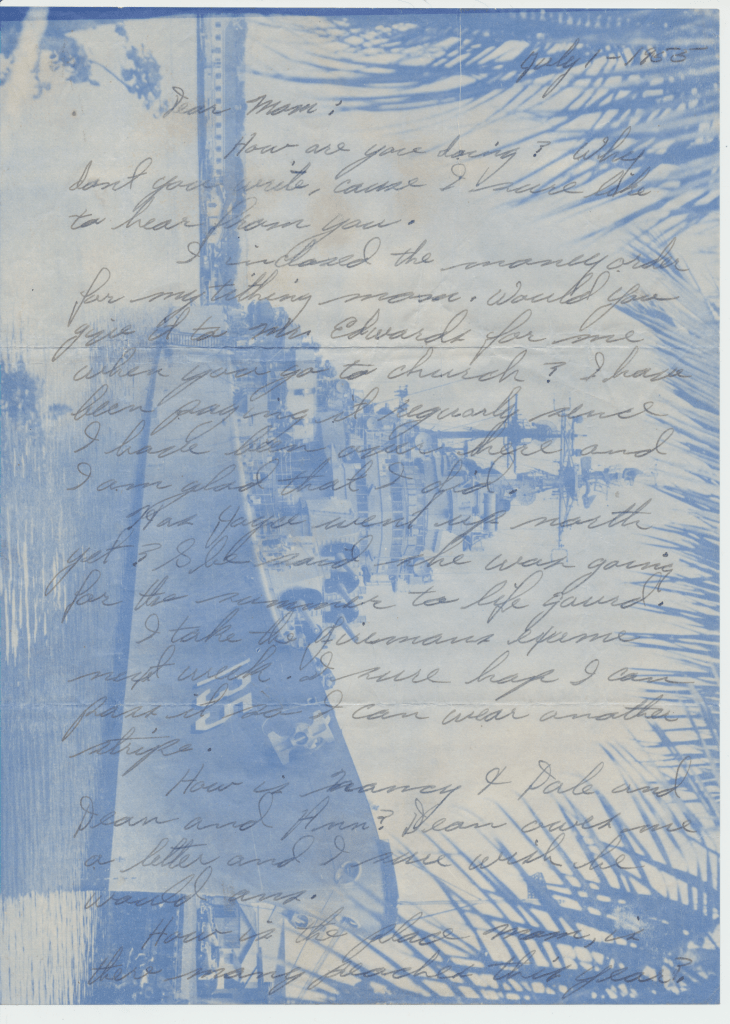
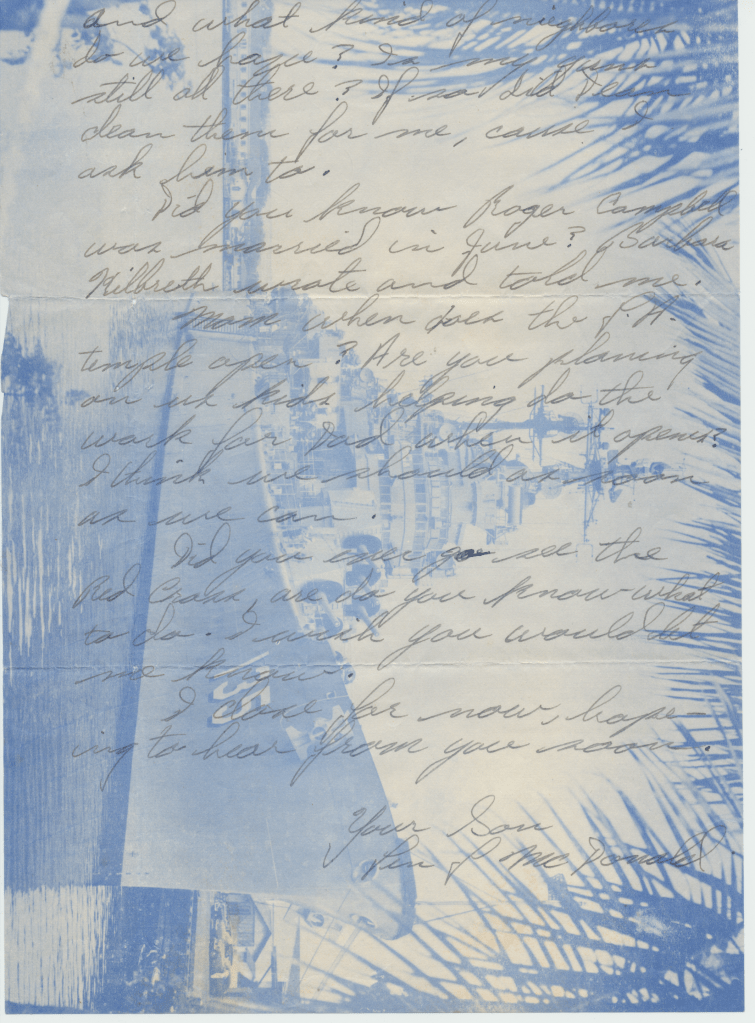
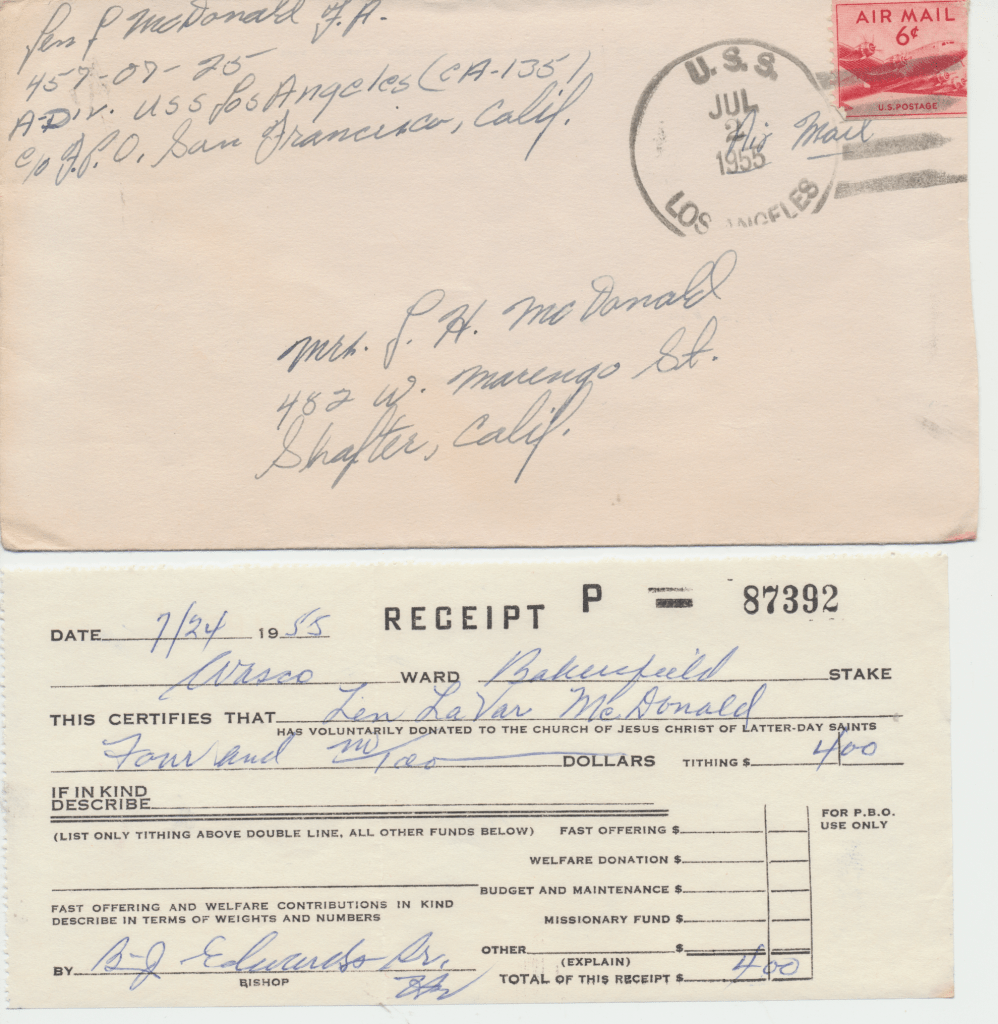
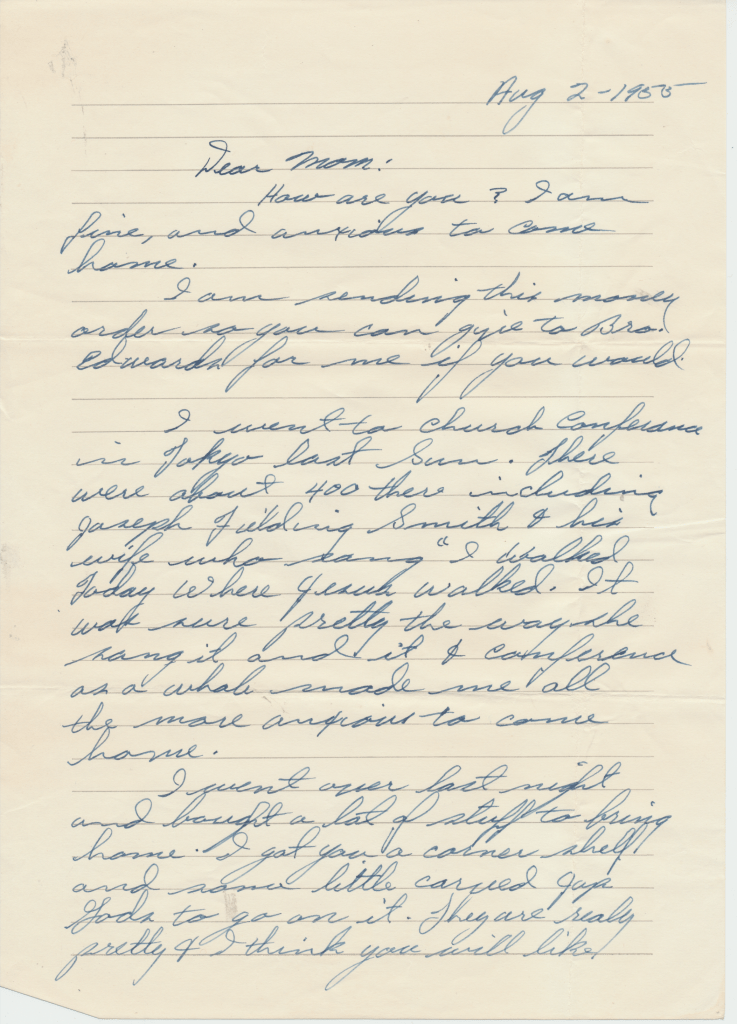
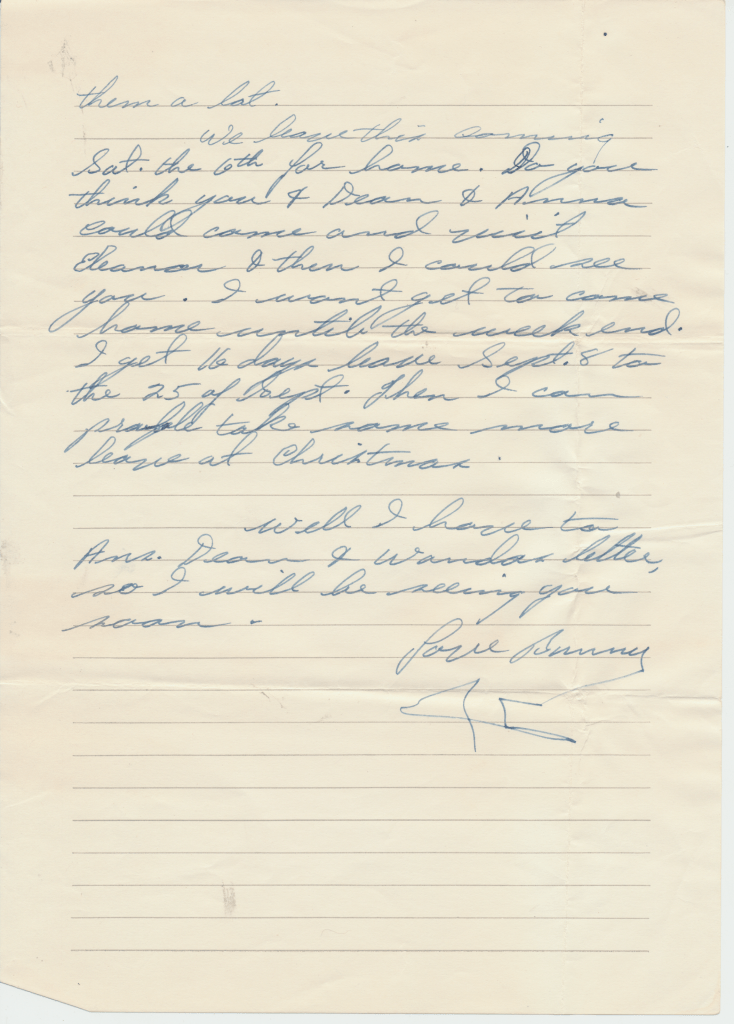
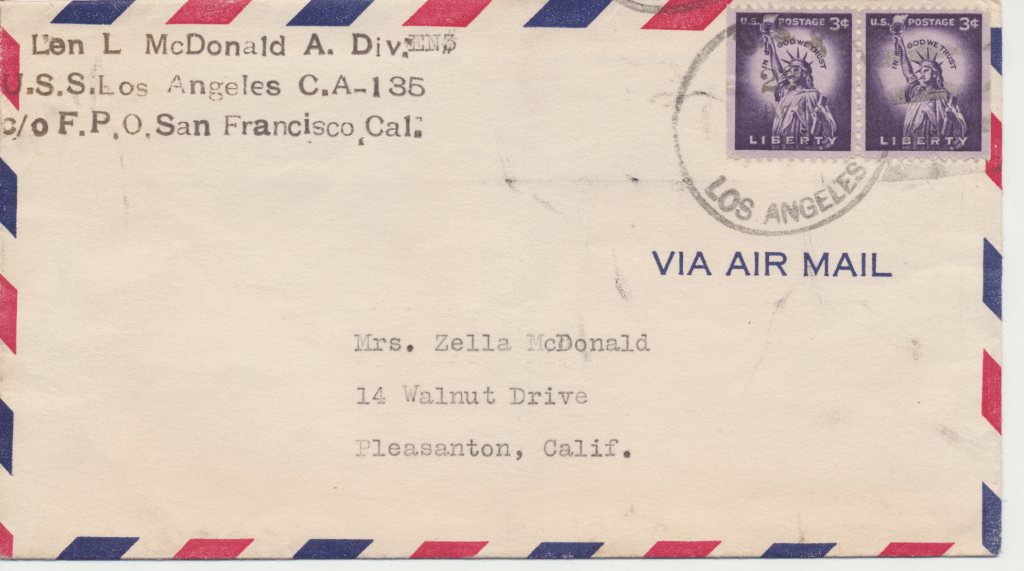
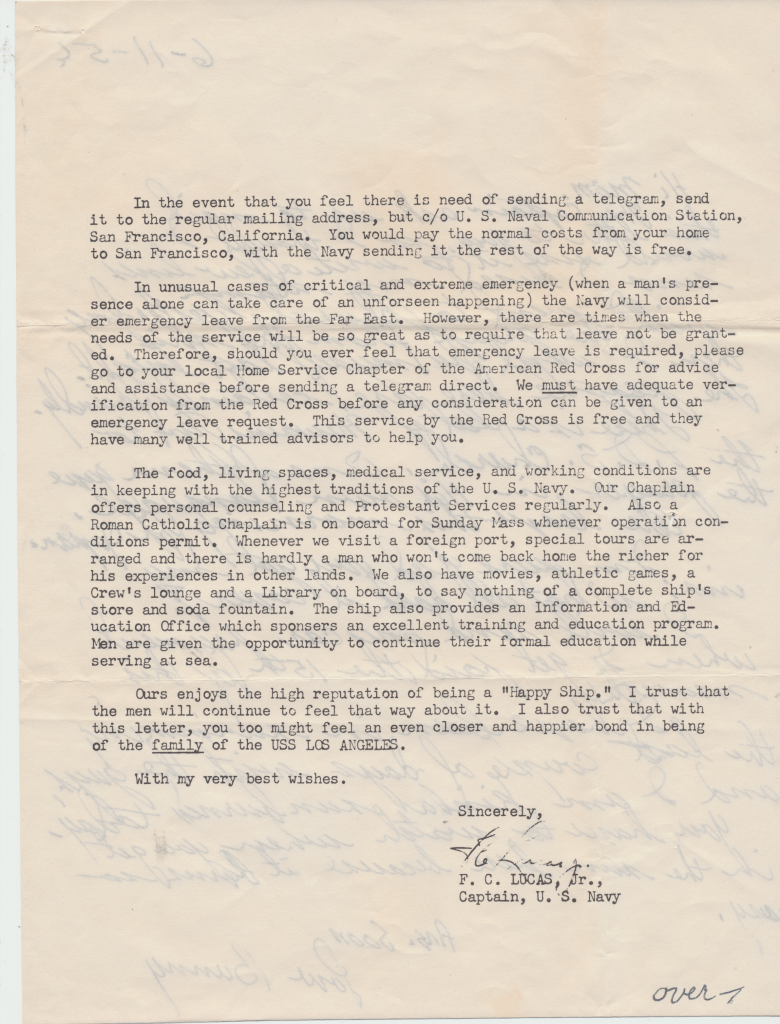
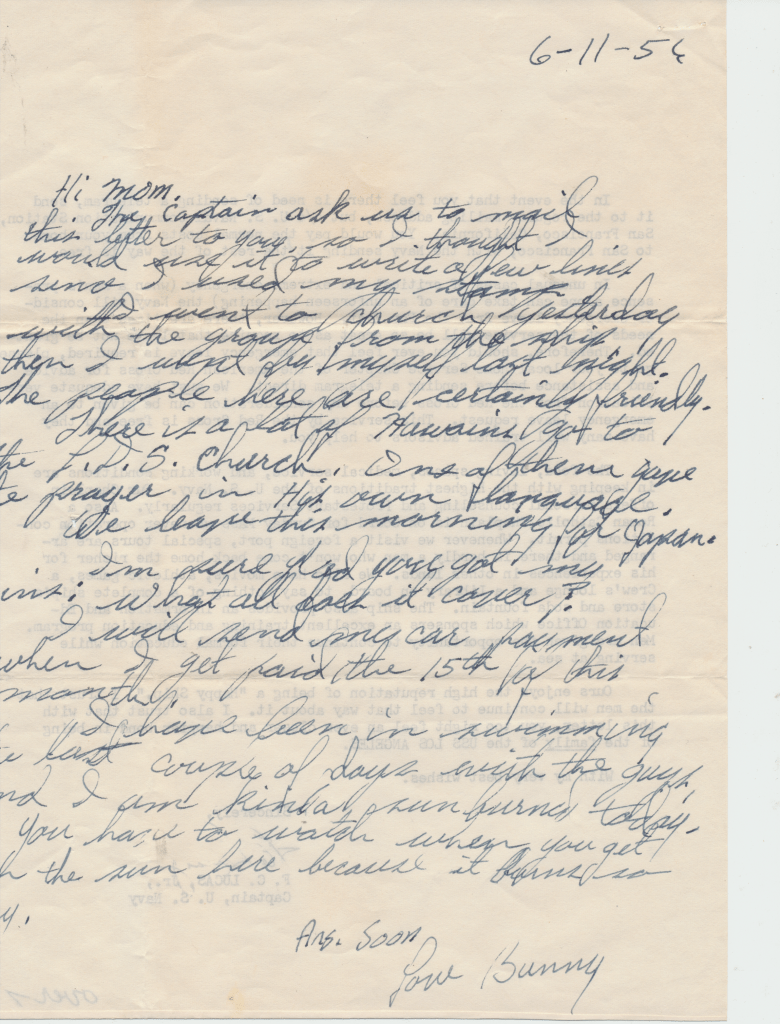
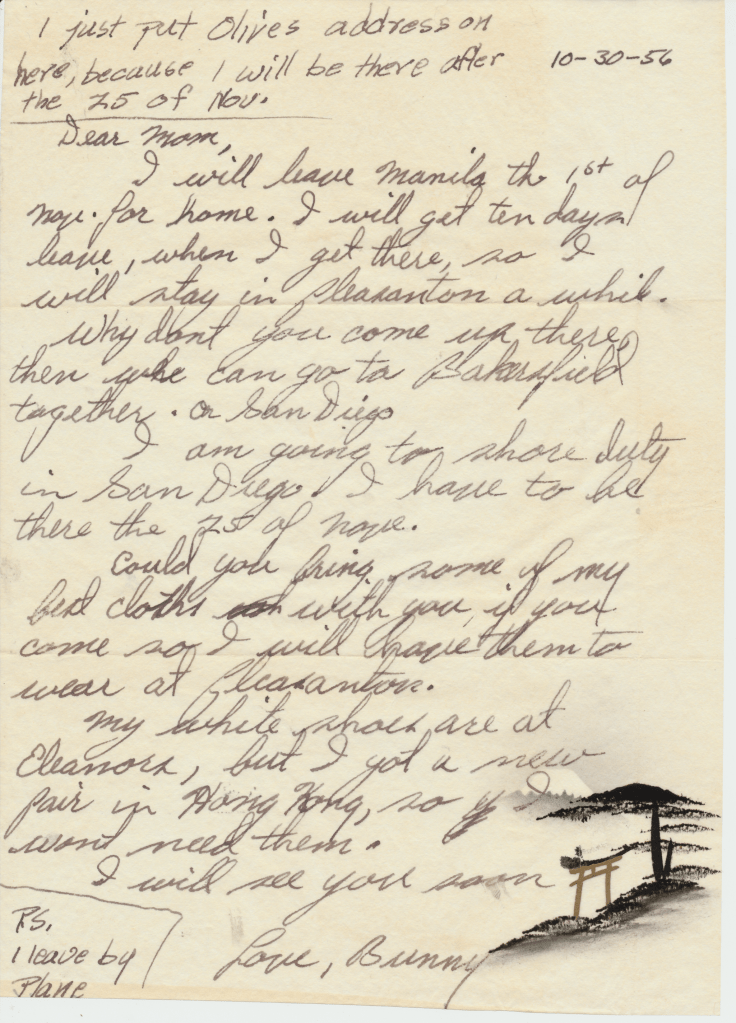
Bunny’s ship, USS Los Angeles. He was in the Navy from 1954 – 1958. This first scene is of the two ships fueling. In letters to his mom, he begged her to talk to the Red Cross about getting him out of the Navy. He hated it, saying, “it was no place for and L.D.S. boy.” He said the guys smoked and drank once on shore. An example of how faithful he was to his religion is in a letter directing $4.00 to go towards his tithing. The receipt still exists.
He was called “Bunny” because as a small child he would hop around on the ground like a bunny. His entire life he was referred to as “Bunny” or “Uncle Bunny” whenever he was with his family.
China – “the people lived in the boats because there wasn’t enough room on land.” The fishing boats were called junks. The figures depicted the people’s history.
Singapore, The Phillipines
Cigarette Factory: “ The sailors were given the long cigarettes before they were cut. “
Port of Manila, The Phillipines
The aircraft were located on his ship. “The platform they are resting on was elevated or lowered to the ship. “
Bunny with his Mormon buddies. The chief with the big stomach was LDS & from Arizona. “Johnson may have been his last name.” (Len retelling the details 10/15/2011). He would go ashore with the others to make sure they stayed out of trouble.
Japan – this is where the Atomic Bomb was dropped. Hiroshima & Nagasaki. The first scene of a bombed out building is of a Catholic church that was hit by the Atomic Bomb. Notice the cross at the top of the building.
Port of Manila, The Philippines.
Greg Middleton, son of Nancy McDonald & Dale Middleton born November 3, 1955. This scene was taken in 1956.
Their first home in Pleasanton, California.
Christmas at the Shafter, California house,1956.
Ray & Alice McDonald. Ray was one of Bunny’s older brothers. Alice was his 2nd wife. Alice later married Bunny’s & Ray’s brother Homer.
The sister of Len’s first wife, Dottie Busby McDonald.
Joyce, Bunny’s younger sister, is the one kissing under the mistletoe.
Dean & Anna McDonald. Dean was one of Bunny’s older brothers & one of his best friends. Dean’s oldest daughter, Deanne.
Wanda & “Sonny” Wilbur McDonald at their house in Reseda, California. Sonny was one of Bunny’s older brothers.
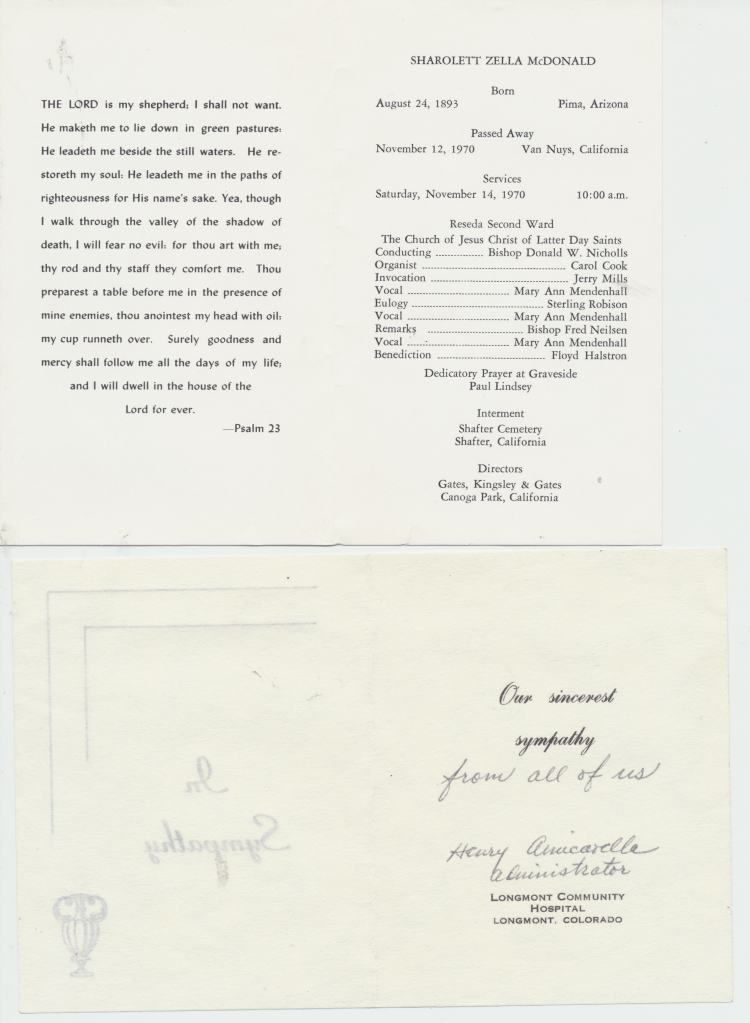
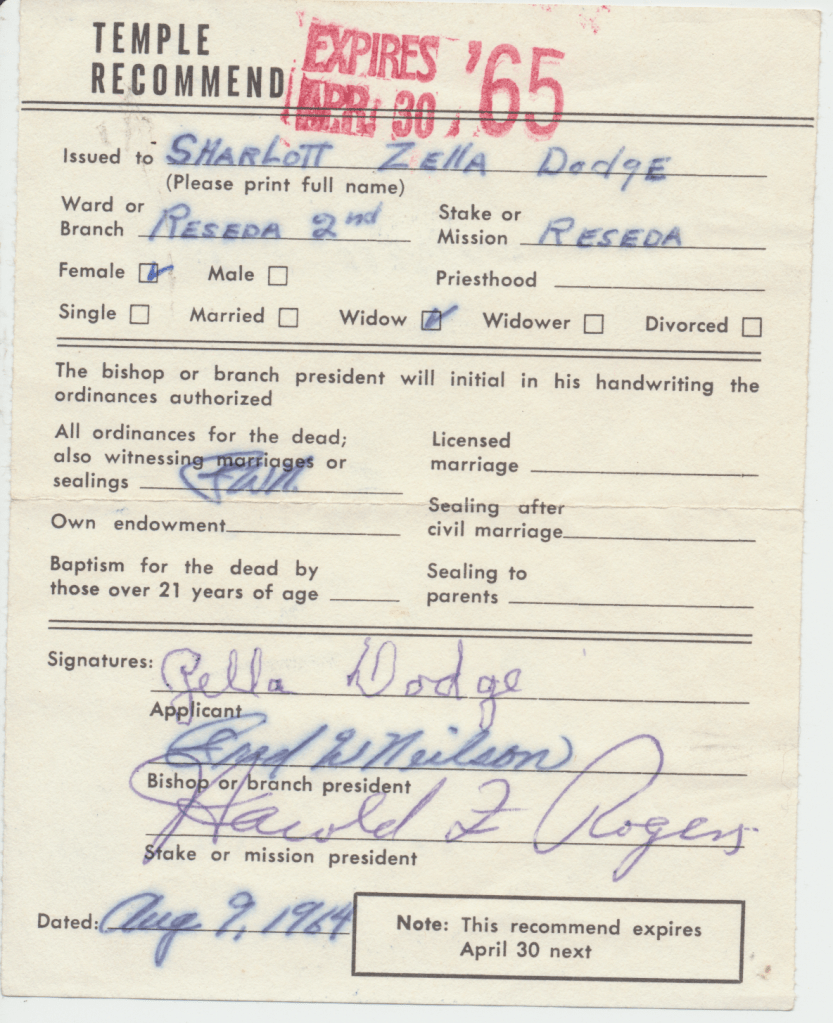
“Grams”, Sharlotte Zella Dodge McDonald, Bunny’s mother at their house in Shafter, Kern, California getting in the car with Joyce.
The kid in the straw hat was Jerry McDonald, son of Lloyd & Grace McDonald. Lloyd was one of Bunny’s older brothers.
Christmas in Pleasanton, California.
Wayne with the coffee mug.
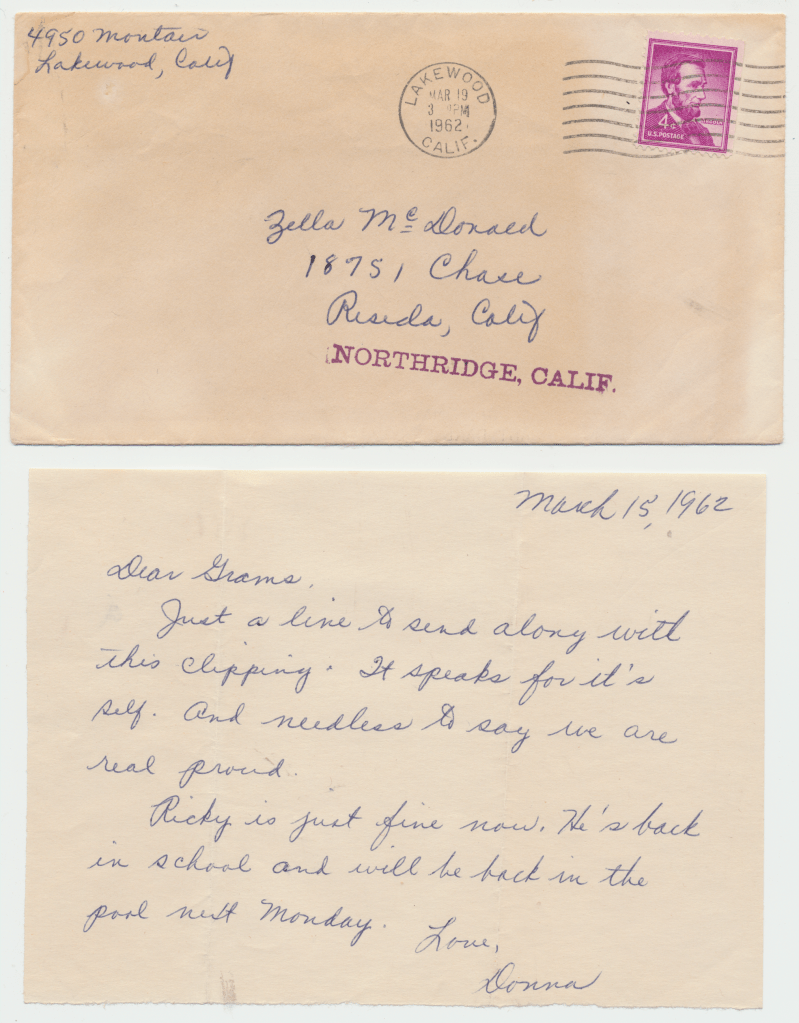
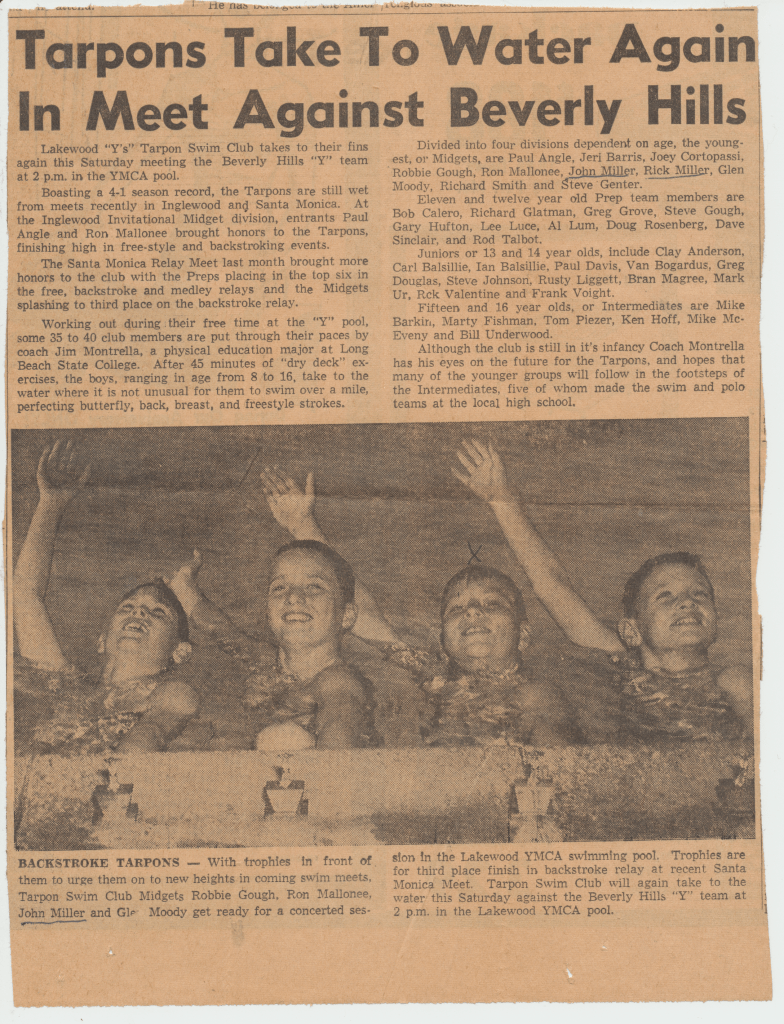
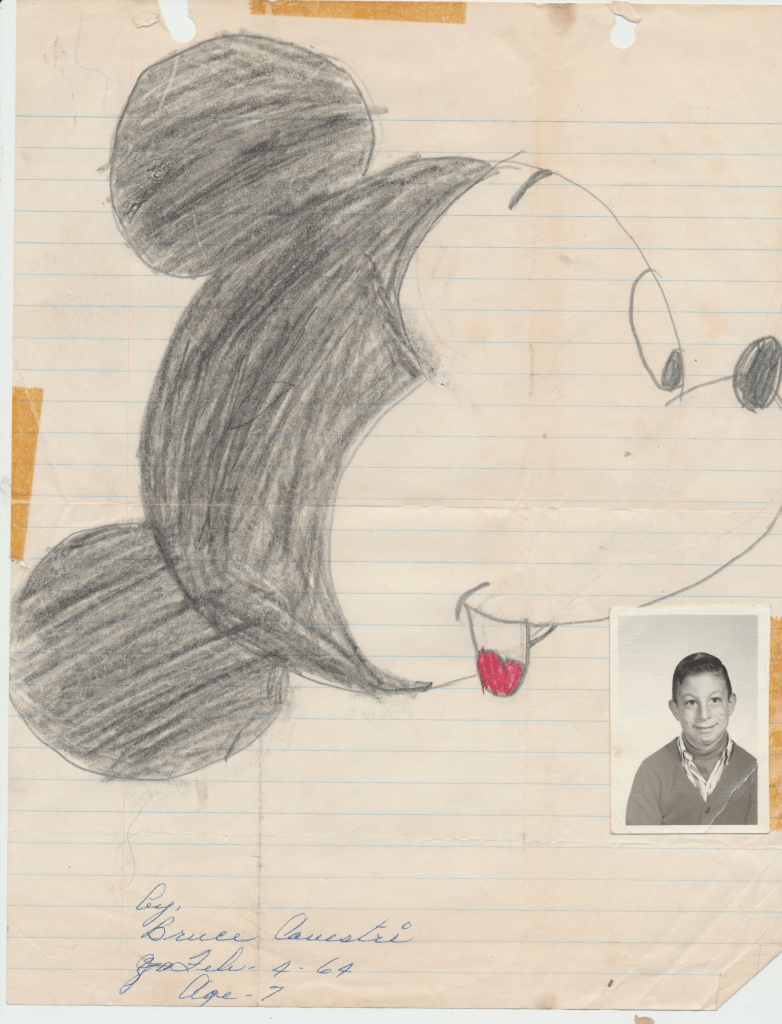
Margie McDonald Covestri and her kids, Terri and Bruce. Margie was one of Bunny’s older sisters and married to Tony Covestri. Bunny said he was Italian/Sicilian “but real nice.”
Nancy McDonald Middleton, one of Bunny’s older sisters, and her 1st child, Greg. Nancy’s husband was Dale Middleton. Grams is sitting in the rocking chair.
Ruby Young McDonald smiling at the camera, Wayne’s wife. Their daughters, Linda (blonde hair) and “Pud” (black hair).
Terri, born May 9, 1952, and Bruce, born April 27, 1956. Nancy is leaning towards Terri and getting the gift for Greg.
Grams, Wayne, Ruby Young McDonald facing the camera is Wayne’s wife. Linda (born December 3, 1945) is showing off her sweater.
Dale Middleton, Nancy’s husband is the shy one.
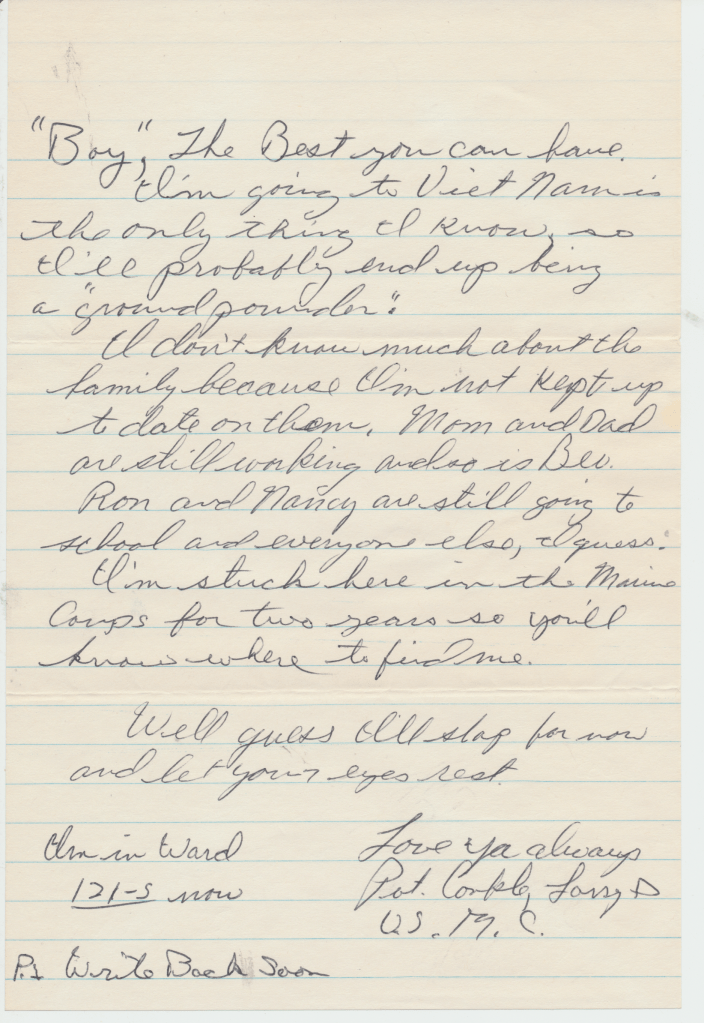
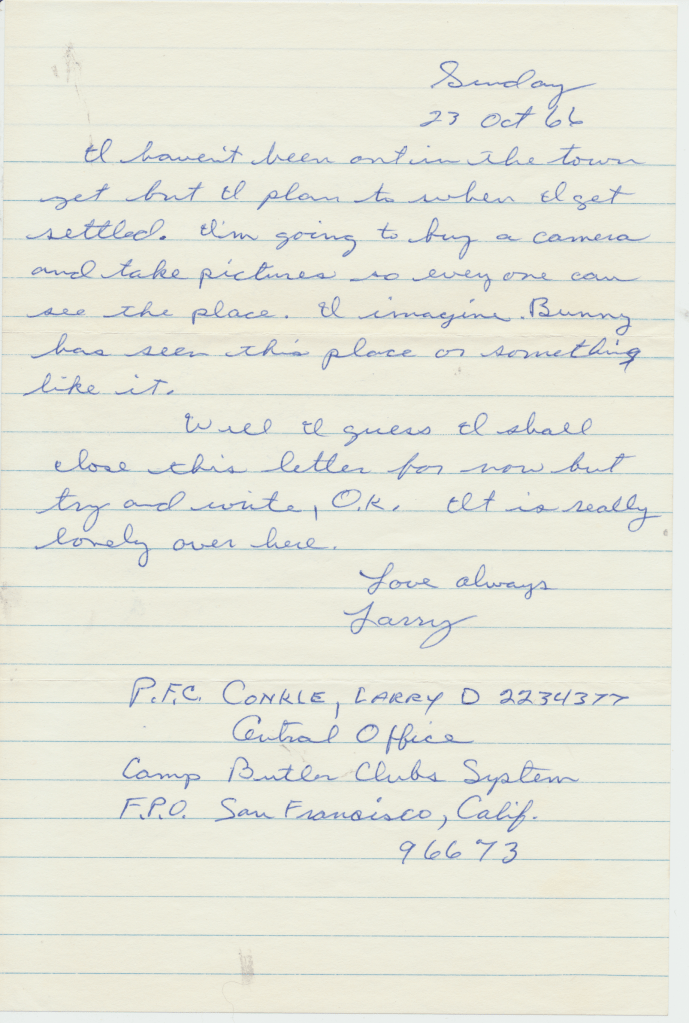
Olive McDonald Conkle’s kids. She was Bunny’s older sister and married to Paul Conkle. They lived in San Diego, California. Ronnie who born November 28, 1944, Nancy Carol is the one with the glasses and was born October 18, 1948, Larry who was born January 20, 1946, Beverly who was born June 2, 1947 is facing towards the ocean, and Randy who was born April 14, 1953. Larry would later serve in the Viet Nam War, including one of the worst battles, The Tet Offense. He tells of having his picture taken in the Commissary before being shipped off to battle and sending the pictures to his mom so that she would think he was working in the Commissary rather than fighting in actual battles. Apparently he never told her the truth. He did not want her to worry.
Little boy folding his arms is Randy who would later wear his hair long.
The Conkle kids at Easter, about 1957 at their home in San Diego. Ronnie and Larry are in the back with Nancy Carol, Randy, and Beverly are in front. Bunny spent a lot of time with them.
Ronnie Conkle practicing and playing baseball. This is about 1957.
Ronnie is in the concession line with his Uncle Bunny.
The guy in the suit was a local disc jockey (d.j.) for a San Diego radio station. Len could not remember his name.
At the table with Ronnie, Bunny, Larry.
The band was a group Bunny played in.
Knott’s Berry Farm, Buena Vista, California. Len said it used to be free. I (Kelli) remember going there often as a child and being amazed at the depiction of the Old West. As I (Kelli) grew, the park became more commercialized. It gradually lost its appeal.
Christmas at Tony & Marge’s in Pleasanton, California about 1958.
Terry & Bruce. Bruce was excited to get a drum set. He wanted the set because “Uncle Bunny” played the drums.
Tony in his pajamas, annoyed and then covers himself up.
Margie, Tony, and Tony’s mother.
Uncle Bunny, LaVar (until after his father died in 1952 and then he went by Len like his dad did.)
Ruby waving at the camera.
Wayne and Ruby dancing.
Vicki Joan Maris McDonald, skiing into the camera.
Summit Inn, Wrightwood, California with one of Vicki’s best friends from James Monroe High School, Peggy Mead (maiden name) and her husband Manwell. Manwell became a professor. They moved to Grand Rapids, Michigan.
Vicki at their home on Eaton Avenue.
Len with Chris the dog that he trained & was jealous of Kelli. Len was told that it was either he would have to get rid of the dog or the baby. He chose to get rid of the dog. Len loved that dog and trained it to do all the things seen in the film. Chris was a female & had puppies before they had to finally find a new home for her.
Len’s TR3 Triumph car. Originally had black wall tires. He turned them to white wall. He also made the seats.
Kelli
Wayne looking up.
Bruce bouncing the ball.
Vicki’s bridal shower – they were mad because she wasn’t excited and only going through the motions. As the camera moves left of Vicki is her aunts Anne, Ethel, and then her mother, Pauline “Pat” who is reading. Alice McDonald is next. Her sister-in-law, Darla Maris is sitting right of the baby. She is wearing a pastel yellow dress. Vicki’s step-sister, Bonnie (blonde hair, sleeveless, pastel yellow dress holding the baby). Her step-mother, Mary, is helping at the table with packages.
Peggy & Linda – Vicki’s best friends from high school. Peggy Mead is the one with blonde hair sitting next to Linda, who has dark, short hair. They were both only children in their families and the best of friends. Linda was also pregnant. Wanda McDonald had very short, brown hair. Sleeveless dress and sitting next to the woman who was wearing a blue dress with large, white flowers. This took place at her father & step-mother’s home on Tupper Street in Sepulveda, California. Len is the smiling man. Her father, Emerson Lewis “Bud” Maris is the older man wearing glasses.
The second shower –was at Vicki’s brother and sister-in-law’s (Dean & Darla Maris). As the camera sweeps to the left, Anne (blue dress), Ethel (purple dress). They were her aunts & mother’s older sisters. Her mother is wearing a white, sleeveless dress. Vicki’s Aunt Juanita is wearing a stripped dress with her dark hair back & lighting a cigarette. Aunt Dottie is wearing a corsage & glasses. She and Pat were very close. When Pat died of cancer in 1969, Dottie took on the maternal role to Vicki. The very much older woman sitting next to the woman wearing a brown & yellow print dress and dark sun glasses was Vicki’s grandmother, Olivia Melinda Green Thompson. She was Pat’s mother. Supposedly, the woman wearing glasses was Vicki’s Aunt Trudy. The sugar heart on the cake was kept long after they divorced.
The little blonde boy was Kenny Maris, son of Dean & Darla. Their son, Keith, was the one in the playpen.
Len playing ping-pong with Vicki’s cousin, Larry.
Vicki arriving at Sonny & Wanda’s place at 15521 Gault Avenue in Reseda, California.
Len & Vicki’s honeymoon in Wrightwood, California. They were married September 15, 1962. Vicki’s 1st boyfriend was Eric Frischlaucher. His family had a cabin in Wrightwood. Both Vicki & Len tell the story from two different states (California & Utah) about how the guy in the adjoining unit was listening. They were both sick. Len sat in the rocking chair making it creek. They could hear the guy next door listening. So, Len put the chair next to the wall & purposely made it squeak!
Vicki working on Christmas cards 1962, Encino, California.
Kelli Lynne McDonald born November 9, 1963.
Dean Maris playing cards with his mother. His daughter, Konnie, is the one with blonde hair wearing a bun and blue jumper dress.
Darla Maris pregnant with Karen.
San Diego Zoo with Olive and Paul’s family, 1956. The lady with the blonde hair was Bunny’s girlfriend, Marylin Suget. She lived next door to Olive & Paul.
Beverly holding a crying Randy.
Bunny standing behind Ronnie and twirling a piece of food while sitting next to his brother-in-law, Paul.
Olive teasing Paul. They really had a strong love for one another. After he died, she followed just months later for no apparent reason other than a broken heart.
Hawaii, 1956
Japan, 1956
Scene with the train is in Japan.
Memorial to the Atomic Bomb, 1956
The couple standing together had them over for dinner.
Guys in uniform at outside concert were L.D.S. “We ran around so we would stay out of trouble.”
Geisha girls dancing: “We were walking down the street and saw these girls doing their routine.”
Memorial to the Atomic Bomb, 1956.
Bunny with the toothpick in his mouth – his trademark.
Statue of Peace, Nagasaki City, Japan.
Woman standing with Len was the tour guide.
Catholic church in Nagasaki that was bombed.
Buddist Temple that was bombed.
Scene with the sailors bent over washing the deck was called a Holystone: there is a brick at the end of a stick. Rubbed sand to clean the deck.
On the ship, a movie was being made called Joe Butterfly. The guys on deck were used as extra’s or stand-ins. “Joe Butterfly (1957) is a comedy film directed by Jesse Hibbs and starring Audie Murphy, George Nader, Keenan Wynn, and Burgess Meredith in the title role. The movie follows the staff of Yank magazine, who are among the first American troops in Tokyo after Japan‘s surrender. They are given the difficult task of producing an issue of the magazine in three days. Short on ideas and having to meet the deadline, they enter Japan’s black market and come across con artist Joe Butterfly. Butterfly shows them the high life letting them live in a mansion complete with beautiful girls” ( http://wikipedia.org).
Sources
Labeled film canisters.
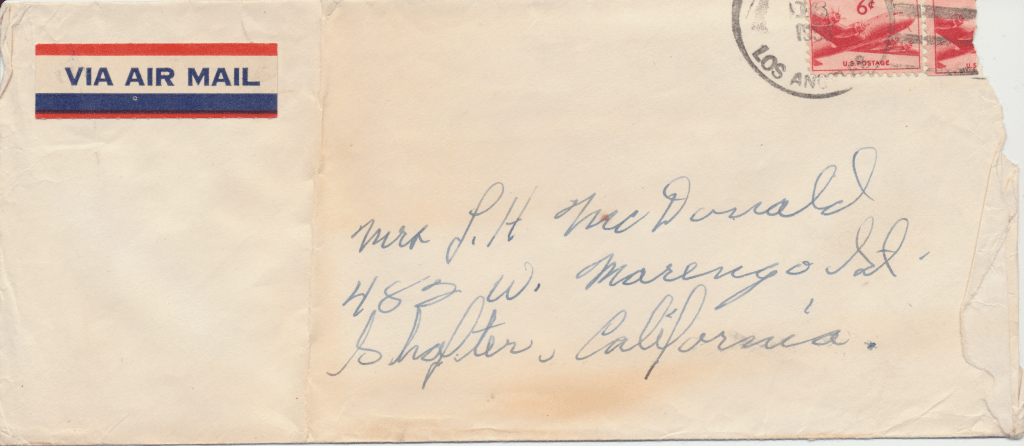
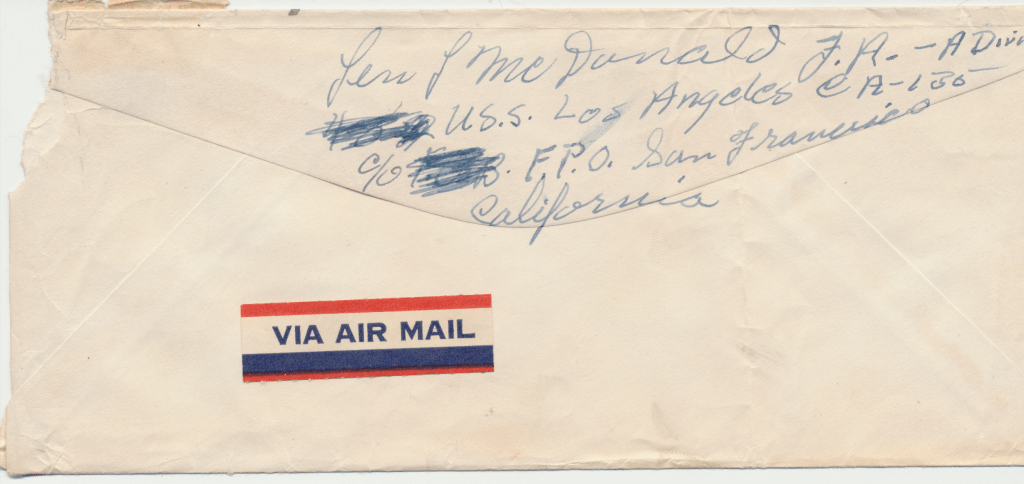
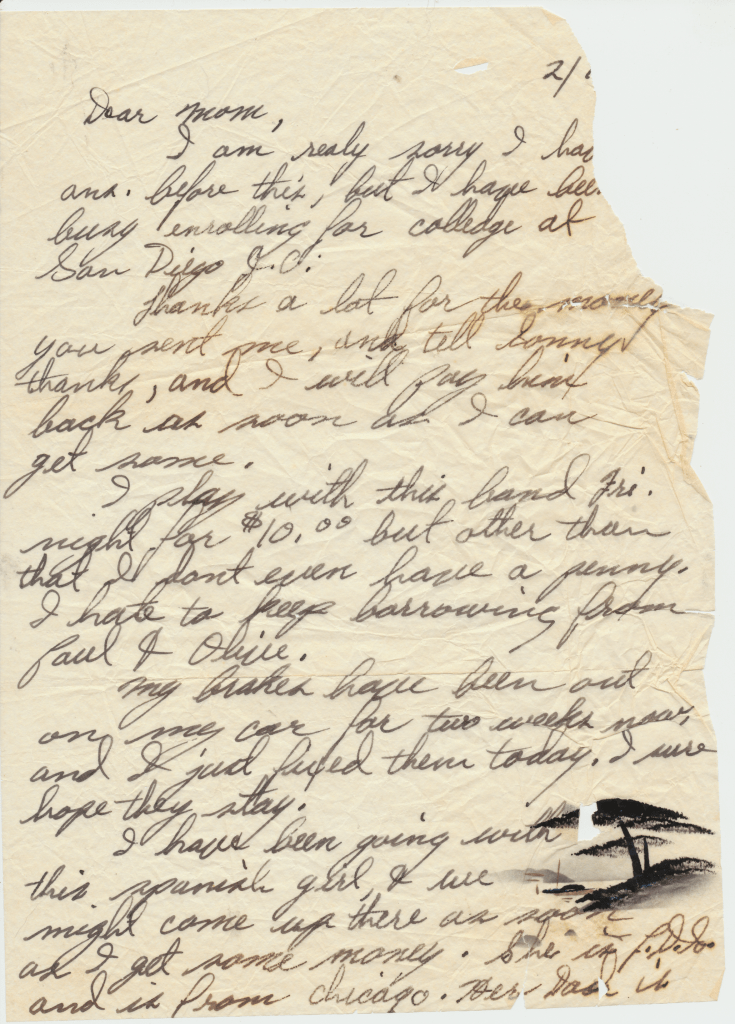
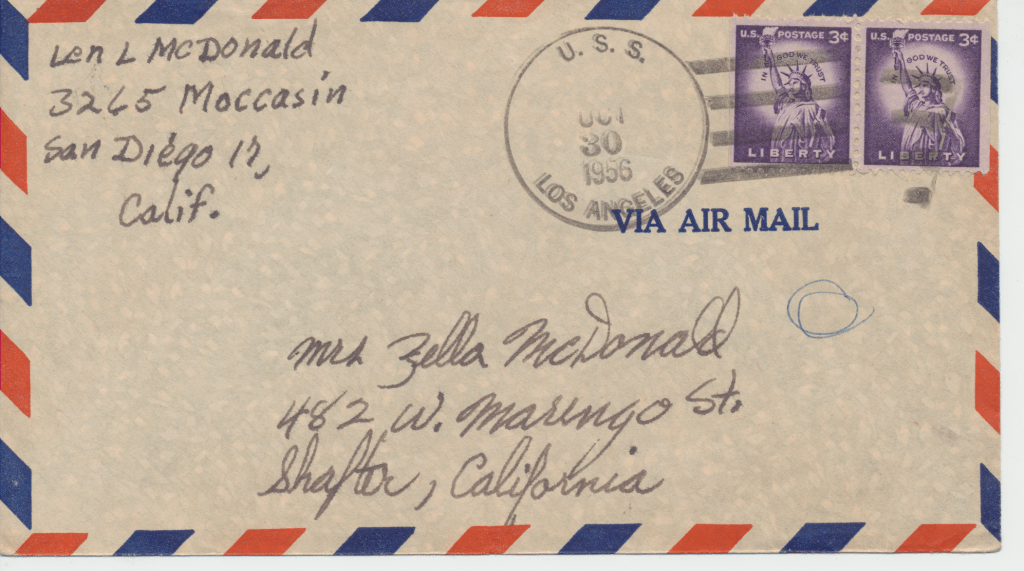
Letters from Len L. McDonald to Zella McDonald, April 1955, in possession of Kelli L. McDonald.
Phone interview with Len L. McDonald Saturday, October 15, 2011 to Kelli McDonald from Palmdale, California to Lehi, Utah.
Personal interview with Len L. McDonald, Palmdale, California, Saturday, October 15, 2011.
Personal interview with Vicki M. Carlson, Cottonwood Heights, Utah, Friday, October 7, 2011.
Personal interview with Vicki M. Carlson, Cottonwood Heights, Utah, Thursday, November 24, 2011.
Wikepedia.com.
Interview with my dad, Len LaVar McDonald. Lancaster, California July 22, 1988 while I was visiting from Lehi, Utah. My 4 month old son, John, is babbling in the background.
Kelli L. McDonald
Kelli: When you were a kid you used to go to Eleanor’s house. Where did you live & how old were you?
Dad: She lived where she lives now.
Kelli: In Long Beach?
Dad: Down in Long Beach.
Kelli: How old were you when you went down there?
Dad: Oh, I wasn’t very old. Must’ve been grammar school, 5th, 6th grade.
Kelli: How did you get down there?
Dad: She came and got me.
Kelli: In a car?
Dad: In a car.
Kelli: Since her daughter, Donna, was your age, a year younger, what was your relationship with her? Would like brother & sister?
Dad: Real close.
Kelli: What do you remember about Donna’s first husband who was killed in Korea(Korean War).
Dad: Just a real nice guy. His name was Johnny Ward.
Kelli: Do you remember anything else about him? Did you guys used to hang around together?
Dad: Nah, I just used to see him when I’d go down to Eleanor’s cause he lived next door.
Kelli: And did they moved down to Long Beach, Eleanor & them?
Dad: Must’ve been about 40, 41 somewhere around that. The beginning of World War 2. Kirt worked for the Douglass Aircraft Company.
Kelli Did he live in Shafter very long? After he got married?
Dad: All his life.
Kelli: After got married?
Dad: He lived there for quite a few years.
Kelli Didn’t you have an uncle on your dad’s side, Uncle Milton?
Dad: Oh ,that was on your grandmother’s side. It was my mother’s brother, younger brother.
Kelli: Tell me about him.
Dad: He was a real nice guy. He was always a cow puncher, foreman of a ranch. Real good horseman. I first met him, when I was about 4 years old& Dean& I were playing in this dirt yard in our front yard. This old model A came in, driving in with a bunch of cowboys in it, saddles piled on top, and in a rumble seat. Uncle Milt said, uh, “Hey boy, where’s your ma?” And I never met him before & I was wondering who he asking for my mother. So then we pointed to the house. He went in &then mother called us & told us that it was him. So they let him, they were, they followed rodeos, they were cowboy men, they rode buckin horses. So there was a rodeo in Bakersfield& they were gonna ride buckin horses there in towns & stuff. So my father let them stay in an old trailer house we had on the property. So he used to, when I would go in to visit them, he would get his saddle on his back & let me ride on him. And uh they had these chaffs they wore& they had guns in their chaffs. And back there in those days they would use guns to scare the cattle, you know .I don’t know what else they used em for. They were real cowboys from Arizona.
Kelli: You used to talk about Ray taking you horseback out in the desert.
Dad: Adelanto.
Kelli: What was that?
Dad: Adelanto.
Kelli: How old were you & what was your purposes in going out there?
Dad: I was just a kid in grammar school. I used to go stay with him for a couple of weeks out of the summer. And Ray owned a horse that uh, Ray & Paul, Olive’s husband, had horse they owned & they kept him over at Grace Tyler’s Dude Ranch in Victorville. So Ray & I went over & picked up his horse & one other horse & rode him back to Adelanto. Actually it wasn’t Adelanto at the time. They were living at George Air Force Base. Later on your Aunt Olive & Paul moved to Adelanto but we rode the horses from Victorville back to George Air Force Base.
Kelli: Was Ray & Paul real good friends?
Dad: Uhhm (he nods in agreement).
Kelli: Tell me about Grams. What kind of mother & person was she? What things was she involved in?
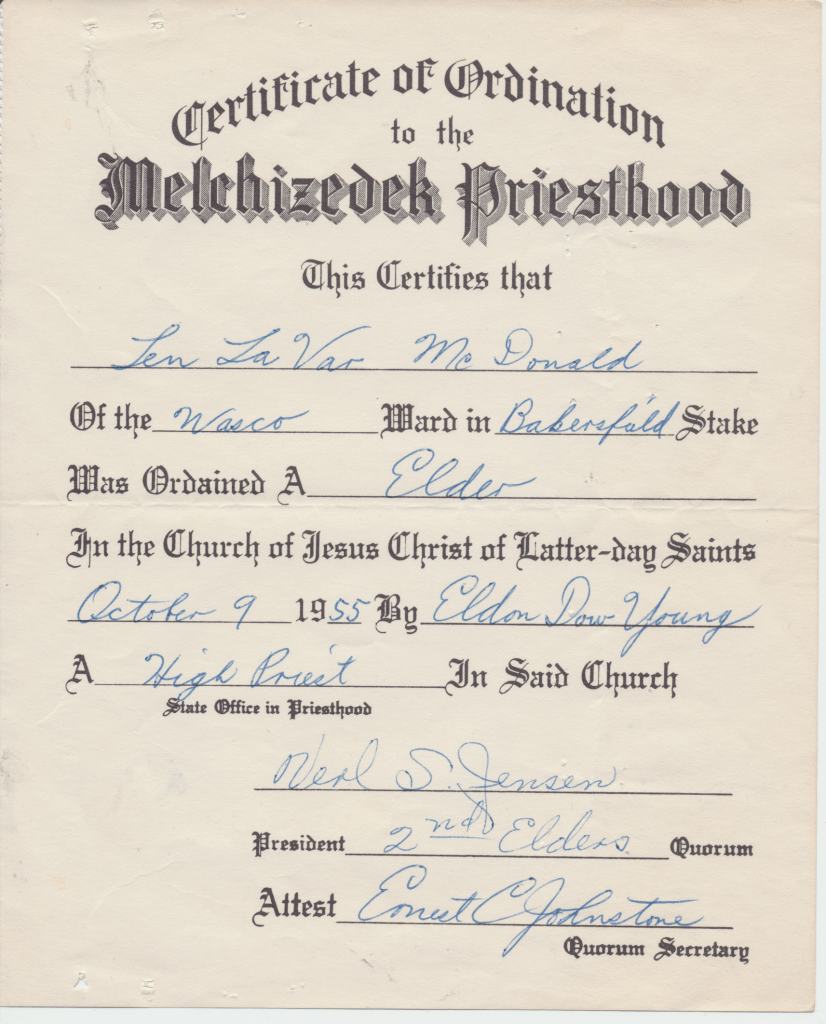
Dad: She was a real good person. Uh real active in the Church, when we lived around the Church. She was involved in Relief Society. When she moved to Northridge she was in the uh the Reseda 3rd Ward singing group, Sing Mothers.
Kelli: Didn’t she avoid going to the doctors?
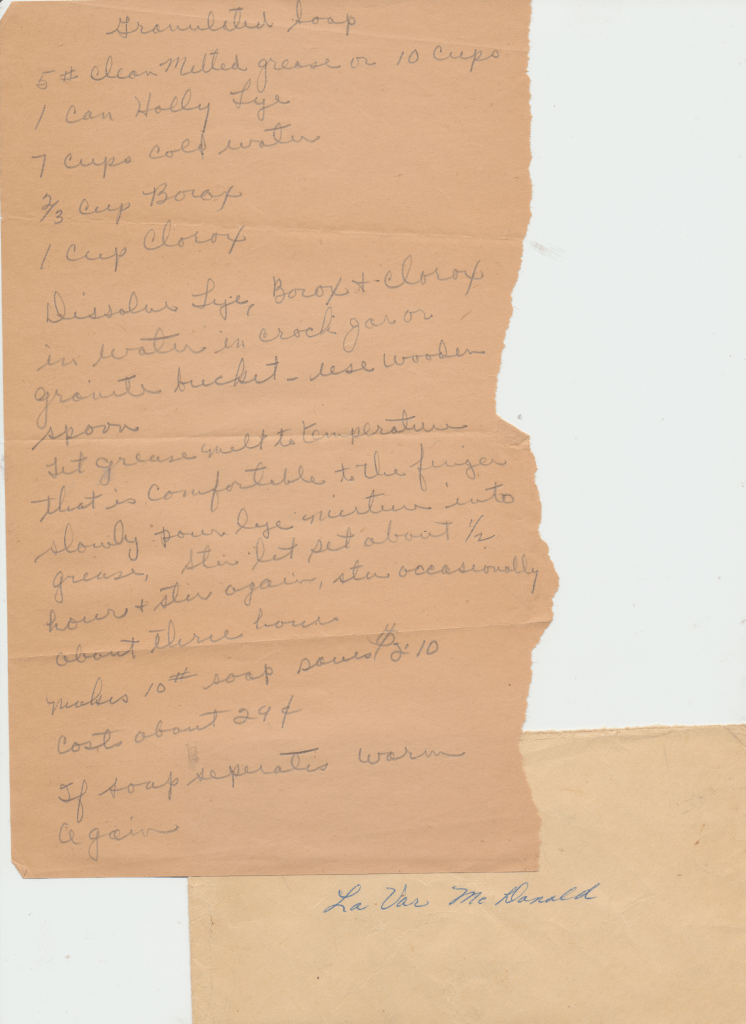
Dad: That’s only when we were, that’s before we lived around a doctor & before we started making enough money to where we could go to the doctor. There’s one of her home remedies.
Kelli: On your finger?
Dad: I cut that with my grandfather’s knife. She put it back together with a, that skin out of an egg shell. You know on the inside of an egg .
Kelli: Did she ever drive a car.
Dad: Nah, never.
Kelli: Were you real close to her relatives? Her aunts & mom?
Dad: We didn’t see them that much. They lived in Los Angeles & Arizona.
Kelli: What was your dad like? What stories do you remember about him? You once said something about a service station & casino mentioned in back?
Dad: You know a casino, they just used to have slot machines in the service station that people could use. They were legal then. We just owned, well, we leased this service station during World War II. And I used to uh used to empty out the money rolls but he’d always leave a few money coins in the money rolls & throw em away in the trash I’d go back there & go through them & get nickels & dimes. Play the slot machines.
Kelli: What else do you remember about your dad?
Dad: Oh he was a real good person. He was always taking me, trying to get me into show business when I was 4 years old. They took me up to the World’s Faire in 1939 in Treasure Island & it was in the newspaper & it was also said that I won the World’s Fair. I was supposed to have won a 1939 Oldsmobile. The Chamber of Commerce beat me out of it because I was just a little kid. I was just comfortable as it is. They called me the 4 year old World’s Champion. I had a picture that said that, the newspaper that said that. And they always had me on talent shows in Bakersfield. Coca Cola Bottling Company and I won this, they called it a gold medal but it was actually silver with the gold place for my name on it. Then Dad had me in Warner Brothers in Hollywood trying to get me in the movies. But at that time because of the child labor laws people were putting kids in the movie & not giving the kids any money for it. So they took the kids out and Shirley Temple & a lot of child actors at the time. So that stopped me from getting to the movies. He used to take me there. He took me to Stuart Hamblin, Gene Autry, oh he took me to, oh ya know, entertainers trying to get me into the movies & show business. Always playing in bars for grown-ups, ya know.
Kelli: Did he talk much about his relationships?
Dad: Oh, he used to tell me stories about him & his uncle Bill, him & his brother who was my uncle Bill were pretty close. I used to hear stories about, oh I guess when they were about 6/7 maybe, they both owned theses donkeys. They lived in Arizona & this old Indian used to always come over & over the hill & steal these donkeys. So then when they would go try to get their donkeys back then the Indian would want a sack of flour & something in exchange for these donkeys. So one night they decided they would go get the donkeys, and put a stop to this. I guess they hiked over there & they had what they called hobbles on these donkeys. So, I guess your grandfather, Lenard, he got his donkey unhobbled. He was ready to jump on it & he also had this rifle he took with him that had a ram rod down the center of it for pushing the shells out. And he forgot & left the ram rod in the rifle. Uncle Bill was having a hard time getting his donkey unhobbled so they looked up & they saw this Indian coming over the hill I think with a, I think it was a hoe or an ax or something. So just before he got to ‘em Uncle Bill got his donkey unhobbled with the Indian was right there on them so your grandfather raised up & shot at him with this gun he had that had a ram rod in the inside of it & I guess the ram rod hit him. So any way that night the Indian stole their donkeys again & they never saw em again so just they assumed that he butchered em & ate em.
Kelli: Why did they butcher them & eat ‘em?
Dad: For food.
Kelli: I know but, seems like they would be even more for transportation than for food.
Dad: They were pretty hungry. You want me to tell so more stories?
Kelli: Yeah, you want to tell me more about your dad?
Dad: Well, I used to hear stories about when your grandfather was dating your grandmother in Arizona & they rode horses & they went stealing watermelons one day. There was a bunch of them. Your grandfather was always trying to be funny. So I guess they hiked down in the field & they were all getting watermelons & your grandfather, uh spotted the owner of the field asleep down there in one of the rows. I guess he had a bald head. Your grandfather couldn’t leave well enough alone. He had to go down there & he thumped on the guy’s head & the guy jumped up with a shot gun & shot at him. So he was always trying to be funny.
Kelli: What did he die of?
Dad: Well, the medical records said a heart attack but he died of uh I guess he drowned in his own fluid. He was quite an alcoholic I guess. And his body had bloated up quite a bit. So they gave him a shot to pass this bloat & I guess he drowned in the fluid. That’s what I was told by your Uncle Loyd.
Kelli: Were you real close to your dad?
Dad: Well I was pretty close I guess.
Kelli: What brothers were you closest to?
Dad: Loyd & Ray & Sonny. I don’t know, we were always a pretty close family. Wayne didn’t live around us too much. He was at his house. I would go visit him all the time.
Kelli: Did they ever talk much about the babies who died?
Dad: Nah
Kelli: Just quiet?
Dad: Yeah.
Kelli: Uh, what kind of things did you guys do together? Any pets?
Dad: Always had pets.
Kelli: What about cats & rabbits & things we’ve had, we’ve always had?
Dad: Always raised rabbits & we had a cow & we had chickens. Ray had a horse on the place.
Kelli: Do you remember any of the games you used to play uh, sometimes the kids would play baseball, street baseball?
Dad: We always played basketball, baseball in the street, dirt street. Always ping pong, kick-the-can, the usual ones, you know.
Kelli: Tell me about your first wife, Dorothy, was that her name?
Dad: Yeah.
Kelli: How did you, where did you meet her?
Dad: I met her when I was in the Navy, in San Diego while I was playing in a band & she was at one of the church dances.
Kelli: So she was a Mormon?
Dad: I baptized her. Yeah, she always went to the church dances.
Kelli: Why’d you guys end up getting’ divorced?
Dad: Oh, the usual squabbles, then she started smokin’ & she started lying about it.
Kelli: Have you seen her since?
Dad: Nah
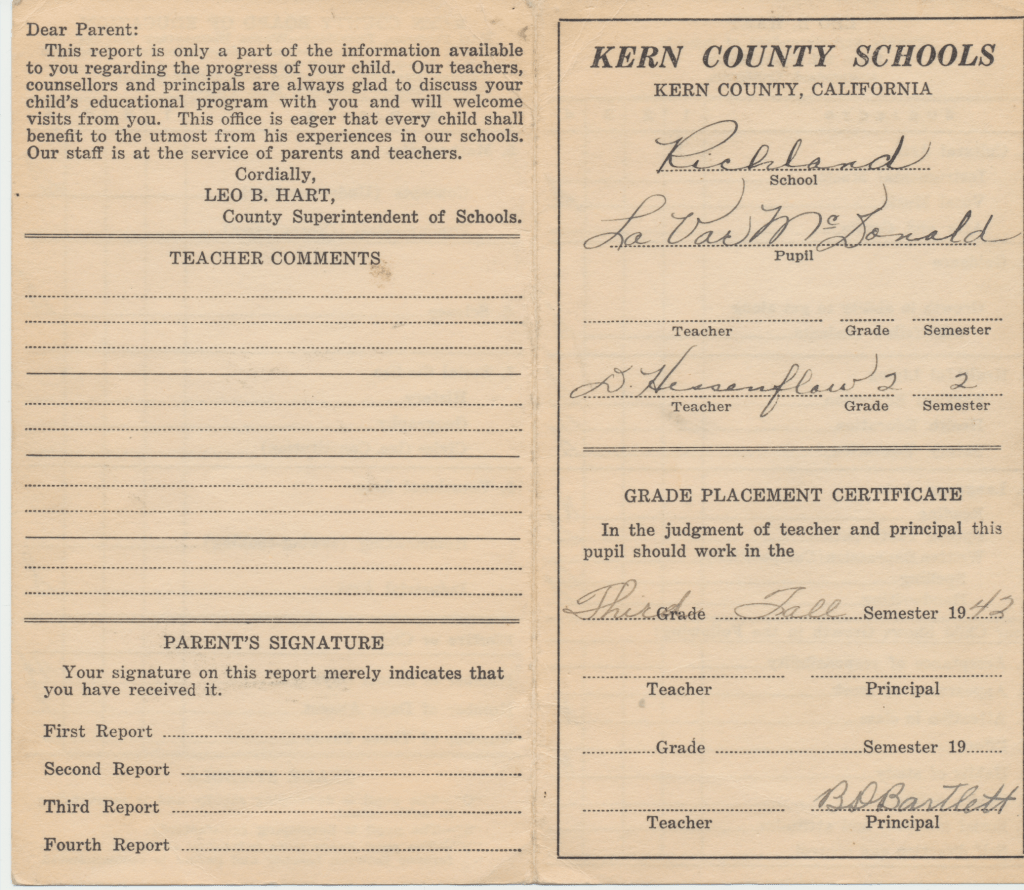
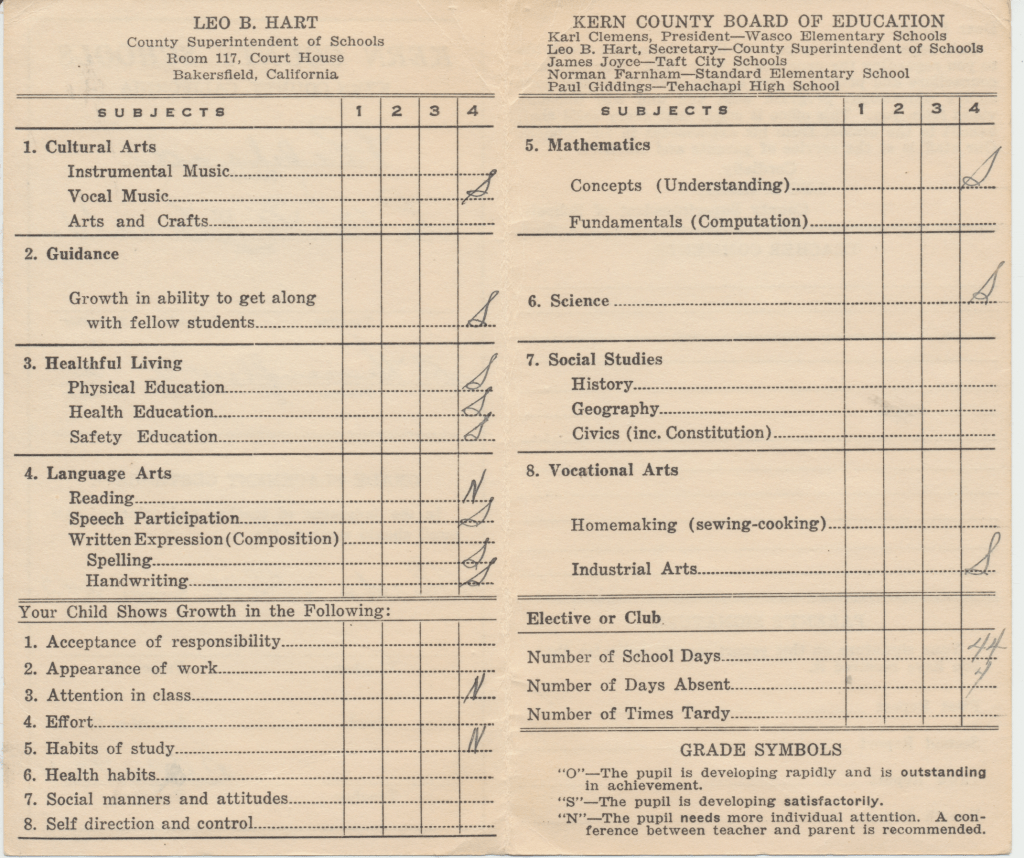
Kelli: What things do you remember about school & how was it different from today?
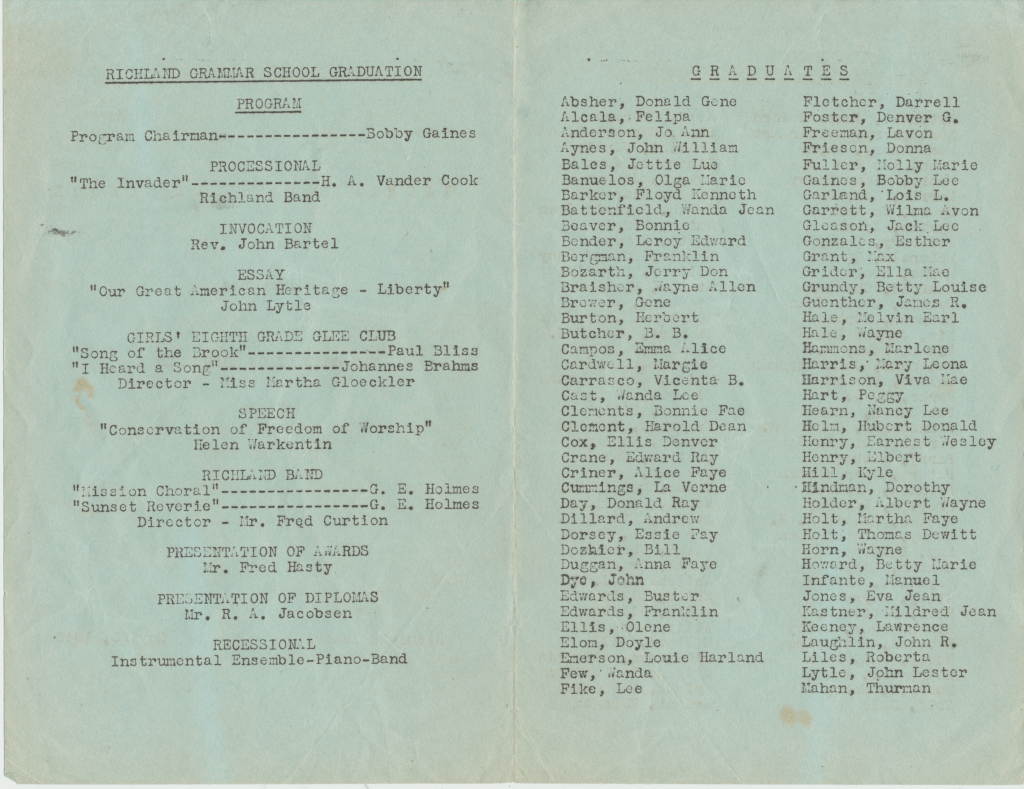
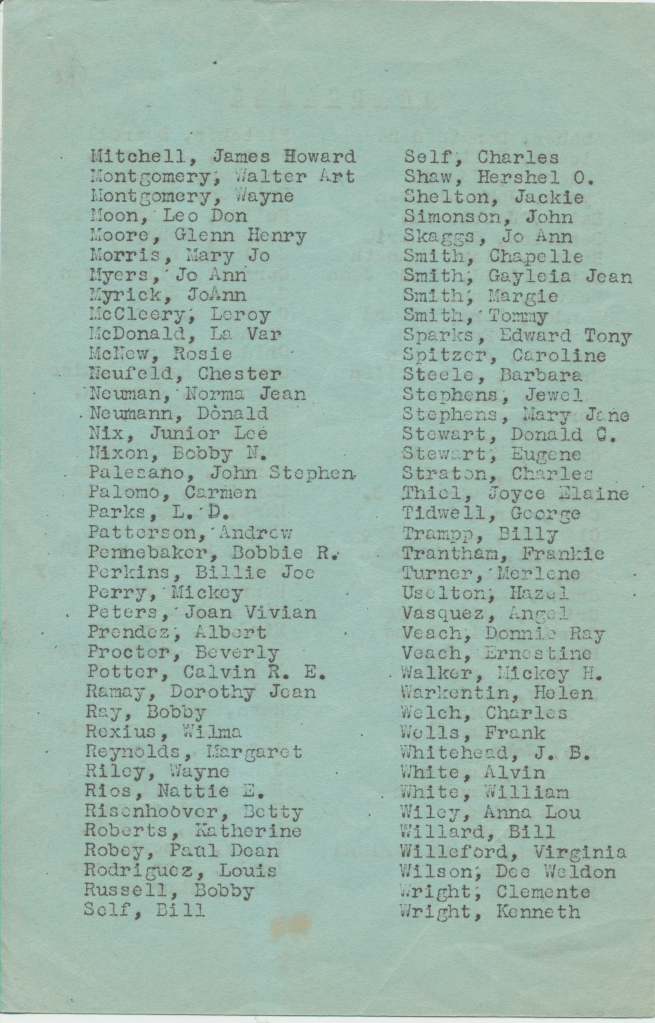
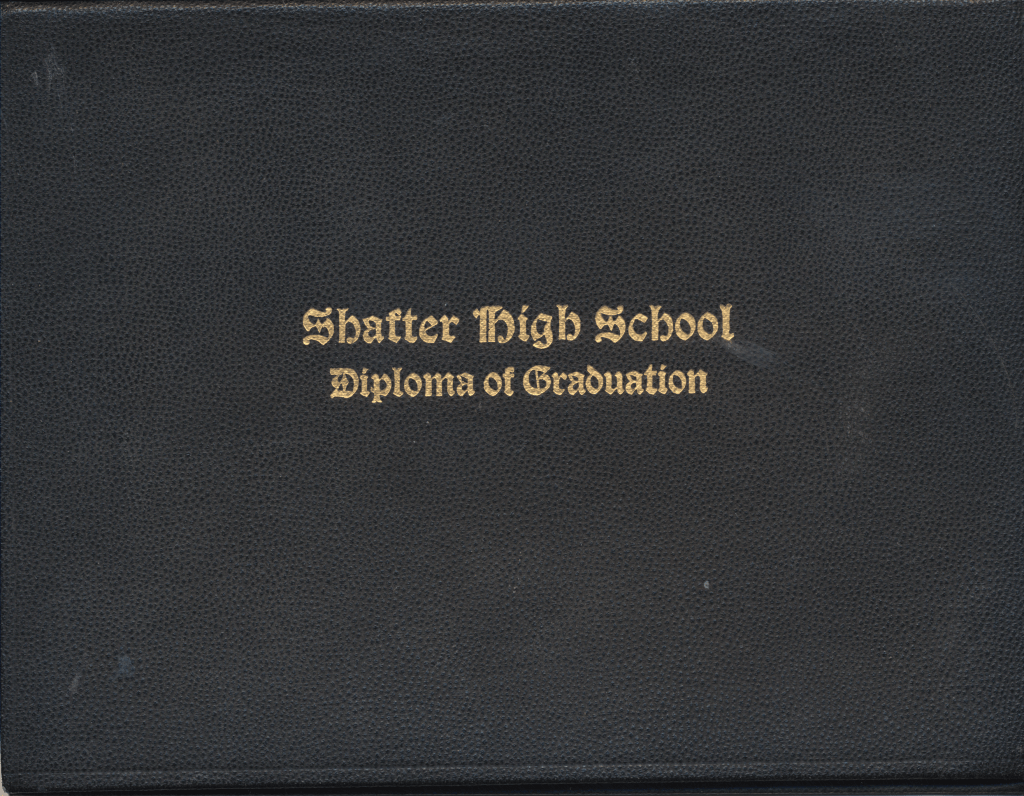
Dad: Well, in school I was always in the band. Always played & sang, always played my guitar & sang. Quit classes. Always in the talent shows or the shows at high school, you know.
Kelli: Do you remember any of your friends & who were they?
Dad: Oh I had a few friends. Bobby Nixon, Roger Campbell. Roger Campbell was from another school. Kyle Hill. His uncle was a big cotton farmer, real lucky…I can’t remember a lot of em.
Kelli: Do you, once you told us that you and Roger Campbell used to go to a restaurant. Go by restaurants on the way to school.
Dad: Not on the way to school. Just around Bakersfield.
Kelli: And pick your nose in the window.
Dad: I didn’t do it, Roger did it.
Kelli: Oh
Dad: He just pretended, you know.
Kelli: What other pranks did you pull?
Dad: Used to throw cotton balls at cars, throw green oranges at cars. Used to swim down the rapids & get a canoe. We were at a mutual party one night. Roger & I & some more kids we swam down the rapids. We weren’t supposed to.
(Tape stopped here & continued onto the other side. It sounds as if the prank is on Roger, because it is not clear who it is.)
Dad: His car was parked at the road above the river. We went up there and we jacked up all 4 wheels. Put blocks underneath the rocks. Then we hid in the bushes and he came with a couple of girls, gonna take em home from the party and he got in his car and started up and not going anywhere. He started cussing and the girls were laughing at him. So he’d get out and take out one rock and let one wheel down and get back in his car and it still wouldn’t go anywhere cause we put rocks all the way around . Every time he had to get out of the car the madder he’d get. So then finally got it undone and we followed him and he went to this Vera Sanford’s house, the first girl he let off and we hid in the trees and we watched him at the front door. Then went by a grocery store and got a bottle of peanut butter. Waited till he went home and he put his car way up in the driveway by the cotton patch. Put peanut butter on his steering wheel and his tires and dashboard. Wherever we thought he’d touch anything. And so then next time we went to church, everybody’s talkin’ about poor Walter, so and so did to his car. So we just pretended we didn’t know anything about it.
Kelli: What about that skunk? Somebody ran into a skunk and went to church.
Dad: Nah, we used to go dancing up at California Hot Springs up above Porterville by Bakersfield. And coming home from that, used to go to the Armenian Dances, coming home we found this skunk going up the side of the hill so we stopped and took you Aunt Joyce’s beach towel. Took a box and put over that skunk and then took her towel and slid underneath it to keep the skunk in and then put it in the back of Roger’s car, trunk, and rode back there with it to keep it in the box and it kept putting its stink all over me. So when we got home we put the skunk in the pen and then the next day I went to church with my new shoes on and everybody kept smelling that skunk. So I never did get it out of those shoes.
Kelli: Remember that one time you played at the funeral home and Joyce didn’t like funeral homes and you were
Dad: It’s just we knew the Robinson’s. They ran the funeral home. Your Aunt Joyce and I were always playing the piano together. We went by Clyde and Eulalia’s. They were the ones that ran the funeral home. So went by ta visit em and uh we wanted to play the organ and Joyce was scared to death of dead bodies and so Clyde whispered to me that there was one on the other side of the organ but we didn’t tell Joyce. So we went in there and we were playing popular tunes on the organ and having a big time. I never did tell her that this dead body was right on the other side of the divider between the organ and the dead body. Then she found out later and Eulalia, I think so, scared the heck out of her. But were playing boogies, ya know, shouldn’t of been played in a funeral home.
Kelli: And The Robinson’s just didn’t care?
Dad: Nah, they knew.
Kelli: Did you go to your Senior Prom in high school?
Dad: Hmm uh
Kelli: Who was your date?
Dad: I didn’t take one. Just went by myself.
Kelli: And you still danced?
Dad: Hmm uh
Kelli: Tell me about the homes you grew up in. What were they like and what areas did you live in since you moved around a lot. And didn’t your dad try helping someone? Well, tell me about that so far and I’ll ask you about it later.
Dad: The homes?
Kelli: Yeah, where you lived.
Dad: When I was a real little kid, we moved way up to Cowpella by Ukiah. That’s the school you saw. And we lived in an old store building that had plaited glass in the front windows. Your Uncle Deand and I used to sleep in one of those big rooms in the front. The bums used to sit out side and drink their wines and you could see em through the window. We were in bed at night. Then, one of the big rooms we used roll our wagon around there on the wood floor and it was kind of a strange store. Had a big basement down underneath it.
Kelli: Did you guys run the store or just rent it?
Dad: Nah, it was just an empty building. We just rented and lived in the house in the back. It was all part of the store.
Kelli: Where else did you live?
Dad: We lived in Las Vegas, Nevada. Your grandfather, I think actually the name of the town was Whitney(?), some town outside Las Vegas. Your grandfather worked at a magnesium plant. They used magnesium metal during the war. Him and you uncles worked there. Then we moved back to Shafter and we, every time we went back to Shafter we’d live in these Labor Camps, they’re just these little small shacks with outside toilets for everybody and dirt floors, real crude.
Kelli: How many would fit in one of those things because they were real small?
Dad: Yeah. Your grandparents had 12 kids.
Kelli: Did you have to rent 2 of those houses sometimes?
Dad: I don’t remember. Seems like they had a trailer house set by one of them. I was just a little kid at the time. And your Aunt Ruby’s father and mother, the Young’s, they owned the grocery store, The Young’s Grocery Store. We rented from them for awhile and we lived back behind uh Young’s Store in a house that had a room for the boys out to the side. We were there for quite awhile and then your grandfather got a chance to buy an old house out in the desert. We bought it and he completely rebuilt it. And we moved it into town – on Morengo Street. And that’s where I grew up the rest of my childhood. I got out of high school and the Navy.
Kelli: Didn’t your dad try helping someone once? And some people took off with your things?
Dad: Ah, that’s before I was born. But they did. They helped some people move. I guess the car was broken down and something. They stopped to help these people. The people ended up stealing the truck with furniture in it. And the last time they saw that truck, it was in a wrecking yard up in Modesto, California. Completely lost it.
Kelli: And didn’t they have
Dad: Your grandfather was always helping people.
Kelli: Tell me about your birth and the circumstances around it. How much did you weigh and was everybody living at the home? What do you remember about it?
Dad: We were living in Shafter and I was born at the Kern County General Hospital.
Kelli: Bakersfield?
Dad: In Bakersfield. I don’t know anything, I don’t remember anything about it.
Kelli: Did you, do you know how much you weighed?
Dad: Probably on my birth certificate somewhere.
Kelli: You don’t have a copy of your birth certificate?
Dad: Probably, somewhere?
Kelli: What was it like having so many brothers and sisters who were married while you were still a kid?
Dad: I was always the baby boy, you know. They were always looking out for me.
Kelli: It didn’t bother you to have people that were married?
Dad: I didn’t know any different.
Kelli: What do you remember about your brothers and sisters?
Dad: Like what?
Kelli: Well, I don’t know. I guess I remember different things about the boys, about Blake and Shannon.
Dad: When I was a young kid, your Uncle Sonny and Homer were in the Navy during World War II.
Kelli: Wasn’t Homer on the Hornet?
Dad: Homer was on the Hornet , Curtis. I think both of them were sunk after he got off them. After he went to different ships.
Kelli: Didn’t Homer have to stand guard and then almost got shot because he
Dad: Yeah, during the war if you went to sleep on guard duty you were shot and killed. That the rule. Homer, I guess hadn’t slept for 2 nights, a long time, I don’t know how long it was, but I guess it was Admiral Hulsey came on their ship to have a meeting and Homer was standing outside their door guarding it and he went to sleep. Just lucky his friend came out before Admiral Hulsey did and woke him up after the meeting they came out of the hatch and his friend woke him up. So that stopped him from getting into trouble.
Kelli: What was your general health conditions when you were growing up?
Dad: I was always pretty healthy, always playing sports. Used to always cut my toes. Always had toe problems. Once I dropped a big cement thing on my toes and caused em to bust em wide open. Then once, your, every spring I had to drive pegs down into these flowers, chrysanthemums, for your grandmother. And instead of getting a claw hammer I always did things the easy way, so I grabbed a hatchet that had a hammer and the opposite end of it. So I grabbed that and I went out, was gonna drive the pegs in a hurry, stakes, stake up the flowers. While I was pounding I was barefooted and the ax slipped outa my hands and made a flip in the air and came down and cut one of my toes. Cut it wide open. Bleeding real bad. So I reached down, grabbed it. Because I was always playing games with my mother, she wouldn’t believe that I cut my toe. So I had to take my hand off and let the blood squirt out and then she got scared. Then another time your Uncle Sonny come home from the Navy. He as always doing things with us kids, taking us to the Bakersfield Beach. It wasn’t really a beach but it was just a sandy area in Bakersfield along side of the Kern River. So Sonny took us down there to let us swim a little bit. And I was running across the sand and a broken bottle was sticking up out of the sand and I cut my toe on it. Cut an artery. And blood was squirting out like a rainbow and I was laughing about cause I’d never seen such a thing. Sonny picked me up and he was scared to death. So he started back to the car with me and I was laughing because of this rainbow of blood that was coming out of my foot and I didn’t know I was bleeding to death. He got me back to Shafter without me bleeding to death and they sewn me back.
Kelli: Tell me about your illness.
Dad: Which one?
Kelli: The A Plastic Anemia
Dad: It’s just an illness where your bone marrow is not producing red and white blood cells and it’s not producing platelets and you get cut and you bleed to death because platelets is what stops you from bleeding to death. You don’t have any platelets then you have no choice but to bleed to death.
Kelli: Where do you stand now with it?
Dad: I guess I’m comin’ out of it. Doctor said I am.
Kelli: Is your bone marrow producing now?
Dad: Yeah. I haven’t had a transfusion for about 5 months. I had a 50% chance of coming out of it. Guess I’m ready.
Kelli: So you can be completely cured from it?
Dad: Yeah.
Kelli: Tell me about your religious affiliation. I don’t know any other way to word it. Didn’t you attend a Pentecostal church for awhile because there wasn’t any LDS church?
Dad: Oh, I was always going to what they called Bible studies after church or after school. During those days they would have what they called Bible classes. So you would just go and you would read Bible stories or teacher would tell stories. But all the time I was growing up it was Pentecostal and usually Pentecostals, they would move into our neighborhood and pitch a tent and all the kids would go down there and attend their services. We’d usually get these little New Testaments things ya know?
Kelli: Is that where you got it?
Dad: You still have it?
Kelli: I think so.
Dad: I’ve had that for years since was a kid.
Kelli: I didn’t know that.
Dad: Oh yeah, probably since I was 9, 10 years old.
Kelli: Todd used to carry that around with him. That and he had a little
Dad: My name in it?
Kelli: I don’t remember. I think I still have it.
Dad: Probably blue.
Kelli: Seems like it was brown.
Dad: I used to get ‘em all the time. I was always going to Bible classes and then the Pentecostals would move in at night. When I was a real little kid they always had base drums and cymbals and always noise makers. I know your Uncle Homer, before he went into the Navy
Tape ended.
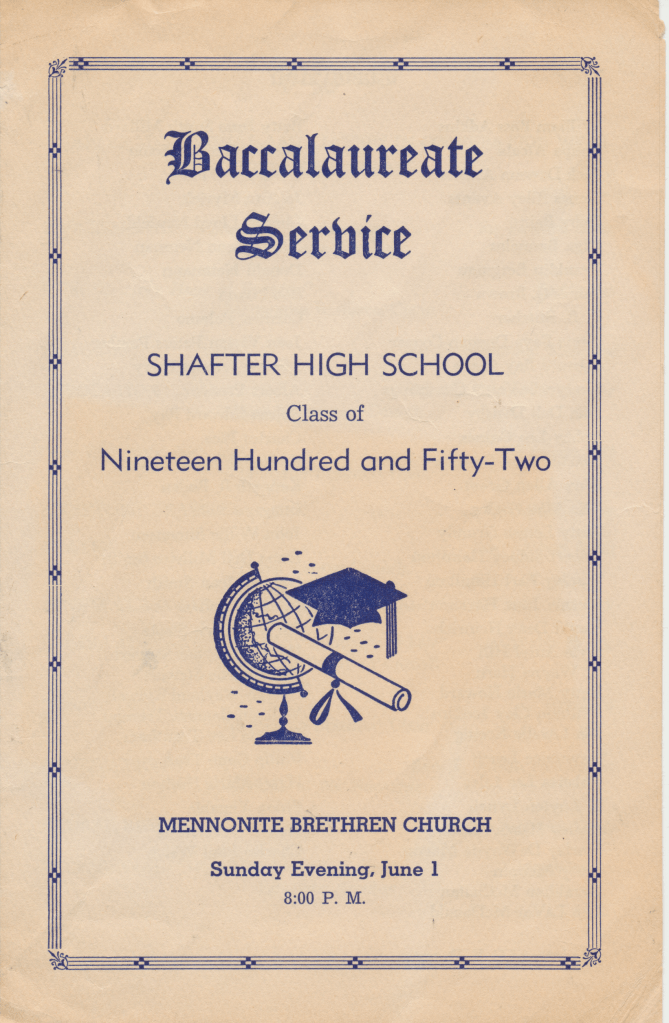
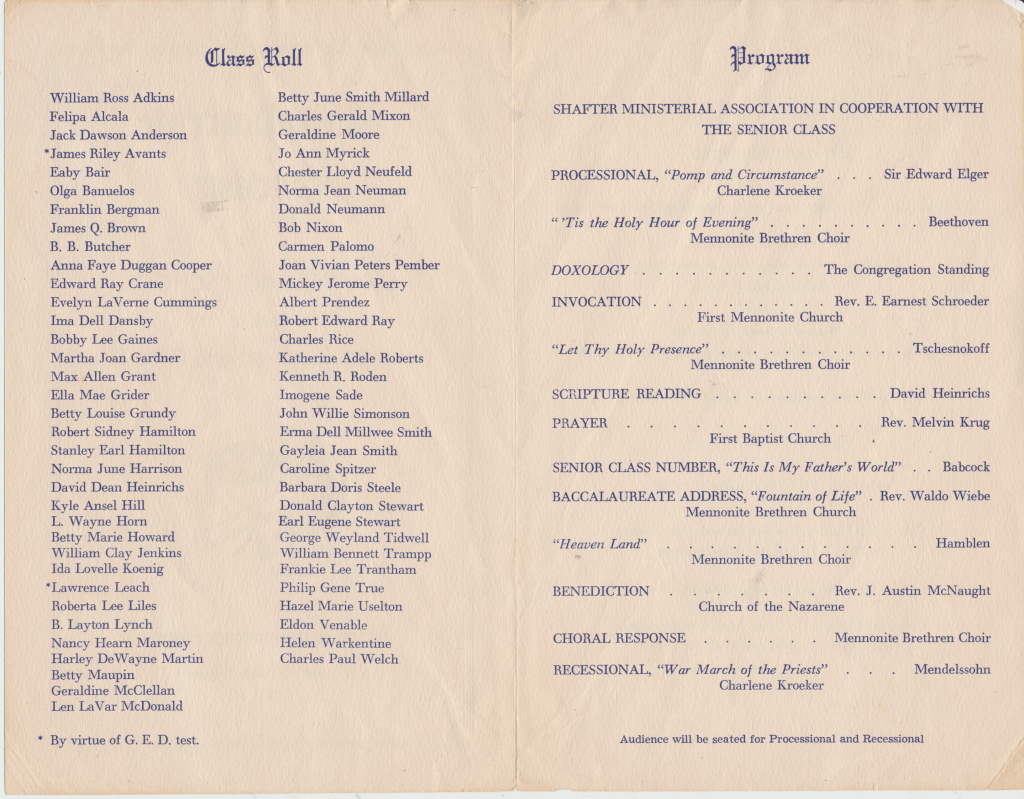
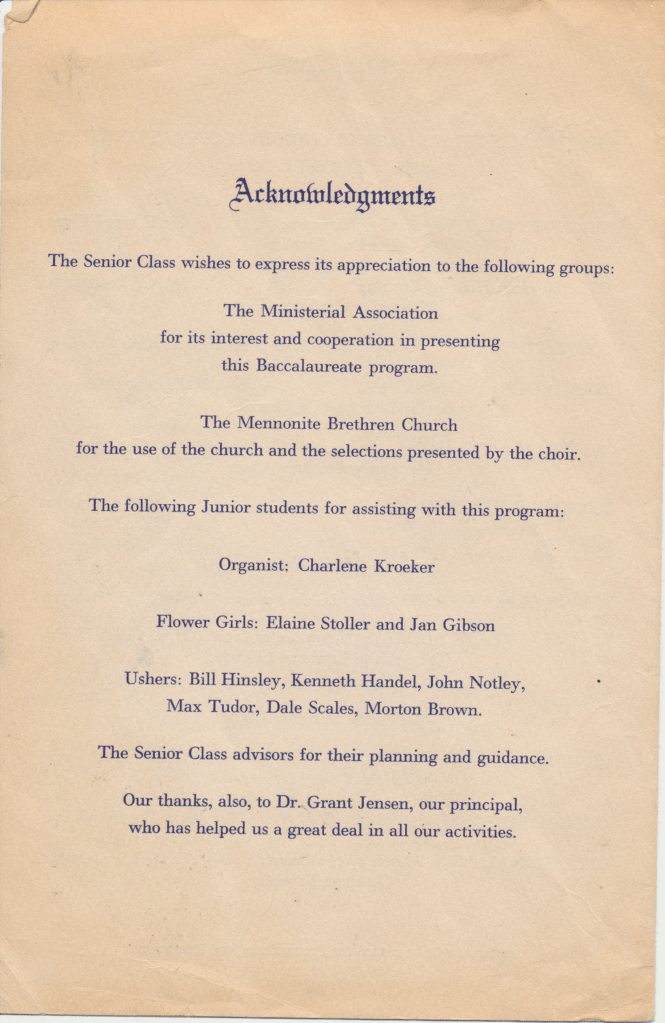
Note: My grandmother would attend church with the Mennonites when a church of our faith was not available. I have always been grateful to this Faith as a result. Where I currently live, lives a large population of them. I have nothing but respect for them. They are kind, humble, gentle and so pure in heart. And their music compares to that of any other Heavenly-type peace.
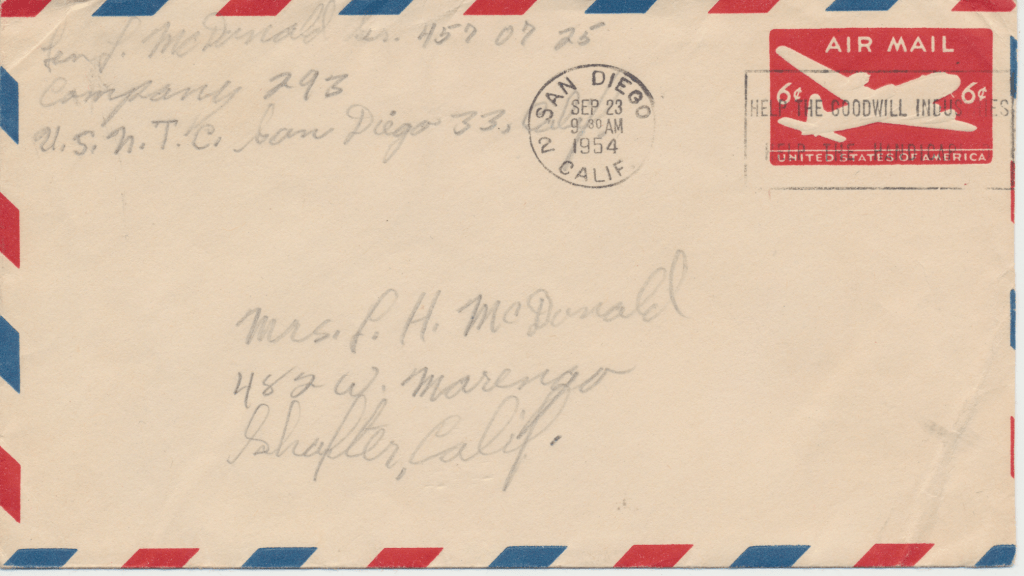

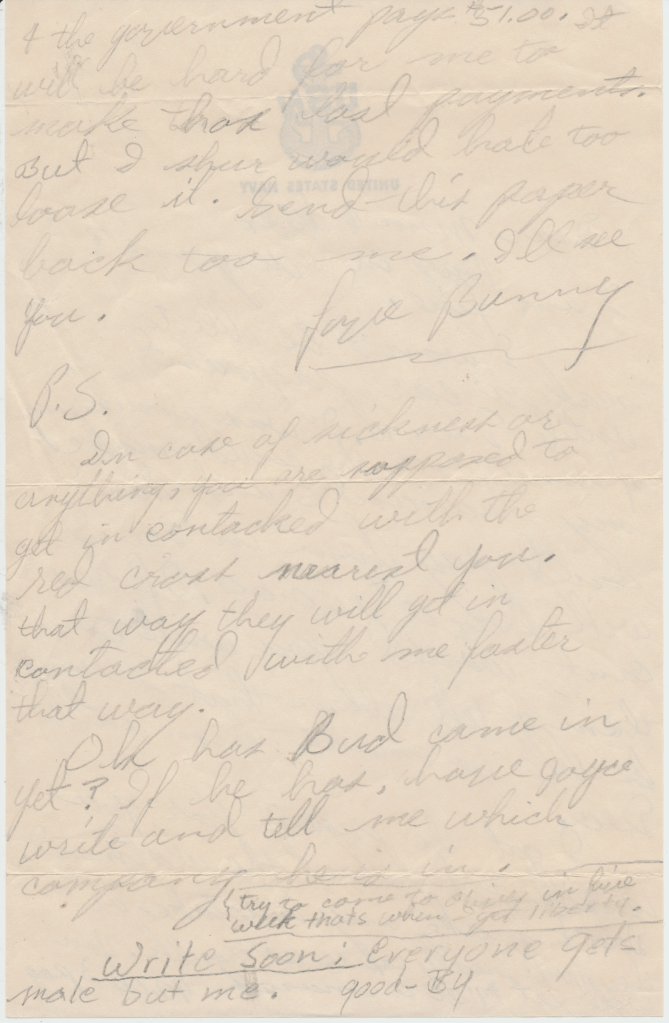





 Angel Prairee
