Her pictures put more words into them than any journalist could. I wanted to rearrange the setting of the format but found that she had arranged them just fine, so I decided to let her tell her story her in her original setting and then I would fill in the gaps with what could be found with facts.
She had a captivating personality that drew people around her. She was the type of person made you feel important just by her smile.
Her name was Mary Rita Faro. She was born on August 17, 1920 in Lawrence, Essex, Massachusetts to Silvestro Faro and Francesco Arazzi who were from Italy. She loved her father. It is evident in the photos.
In 1939 she became a student at Lawrence General Hospital for Nursing and entered the Navy. She graduated in 1942 as an Ensign.
She had a sweetheart named, Bill from at least 1942-1943. Her pictures do not indicate his last name nor what became of him. It would be interest to know more.
On September 17, 1944, in San Diego she married Lieutenant Commander Stephan Anthony Ferdinand. He was born in 1906 and died in 1972.
Mary later married Bertram E. Mackrell in Orange, California on January 11, 1975. She died on February 15, 2002 in Long Beach, California.
She was a Navy nurse during World War II. And she documented part of this adventure with her camera. It should be remembered and honored, just as she should be.
I became acquainted with her when I purchased her photo albums through an online store, eBay. The seller, Pat Adamek, told me about this when I explained my purpose in collecting these items. He was sure that I would find an interest in this and he couldn’t be more right. My dad was in the Navy and served in several places that she did. He was a patient at the same hospital she was a nurse. I grew up with an intense respect for the Navy.
My purpose here is to bring to light her life and celebrate this fine lady. Here’s to you, my friend!
I have also added a line on ancestry.com for better assistance in collecting more information on this group of people. Should more information become available it will be added.
May 19, 2023
It would be nice if I could present better information, especially given all of the extra hours devoted to looking – but sadly, I do not have more to offer other than more pictures – and speculations.
I am disappointed that so little remains – or that I am unable to see it, because, afterall, she was a NAVY NURSE during World War II! Why isn’t her name and photos splattered all over the internet??? Instead they are tucked away in small crevices of ancestry.com where I have started a family tree for her. Anyone can add to it. And this way, ancestry is able to add hints, thus helping me to gain additional information into her life.
May 22, 2023
Another trip to Tiajuana, Mexico. Fun with Mary Collins and the boys at Balboa Park and Zoo, the San Diego Yacht Club, Presidio Park, and La Jolla. Oh! And let’s remember their trip to Hollywood – la la la! I grew up in that area. My brother was part of that scene and so it was no big deal to me. But to these kids, being from small towns and small states so far away from home and a very big war going on – it was a big deal. For me, it was heavy traffic, smog, congestion, competition, heat, and did I say congestion and heat? Where I live now, the biggest congestion is Main Street on Saturday’s or between 3:30 when the Middle School is getting out and around 5:30 when everyone else is getting out. They complain about the heat but it isn’t any like what Southern California is in the summer.
It was World War II. She was young. She was adventurous. She was beautiful and she was single. The world was at her disposal. And she lived as if there was no tomorrow.
First Anniversary of WAVES
THE WHITE HOUSE
WASHINGTON
July 30, 1943
One year ago today the United States Navy opened to this nation’s patriotic womanhood an opportunity for service within its ranks. The wholly voluntary response came in such swelling volume as to constitute a ringing confirmation of the tenet that, in total war, democracy must be fought for and defended by all the people. Once again, the women of this free land stepped forward to prove themselves worthy descendants of those proud pioneer daughters who first nurtured freedom’s flame.
Thousands of fighting Navy men are now at battle stations because they were released form vital shore jobs by women within and wholly a part of the Naval Service. Other thousands will sail to meet the enemy as more women become available to take over these vital jobs ashore.
In their first year, the WAVES have proved that they are capable of accepting the highest responsibility in the service of their country. On behalf of a grateful nation, I offer birthday congratulations and a hearty “Well done”.
[signed]
Franklin D. Roosevelt
We have to remember that these were still soldiers in a war who were just having a good time on this particular day. And these were still nurses just having a good time on this particular day. What we are NOT seeing is the other side of the war. I do even know which of these young men made it through the war.
100 years of Navy medicine in San Diego
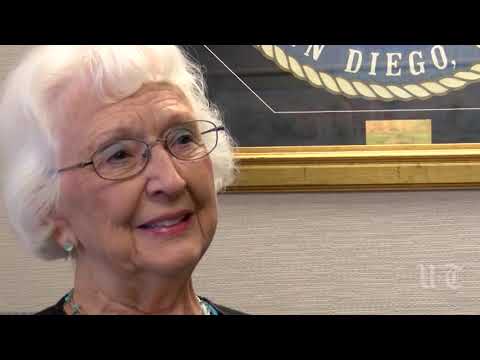
The 1917 war dispensary in Balboa Park has grown into a crown jewel of Navy medicine and is celebrating its centennial this year.
JULY 7, 2017 12:05 AM PT
One hundred years ago, according to Navy lore, the United States entered World War I and opened a troop training camp in San Diego, complete with a budding naval dispensary.
The site was Balboa Park, where buildings left over from a 1915 exposition were awaiting new uses.
The dispensary has grown into a crown jewel of Navy medicine and is celebrating its centennial this year.
It’s now a 6,600-employee economic powerhouse for the city. The hospital trains most of the Navy’s doctors, supplies medical staff for the battlefield and cares for 125,000 patients around the region.
That’s just one side of the story.
Another is that San Diego’s naval hospital was a major early marketing victory for the city’s business leaders, who were aggressively wooing the Navy Department around the dawn of the 20th century.
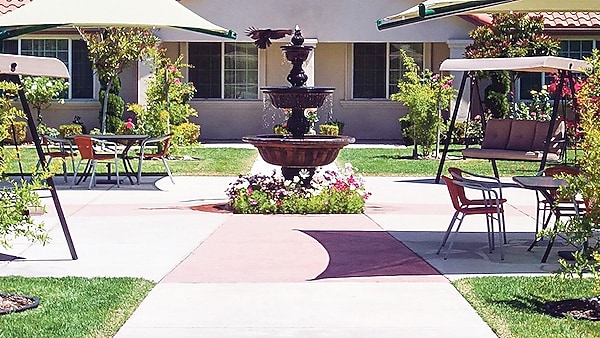
Villa Scalabrini
The upscale facility opens its doors as a warm, secure and loving home to the elderly in Sun Valley.
After 10 years of stagnant economic growth, city officials put on a hard sell — including weekly telegrams and letters to Navy officials back East, complete with handwritten notes about San Diego’s sunny weather forecast.
“The chamber of commerce hammered and hammered and hammered at the Navy Department and created quite an amazing relationship,” said historian Abraham Shragge, whose doctoral dissertation looked at the Navy and San Diego during that period.
RELATED: Navy baby ICU in San Diego: Hub for the Pacific »
RELATED: A medical ward for the modern battlefield »
“It’s not an exaggeration to call it a love affair,” he added. “They were very courtly to the Navy, and the Navy responded.”
A century later, that naval hospital is one of the largest U.S. military medical centers in the world.
“There is no place like this place. It’s huge. It takes care of an incredible number of patients,” said Harold Koenig, a retired three-star admiral was the San Diego hospital’s commanding officer in the 1980s and later became the Navy surgeon general.
Why isn’t the Balboa Park medical center a household name nationally — like Walter Reed in Maryland?
“It’s because we’re out here in the southwest corner of the nation,” Koenig said.
But, of course, that’s why the Navy chose San Diego. Those chamber of commerce dispatches about sunny skies paid off.
The Navy put its first flight school on Coronado in 1911, and Balboa Park was taken over as a World War I training camp by 1917.
1/21
The San Diego Regional Naval Medical Center is celebrating it’s 100th anniversary this year. (John Gibbins / San Diego Union-Tribune)

2/21
Kimberly Rowe, a research assistant in the Gait Lab at the Regional Naval Medical Center San Diego demonstrated how they use a system of sensors on a patient to visually analyze their gait. (John Gibbins / San Diego Union-Tribune)

3/21
Carol Devine, the executive assistant to the executive officer of Naval Medical Center San Diego takes a photograph of the tile work at a fountain at the old hospital which is now City property. (John Gibbins / San Diego Union-Tribune)

4/21
The courtyard behind the old Naval Hospital is a quiet place graced with a large fountain and large grassy areas. (John Gibbins / San Diego Union-Tribune)
5/21
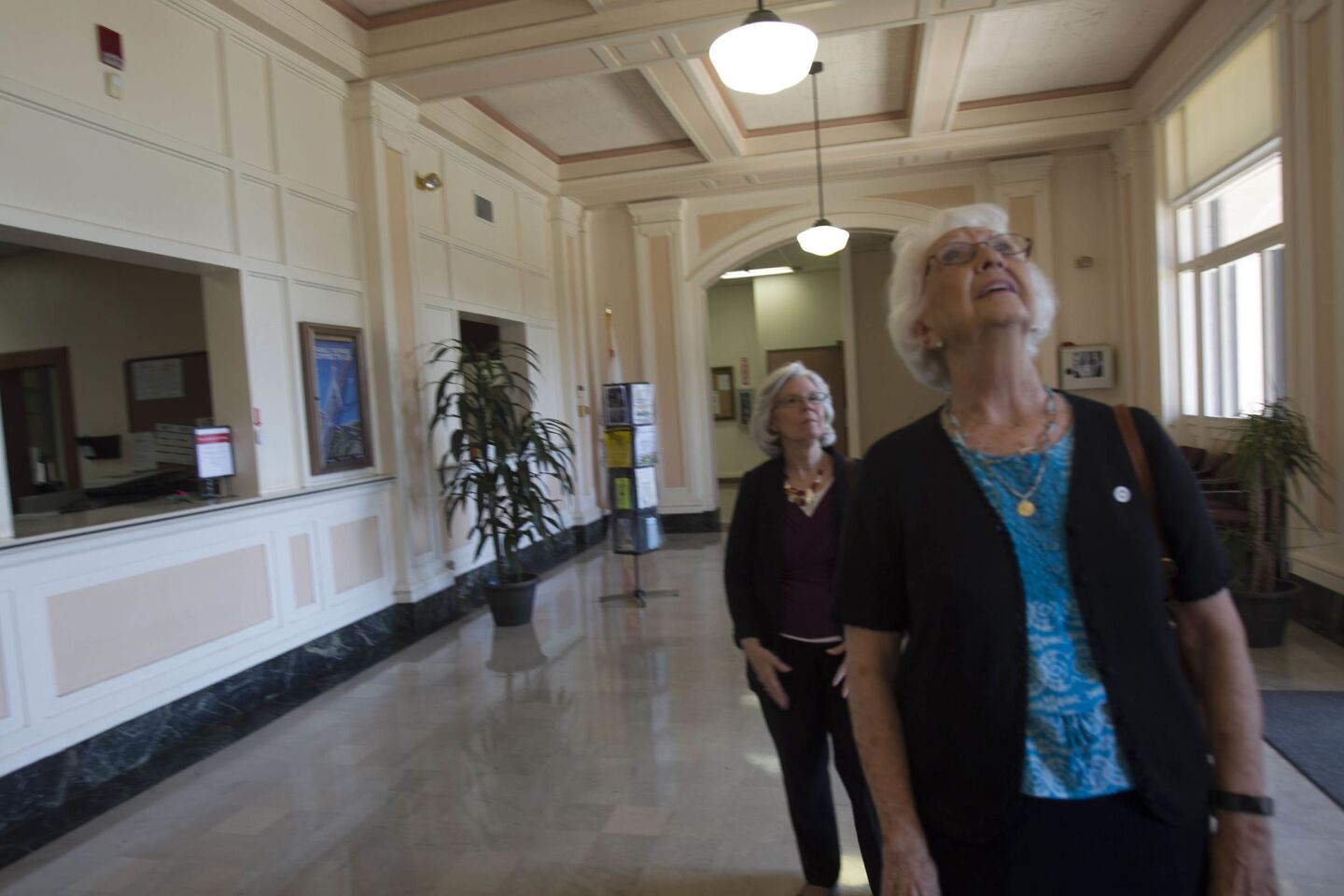
Donna McKenzie, front, and Carol Devine, rear, look around the lobby of the old Naval Hospital where they worked for a large part of their careers. They both are still working at the “new” hospital for the Commanding officer and the executive officer. (John Gibbins / San Diego Union-Tribune)

6/21
While it is now faded, the former “Pink Palace” as the old Naval Hospital was called, is still in use as offices for the San Diego Park and Recreation Department. (John Gibbins / San Diego Union-Tribune)

7/21
Captain Joel Roos is the Commanding officer of Naval Medical Center San Diego. (John Gibbins / San Diego Union-Tribune)
8/21
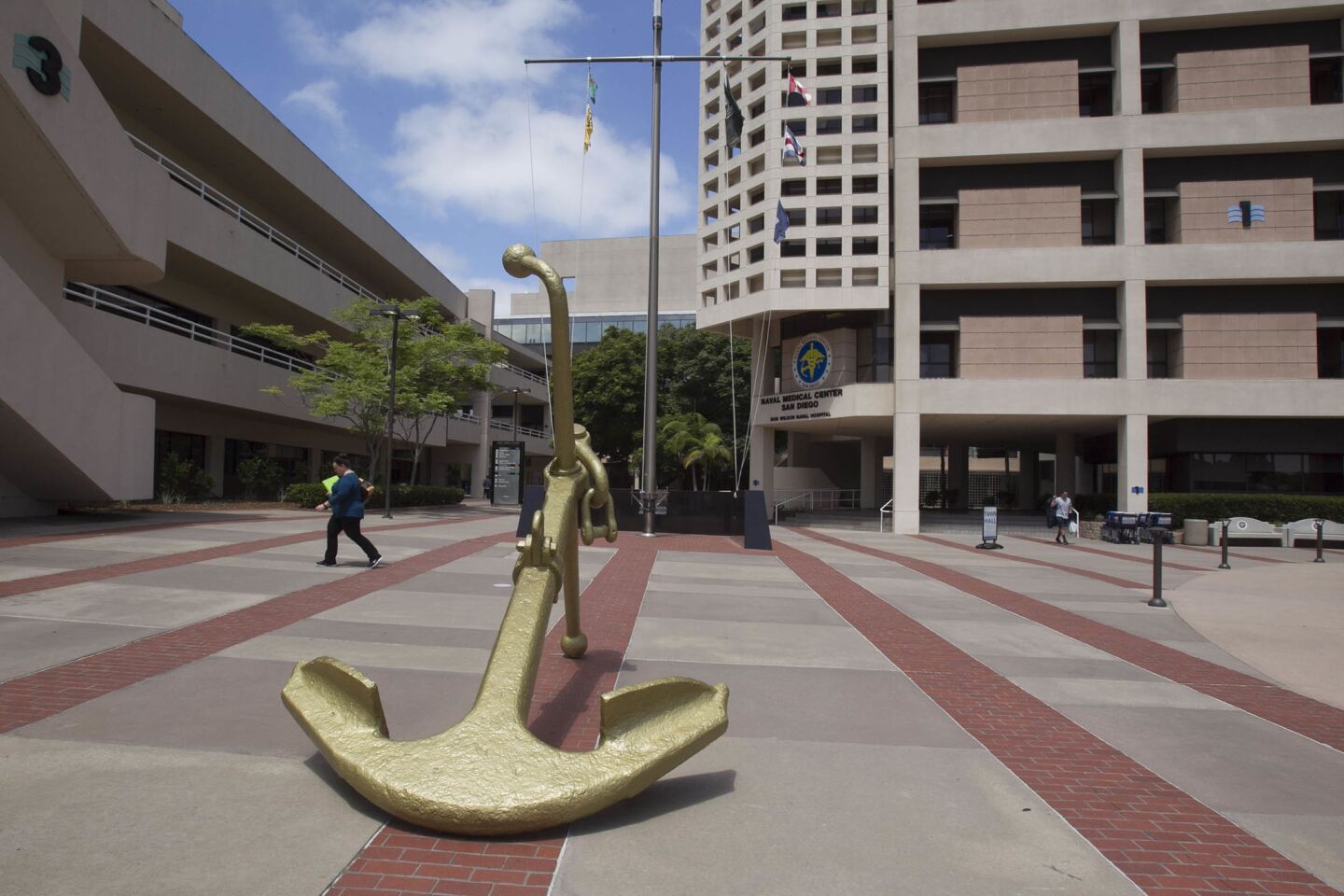
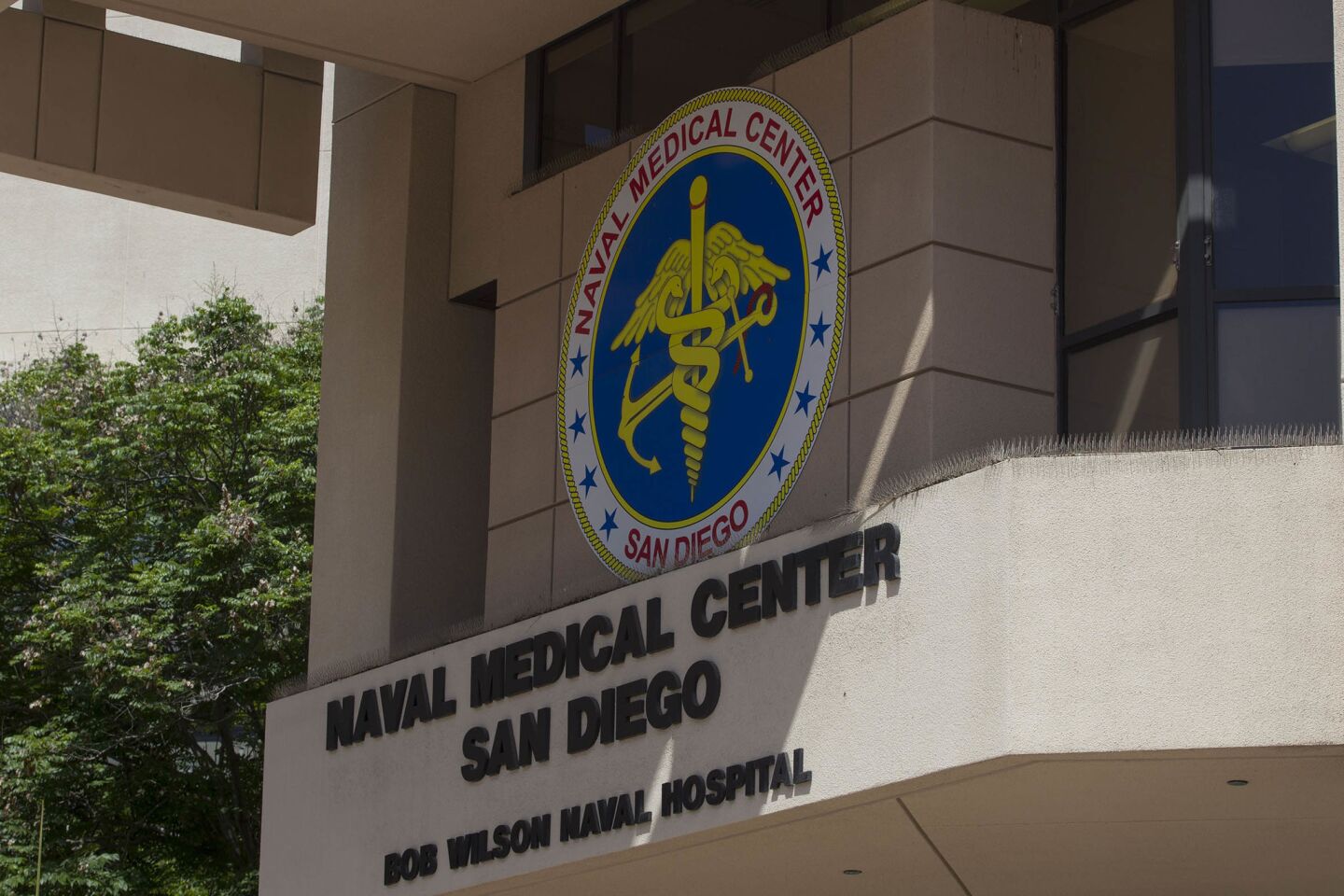
The entrance to Regional Naval Medical Center San Diego which is celebrating it’s 100th anniversary this year. (John Gibbins / San Diego Union-Tribune)

9/21
A training aid of the spinal column at the Naval Medical Center San Diego’s Bio Skills Training Center. (John Gibbins / San Diego Union-Tribune)

10/21
Sean Mertens, manager of the Bio Skills training center at the Regional Naval Medical Center San Diego shows training aids students can use while training there. (John Gibbins / San Diego Union-Tribune)

11/21
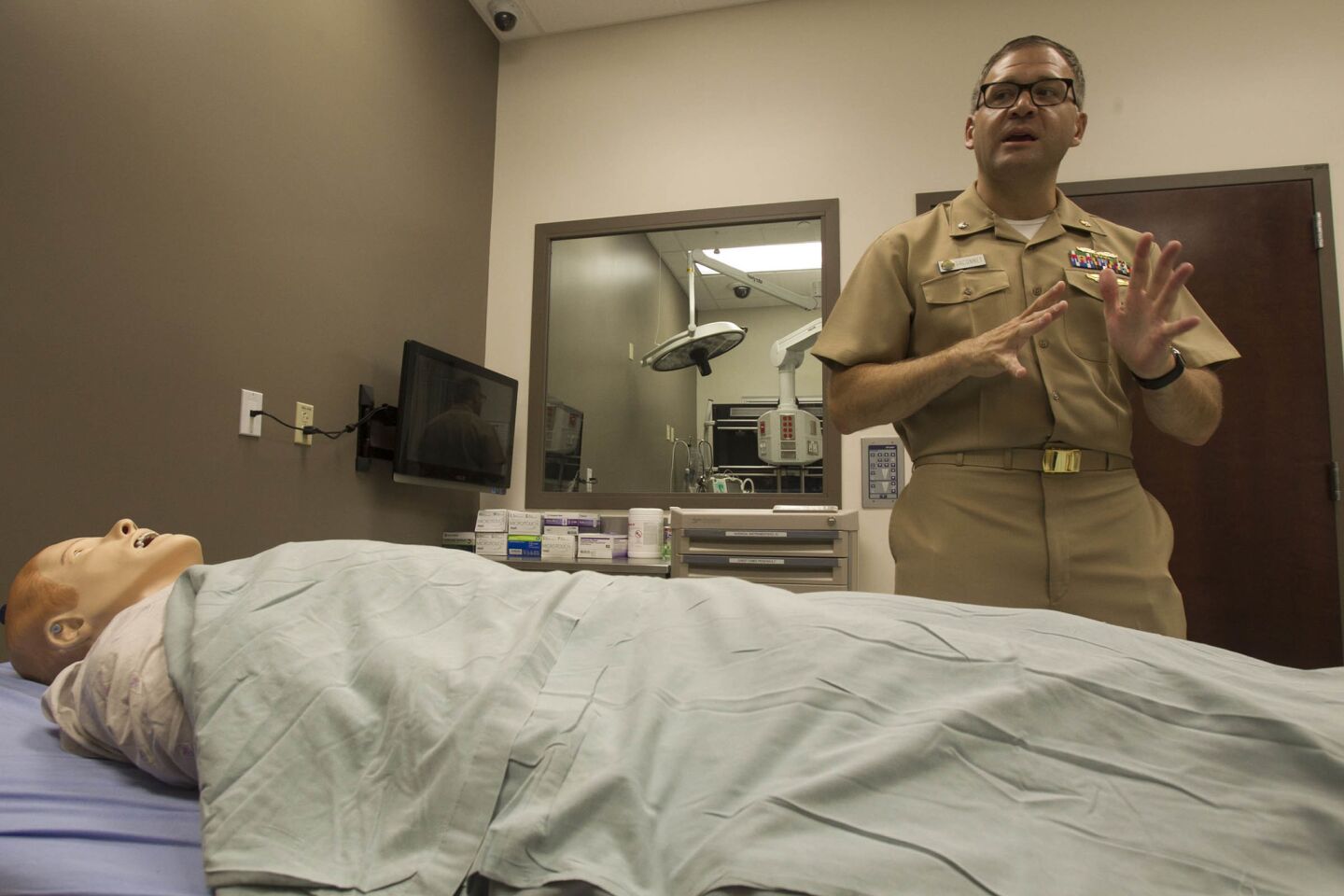
Cmdr. Cory Gaconnet a pediatric anesthesiologist at the Regional Naval Medical Center San Diego, demonstrated a training device that students use to teach hand-eye coordination that builds skills used during surgery. (John Gibbins / San Diego Union-Tribune)
12/21
Cmdr. Cory Gaconnet a pediatric anesthesiologist at the Regional Naval Medical Center San Diego, talked about the computerized robotic training dummies that talk, move and give feedback to physicians working with it. (John Gibbins / San Diego Union-Tribune)

13/21
The three year-old Kiendrebego twins Faith and Grace got a lift up to see a baby that was being tended to in the Neonatal Infant Care Unit where they spent the first few months of their lives when they were born prematurely. (John Gibbins / San Diego Union-Tribune)

14/21
The three year-old Kiendrebego twins Fait Juliet, foreground, and Grace Alice, rear, played with surgical masks in the Neonatal Infant Care Unit where they spent the first few months of their lives after they were born prematurely. (John Gibbins / San Diego Union-Tribune)

15/21
Parents Roland and Esther Kiendrebeogo, both in the Navy, hold their twin daughters Faith Juliet, on his lap, and Grace Alice on her lap in the Neonatal Intensive Care Unit where they spent the first few months of their lives three years ago. (John Gibbins / San Diego Union-Tribune)

16/21
Molds for prosthetic legs were on racks at the prosthetics lab of San Diego Naval Medical Center’s C5 ward, which was created in response to the grave wounds suffered by troops in Iraq and Afghanistan. C5 stands for Comprehensive Combat and Complex Casualty Care. (John Gibbins / San Diego Union-Tribune)

17/21
Research Physical Therapist Brittney Mazzone fitted sensors to Adam Yoder, a Biomedical Engineer who was demonstrating how they used a treadmill to analyze patients. (John Gibbins / San Diego Union-Tribune)

18/21
Brian Zaleski, the head of the prosthetics department at Naval Medical Center San Diego showed the variety of prosthetics his lab has fabricated for patients at the hospital. (John Gibbins / San Diego Union-Tribune)

19/21
Dave Rayder, left, a Vietnam Army vet and amputee who works as a peer counselor at the hospital talked with patient Jim Collins, a former Marine who lost his leg in the Vietnam war. (John Gibbins / San Diego Union-Tribune)

20/21
Dave Rayder, a Vietnam vet and amputee, demonstrates how the gait lab analyzes a patient’s gait with the aid of reflective sensors placed on the body are recorded and analyzed. Ryder volunteers as a peer counselor at the hospital. (John Gibbins / San Diego Union-Tribune)

21/21
Dave Rayder, a Vietnam vet and amputee, demonstrates how the gait lab analyzes a patient’s gait with the aid of sensors placed on the body are recorded and analyzed. Ryder volunteers as a peer counselor at the hospital. (John Gibbins / San Diego Union-Tribune)
As for medicine, San Diego’s warm air had already earned it a national reputation as a health retreat for people with asthma and tuberculosis.
“They sold the weather relentlessly,” Shragge said.
Build-up for the ‘Great War’
The Navy set up shop in a building once used as the park police headquarters.
It was called the War Dispensary. Initially there were two wards of 25 beds each, with a surgical ward in what’s currently the Pepper Grove playground.
Between May 1917 and December 1918, the end of the war, the Dispensary treated 9,997 patients and grew to 800 hospital beds.
By now, the Navy saw the center’s worth.
A year later, Congress authorized the Navy to accept a 22-acre parcel at the park’s Inspiration Point for construction of a new naval hospital.
Built in the Spanish Colonial style that had become the Balboa Park trademark, the hospital was known unofficially as the “pink palace” due to the hue of its stucco.
The Navy added construction projects over time. The hospital became a collection of buildings loosely organized around a central courtyard, with fountains and lawns for patients and workers to enjoy. The complex was in operation for 65 years, through World War II and the Korean and Vietnam wars.
People who have worked there fondly remember the place, with its big open windows and breezy views of San Diego Bay.
“There were things that we don’t have here now — a corps school where we trained the young corpsmen. And we had a gas station and a little store. And we had a golf course and tennis courts,” said Donna MacKenzie, who started at the Navy hospital in 1971 and is the longtime executive assistant to the commanding officer.
“You could just live your life there. It was a family situation.”
WWII: Taking over the park
When World War II arrived, the San Diego naval hospital shifted into high gear — as did the rest of the city’s wartime industry. The Navy spread out to occupy most of the park’s central buildings, and the military space was temporarily renamed Camp Kidd.
In addition to medical work, the Navy used the park for training and barracks.
By January 1942, a month after the Japanese attacks in Hawaii, the first Pearl Harbor victims were brought to the San Diego naval hospital for treatment.
At that point, it consisted of 56 buildings with 1,424 beds and 728 staff members.
In total, more than 150,000 patients were treated at the hospital between 1941 and 1945.
Survivors of some of the bloodiest Pacific campaigns — Okinawa, Iwo Jima, Tarawa — were transported to San Diego for care.
At war’s end, then-Secretary of the Navy James Forrestal issued a commendation to the Navy Hospital Corps.
“Out of every 100 men of the United States Navy and Marine Corps who were wounded in World War II, 97 recovered. That is a record not equaled anywhere anytime,” he wrote.
The park was largely returned to the city in 1946. However the Navy hospital continued on in the pink palace at Inspiration Point and eventually added more buildings down the rear slope into Florida Canyon.
More growth
In 1950, the Navy built a modern, multistory structure facing Florida Drive to house 1,000 beds and, in 1957, a surgical unit. This nondescript, beige building became the heart of the medical center.
The hospital administration continued to occupy the pink palace while patients reported to the new building, which still stands and is referred to simply as Building 26. The latter building regained importance during the Iraq and Afghanistan war era when it was renovated as a barracks for gravely wounded troops living at the hospital for long-term convalescence.
By the time the Vietnam War rolled around, the San Diego naval hospital had become the largest U.S. military medical center in the world, according to the Navy Bureau of Medicine and Surgery’s historian.
Notably, the medical center had to adjust its services to meet the issues of the day.
For instance, in March 1973, dozens of U.S. former prisoners of war in Vietnam were brought to the Balboa Park hospital upon returning home. It was sometimes the scene of the initial reunion with their families.
“I remember right where I was standing, watching those POWs coming off that bus. The bus drove up, and as many staff as were available were standing there to greet them,” said MacKenzie, the longtime employee.
“They called their names and they got off, and their families met them. It was awesome. They stayed with us until they were well enough to go home with their families,” she said. “Things like that stick in your mind and make your job worthwhile.”
Hospital workers in San Diego were assigned to collect data from former prisoners of war and develop a comprehensive health plan for them. The Navy established a Center for POW Studies in Point Loma.
In another sign of the times, the Navy’s first rehabilitation programs for drug addicts was created at the then-Miramar Naval Air Station. In July 1971, eight sailors and Marines who had become heroin addicts in Vietnam were the first to join.
A modern hospital
As the nation shook off the Vietnam War, Navy officials decided it was time for a new hospital in San Diego.
Executing on that vision was not an easy task.
The civic debate back then rivaled the fury of today’s Qualcomm Stadium replacement battle.
The Navy would have perhaps preferred a location closer to San Diego Naval Base or the Navy and Marine Corps recruit depots of the day. But there was no available land, said Koenig, who was the medical center’s commanding officer from 1985 to 1987, just before the new hospital opened.
“There were all sorts of places proposed to put the new hospital. Eventually it came down to Florida Canyon, which had been left in its natural state, as the best place,” Koenig said.
There was a proposal to build in downtown San Diego near City College. Another was for Market Street just east of Interstate 15, an area dubbed “Helix Heights” in pitches. The voters approved the latter project, but the Navy rejected it.
Some open-space advocates fought the Florida Canyon site. The Save Balboa Park Committee bemoaned the development of those canyonlands, instead wanting to “reunite” the east and west sides of the park. And in September 1979, a public vote on Proposition D fell short of the two-thirds needed to approve a land swap between the Navy and the city.
In the end, the Navy had federal muscle. Navy brass asked the U.S. Justice Department to condemn the land it was targeting.
In March 1980, a federal judge awarded possession of about 36 acres of Florida Canyon to the Navy for construction of a new hospital.
Two years later, the San Diego City Council approved a deal to give those 36 acres of Florida Canyon land to the Navy in return for 34 acres of the old hospital site in Balboa Park and $6.86 million to cover demolition of several buildings.
For the Navy, what was at stake was bringing its West Coast hub into the modern age of medicine.
“(The old hospital) was actually getting to the point where it was dangerous,” Koenig remembers. “The structural materials were just deteriorating over so many years.”
It was also a logistical headache. For example, babies born in the basement operating rooms had to be transported up six floors via elevator and then through outdoor courtyards and across the street to get to the nursery, Koenig said.
Also, he added, the idea of wards to separate infectious-disease patients was antiquated.
“It was a very old design, with the courtyards. It had been built to bring down the spread of infection. There was the ward for pneumonia, the ward for meningitis and so forth. They tried not to mix the patients and they tried to have distance between them,” Koenig said. “Whereas the new modern hospitals were quite a bit different.”
The construction lasted years. In 1988, the new $382 million naval hospital was dedicated. Its front entrance came from Florida Drive, which had been made into a significant roadway.
Eventually, all but three of the old Navy hospital buildings on park land were demolished. What’s left are the old administration building, a library and the chapel — now the Veterans Museum at Balboa Park.
Thus the San Diego naval hospital entered the era that would bring the Persian Gulf War and, later, the post-9/11 conflicts. In any future Pacific conflict, the Balboa complex is designated to receive the bulk of the wounded.
What’s next
What does the future bring? The “new” hospital will be 30 years old next year.
“I remember walking into it when it was brand new. I was a third-year medical student. I bought my first uniform here, within a month of its opening. Yeah, I’m an old guy,” joked Capt. Joel Roos, the current commanding officer of the medical center. “At some point, it will achieve end-of-life expectancy. Then you start talking about new facilities, and whether that’s the same location or different location — don’t know.”
Roughly $250 million in modernization work is scheduled for the Balboa Park medical campus. The schedule includes retrofitting buildings to meet current earthquake standards and upgrading the electrical system to feed the power needs of modern medical equipment.
Another effort is to offer more services in 10 branch clinics around the county — where access is easier than at the hospital complex, where it’s famously hard to find parking.
While there’s 100 years of architectural history to remember, Roos said what’s really important is the work that’s taken place there.
“Doesn’t matter if you go back to 1917 or now, the people who work here are here because they want to be, whether they are civilian or military,” he said.
“It’s a privilege to take care of these patients,” Roos added. “Frankly, if you are going to put your life on the line, you deserve an organization behind you to take care of you.”
***
Typical day at San Diego Naval Medical Center
8,200: prescriptions filled
5,466: medical visits
1,013: dental visits
150: daily overnight patients
625: immunizations
204: emergency department visits
255: pairs of eyeglasses made
50: operating room cases
53: new patients admitted
9: babies delivered
***
Navy medicine in San Diego, an early history
April 1917 – The U.S. declares war against Germany. The Navy responds by recruiting hundreds of physicians, dentists, and nurses and thousands of hospital corpsmen.
Spring 1917 — Navy takes over vacated grounds of the Panama-California Exposition in Balboa Park as a training camp for sailors bound for the “Great War.”
The Navy Medical Department takes over former park police headquarters for training camp medical facility. Sometimes referred to as the War Dispensary, it includes two 25-bed wards. A separate surgical ward went in what’s now the park’s Pepper Grove area.
May 1917 to December 1918 – The Dispensary treats 9,997 patients: 91 were invalided from service and 63 died. Facility has over 800 hospital beds.
May 1919 — Dispensary is officially redesignated as Naval Hospital San Diego.
July 1919 — Congress authorized the Navy to accept a tract of land at Balboa Park’s Inspiration Point at no cost for construction of a new naval hospital. Original property consisted of 22 acres.
March 1922 — Construction of new naval hospital is complete at a cost of $242,515.
August 1922 — New Naval Hospital San Diego is placed into commission. By the next year, the average daily patient count is 400.
1926 — Naval hospital acquires an additional 5 ½ acres of land.
1928 — North ward building, laboratory, X-ray building, nurses quarters, hospital corps quarters and school are completed. Capacity increases to 1,035 beds by the next year.
1937 to 1940 — Naval hospital acquires another 48 ½ acres of land.
December 1941 – Japan attacks the Pacific Fleet at Pearl Harbor in Hawaii.
January 1942 — First victims of the Pearl Harbor attack are brought to the San Diego naval hospital for treatment. At that point, it consists of 56 buildings with 1,424 beds and 728 staff members.
1941 to 1945 — During World War II, more than 150,000 patients are treated at the hospital, including over 23,000 neuropsychiatric patients.
1942 — Naval hospital acquires an additional 32 acres of land.
December 1942 — First WAVES, or Women Accepted for Volunteer Emergency Service, report to the naval hospital.
December 1942 – The hospital newspaper, The Dry Dock, is established and would remain in circulation until July 1994.
December 1943 — The first casualties from the Battle of Tarawa arrive for treatment.
September and October 1944 — Casualties from Guam and Peleliu arrive for treatment.
March and May 1945 — Casualties from Iwo Jima and Okinawa arrive for treatment.
August 1945 — Hospital cares for an average 8,096 patients a month.
1945 — The Navy Hospital Corps receives commendation from Secretary of the Navy James Forrestal for World War II service: “Out of every 100 men of the United States Navy and Marine Corps who were wounded in World War II, 97 recovered. That is a record not equaled anywhere anytime.”
1950 to 1953 — Korean War. Naval hospital treats more than 90,000 patients.
September 1950 — Pfc. Peter Emeterio becomes the first casualty of the Korean War treated at the naval hospital.
June 1959 — The Naval Medical Neuropsychiatric Research Unit is established in San Diego. Unit would later develop into today’s Naval Health Research Center.
1964 to 1975 — Vietnam War. San Diego’s naval hospital is the largest military medical facility in the world. It serves as a special treatment center for plastic surgery, neurosurgery, thoracic and cardiovascular surgery, oncology, tuberculosis and radiation therapy.
1964 – Lt. Charles Klusmann, a Navy pilot who spent three months in captivity in Laos, is treated at the naval hospital.
October 1969 – A tissue bank is established at the Naval Hospital San Diego, owing to the demand for human skin and bones needed to treat Vietnam casualties.
1971 — First Navy program offering rehabilitation for drug addicts was created at Miramar Naval Air Station. In July, eight sailors and Marines who became heroin addicts in Vietnam were first to join.
July 1972 — Naval Hospital San Diego becomes the Naval Regional Medical Center.
July 1972 – Center for POW Studies is established in Point Loma to collect data from former prisoners of war and develop a comprehensive health plan for them.
March 1974 – Navy chooses site for new Naval Hospital San Diego, still the world’s largest military medical facility.
1977 – The Navy negotiates with the city to exchange land in the existing naval hospital complex for nearby facilities.
1980 – Congress appropriates $293 million to build a Navy hospital at the current site along Florida Drive.
January 1988 – The new hospital was commissioned, marking the end of the original location in Balboa Park.
Following a campaign by San Diego veterans, the old chapel was preserved for use as a museum.
Sources: Navy Bureau of Medicine and Surgery and San Diego Union-Tribune archives
https://www.sandiegouniontribune.com/military/veterans/sd-me-navy-medicine-20170707-story.html
Samuel graduated from Iowa State University in Ames, Iowa. He served in the U.S. Navy during World War II. He worked as a sales agent for an automotive and equipment parts company.
He married Joyce Wood in 1944. Samuel is survived by his beloved wife, Joyce of 67 years; two daughters, Debi Ford and Martgaret Ann Shiffler; and one son, Samuel F. Shiffler, Jr.
A memorial service will be held on Friday, December 2, 2011 at 11:00 a.m. at the Community Congregational Church, 103 Pawnee, Manitou Springs, Colorado 80829.
May30, 2023
This next section focuses on Mary’s training. True to my word, I am following her photo album as she put it together. The dates are not consistent. However, this is her album and I am following her lead. As facts become available, they will be inserted for clarity.
JUNE 21, 2023
Graduation Ceremonies and off to Boston Hospital. Compare the hospital with today.
June 25, 2023
Christmas Parties for staff and children 1939, 1941, and 1942. Farwell Party 1942. Formal Dance 1942. And weddings!
According to the same record, Douglass Neilson Howe, Sr was born February 1, 1921 in Woburn, Middlesex, Massachusetts. He died May 3, 2014. They were married in 1943 in Andover, Massachusetts. At the age of 21, Doug, as he was commonly known, was drafted into WW2. Below is his draft card.
June 29, 2023
Steven’s Pond-North Andover 1943, Hampton Beach 1942-notice the heals she is wearing AT THE BEACH! Cobbets’ Pond, a cruise on the S.S. Steel Pier, horse riding at the Stagecoach Riding Academy, Arm & Navy Day, Rockingham Racetrack. And pearls on the beach! What WERE they thinking?
Born in Toronto, Ontario, Canada. His sister was Ruth Atkinson Ford. Ted Atkinson as a child emigrated with his family across the border to upstate New York. [1] He began his career in thoroughbred horse racing in 1938 and first gained national recognition in 1941, when he rode War Relic to an upset win in the Narragansett Special over the 1941 U.S. Triple Crown winner Whirlaway. For 12 of his 21 years in the sport, Atkinson was contract rider for the wealthy New York City Whitney family’s Greentree Stable. In 1944, he was North America’s leading jockey in both number of wins and money earned. He repeated the feat in 1946, when he became the first rider to achieve purse earnings of more the $1 million in a single season.
Riding Greentree’s colt Capot, Atkinson just missed winning the U.S. triple Crown in 1949 when he finished second in the Kentucky Derby then won both the Preakness and the Belmont Stakes. Capot shared Horse of the Year honors with Coaltown, after beating the older horse in the Pimlico Special. Atkinson was also the jockey for all of Hall of Famer Tom Fool‘s races, guiding the colt to a perfect season of 10 wins in 10 starts, including the New York Handicap Triple and winning the Horse of the Year honors in 1953.
In 1957, Ted Atkinson was voted the George Woolf Memorial Jockey Award and that same year became the first active jockey elected to the National Museum of Racing and Hall of Fame. He was then invited to appear on the CBS television’s The Ed Sullivan Show. In an article on jockey Eddie Arcaro, TIME magazine wrote that: “He [Arcaro] also gives a large share of credit to gentlemanly Jockey Ted Atkinson, who helped raise the standard of sportsmanship on New York tracks.”[2][3]
Following his retirement in 1959 as a result of a back injury, Atkinson became a racing official and served as State Steward in Illinois from 1961 until 1976.
Atkinson, who had been fighting a lengthy cancer-related illness, died at his home near Beaverdam, Virginia after several strokes, a few weeks short of his 89th birthday. (https://en.wikipedia.org/wiki/Ted_Atkinson)
July 2, 2023 Lawrence, Massachusetts, Salisbury Beach, Methuen, Massachusetts anc SNOW! She lives a high adventure lifestyle. She had some wonderful memories to look back on later in life. One could be envious of all that she was able to encounter OR be appreciative that a fellow sister had those opportunities. I, personally, do not know enough about her life to judge. I have no idea of what her earlier years were like or, for that matter, what her latter life was like. It could very well be that this was just a small window in time for her. However, I am so thankful for the opportunity to put this together for her.
July 14, 2023
The mysterious and HANDSOME Bill! Trying all sorts of avenues to find out who he was, what happened to him, and the rest of the story. Stay tuned for more. This story isn’t finished. Then there is Christmas 1942 with Jackie and Patsie, two more mysteries that I am hoping will come to light. In the meantime, I will continue to present what I have and continue to look for more on these fine people who sacrificed so much for us today.
July 15, 2023
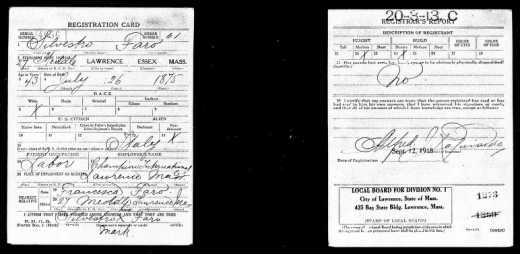
Last night I found the obituary for Mary’s SISTER! Yes! I was not aware that she even had siblings. Now we know. This will open the door for better labeling of the pictures. I found the original entry of Dorraddia or Dorothy’s birth entry into the Massachusetts’s Vital Records as well as the Registration for the Draft for World War I. Those, along with the obituary have been included as well as the Social Security Registration.
In doing this, I have found the census and phone directories to be particularly helpful; the older ones at least. The online census allows us to click on the other family members to retrieve information about them and their families when they are not related directly.
In my case, being sick was a blessing in disguise.
Dorothy Rozzi Obituary
METHUEN — Dorothy R. (Faro) Rozzi, 91, of Methuen, passed away Monday, July 6, 2009 at the Methuen Health and Rehabilitation Home.
She was born in Lawrence and was the daughter of the late Silvestro and Francesca (Arizza) Faro. Dorothy was raised and educated in Lawrence. She had lived in Methuen for the past 30 years and also spent time in Florida during the winter. Dorothy had lived at the Cedars Home in Methuen for many years where she enjoyed volunteering and coordinating many events and activities.
She worked for over 26 years at the former Ludington Shoe Factory in Lawrence where she retired as a supervisor.
Dorothy was predeceased by her beloved husband, Rosildo J. Rozzi with whom she had shared 49 years of marriage. She was also predeceased by her brothers, Samuel and John Faro; and her sister, Mary McKrell. She is survived by her son, Steve Rozzi and his wife Maryann of Como, Colo.; daughter, Florence P. Skeirik and her husband Edward of Methuen; grandchildren, Kimberly Skeirik of Methuen, Kenneth Skeirik and his wife Heidi of Haverhill and David Skeirik and his companion Anna D’Amato of Methuen; and a very special great-granddaughter, Kendra Faye Skeirik of Haverhill. There are also many nieces and nephews.
ARRANGEMENTS: Family and friends may call on Thursday, July 9, 2009 from 5 to 8 p.m. at the Cataudella Funeral Home, 126 Pleasant Valley St., Methuen. Funeral Mass of Christian burial will be celebrated at 9 a.m. on Friday, July 10, 2009 at St. Monica’s Church, Methuen. Interment will follow in Elmwood Cemetery, Methuen. Memorial donations may be made in Dorothy’s memory to Holy Family Cancer Center, 70 East St., Methuen, MA 01844. For directions and condolences, please visit our online Web site at www.cataudellafh.com.
| Name | Dorothy Faro[Dorathy Faro] |
|---|---|
| Age | 21 |
| Estimated Birth Year | abt 1919 |
| Gender | Female |
| Race | White |
| Birthplace | Massachusetts |
| Marital Status | Single |
| Relation to Head of House | Daughter |
| Home in 1940 | Lawrence, Essex, Massachusetts |
| Map of Home in 1940 | Lawrence, Essex, Massachusetts |
| House Number | 172 |
| Inferred Residence in 1935 | Lawrence, Essex, Massachusetts |
| Residence in 1935 | Lawrence |
| Sheet Number | 14B |
| Occupation | Packer |
| Attended School or College | No |
| Highest Grade Completed | High School, 2nd year |
| Hours Worked Week Prior to Census | 40 |
| Class of Worker | Wage or salary worker in private work |
| Weeks Worked in 1939 | 50 |
| Income | 850 |
| Income Other Sources | No |
| Neighbors | View others on page |
| Household Members (Name)AgeRelationshipSalvester Faro63HeadFrances Faro60WifeSalvatore Faro27SonDorothy Faro21DaughterJohn Faro32SonFlorence Faro26Daughter-in-lawSidney Stevenson35Brother-in-law | |
July 16, 2023
And thus ends the FIRST VOLUME in the exciting life of Mary Faro. Coming next is her wedding. IF ANYONE READING THIS HAS ANY KNOWLEDGE OF THE HISTORY OF THESE PICTURES, PLEASE CONTACT ME AT: mcdonaldkl@msn.com. Subject line: Mary Faro, Naval Nurse.
SEPTEMBER 16, 2023
Marriage to Lieutenant Commander Stephen Anthony Ferdinand on September 17, 1944 in San Diego, California. He was born December 6, 1906 and died 19 August 1972. As of today, I know that he had a previous wife and family, of which I will add more information as it becomes available. I believe that he was a pharmacist with the Navy.
In the early 1900’s Mary Carpenter Yawkey, who lived in Saginaw, Michigan, started visiting her daughter in San Diego and then lived with her during the last few years of her life. At that time Mt. Helix was barren, void of trees, and completely undeveloped, but according to Cyrus, his mother “loved to ascend to the summit and look upon the beautiful panorama of mesa, hills and sea spread out before her. It was her favorite drive, and frequently, in her later years, with a reverent and true love of nature, she came up the steep, winding trail where she might see the sunset in all its glory from the high summit.”
Visionary Families
Fletchers & Yawkeys
After the death of Mrs. Yawkey, three prominent and highly regarded families, the Whites, the Yawkeys and the Fletchers, shaped the vision for the Park. In 1917, Colonel Ed Fletcher, a successful businessman and visionary developer who owned the summit of Mt. Helix suggested that Easter sunrise services be held in the natural “bowl” on the eastern face of the mountain. Since then, the Easter sunrise service, which is rotated among various Christian churches in the area, has been held there every year. It is considered the second oldest continuous Easter sunrise service in the country.
Source: https://www.mthelixpark.org/history-of-mt-helix-park
Thank you, Mary for allowing me to share a small part of your tremendous life~
 Angel Prairee