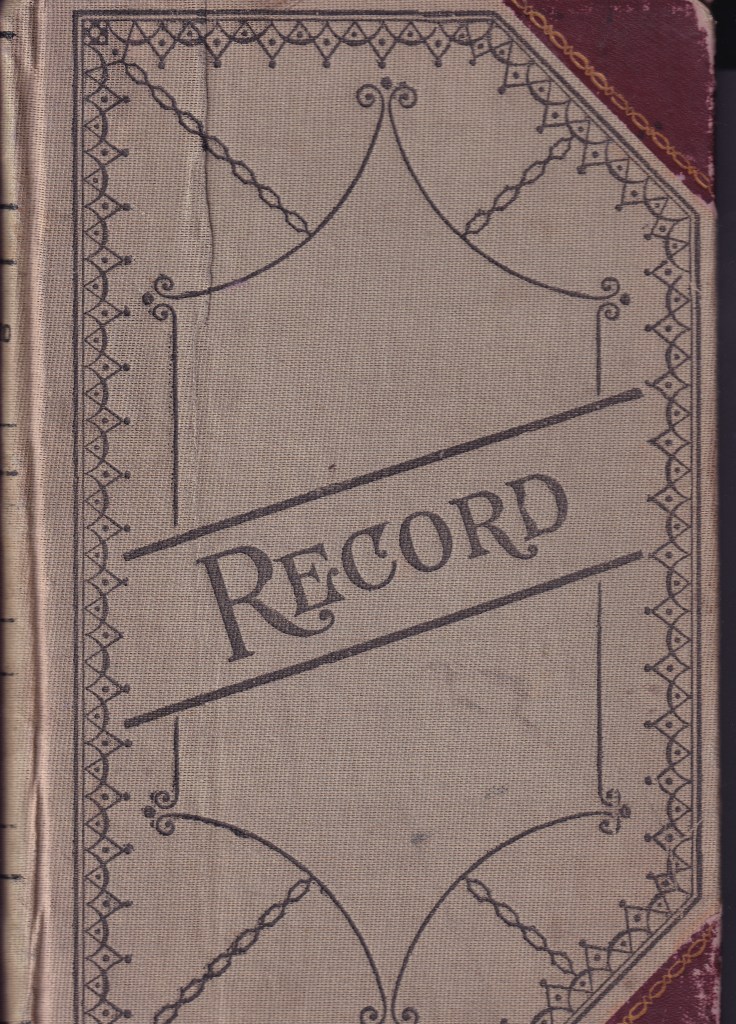
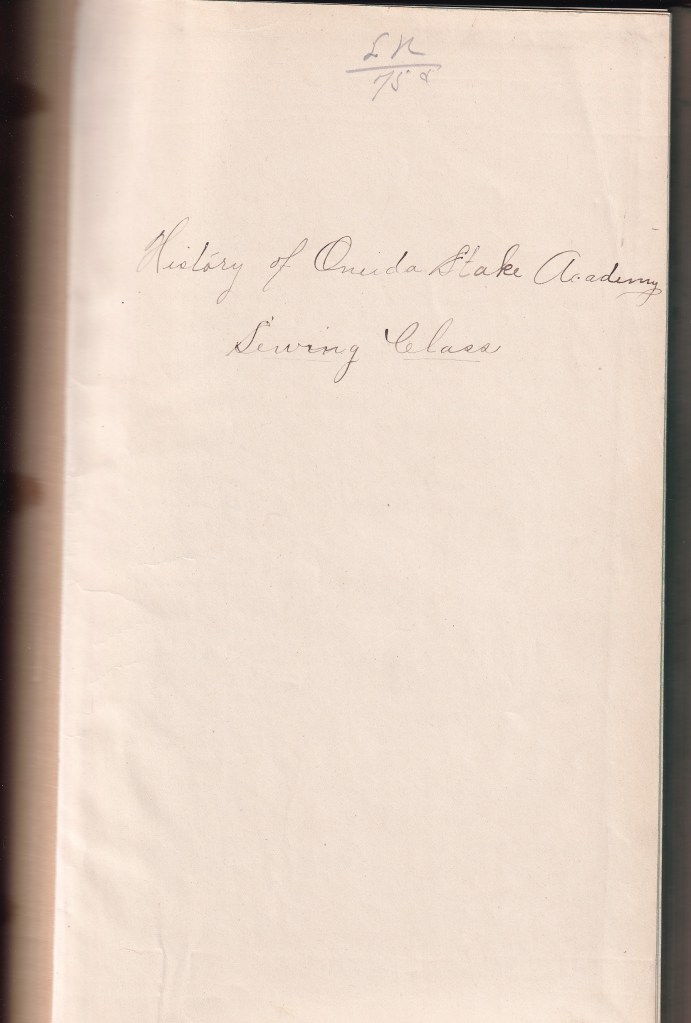
I found this original record in a thrift shop and decided to transcribe it, preserving the integrity of each historian as carefully as possible. It is with interest to note that due to the efforts of the teacher, Miss Anna Frost, the enrollment increased from 22 pupils in 1904 to over one hundred by the end of the term in 1907. As a result, a new building was erected from September 24, 1906 with classes resuming Tuesday, February 27, 1907. Parties were given as fundraisers for supplies and equiptment
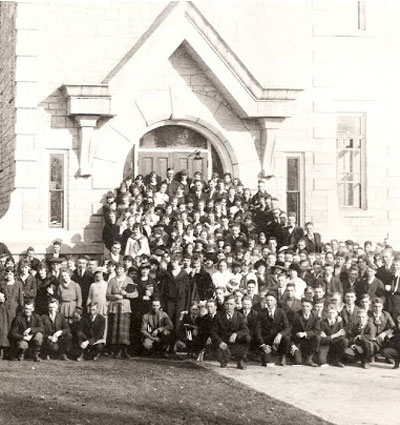
Late in the 19th century, the Edmunds-Tucker Act prevented Mormons from holding public office, including that of teaching in public schools. Mormons were concerned about the anti-Mormon philosophies their children were receiving in state-run schools, so they began an intensive effort to build their own educational facilities from Canada to the Mexican colonies.
Over 30 academies were built for this purpose, including the Brigham Young Academy in Provo (which was recently restored into a magnificent public library for the community) and the Oneida Stake Academy in Preston, Idaho. The Oneida Stake Academy is one of the oldest, having been organized in 1888 in Franklin. It was held in a room above a store there for 3 years.
In 1890 Solomon H. Hale was called by The Church of Jesus Christ of Latter-day Saints to be the superintendent over the construction of a new, rock building five miles north of Franklin, in Preston, for the academy. A year later, classes were held in its just-completed basement. The building was finished in 1895, dedicated by Moses Thatcher on July 28, 1895.
Hale was an ecclesiastical leader in the Oneida Stake presidency. He was the first counselor to George C. Parkinson. Mathias F. Cowley was the second counselor. His assignment included raising funds locally and, in the case of subscriptions obtained in the form of livestock and produce, convert them into building materials and labor. Hale not only supervised this project until its completion five years later, but served as a member of the board of education of the institution for 15 years afterward. His children attended the school. At the time he was called to be the superintendent of the project, he and his family lived in Gentile Valley where he ran cattle and horses on his ranch. Due to his involvement with the academy he soon decided to move his family to Preston. He built and sold three homes in the city of Preston and ran a ranch with his son three miles south of Preston.
John Nuffer was the head stonemason. He and his young wife, Louisa Zollinger, were living in Glendale (about five miles from Preston) amongst other members of Nuffer’s family who homesteaded there. The calling required his full attention, so the young family moved to Preston as the Hale family did.
Although the plans for the academy came from church officials in Salt Lake City, Nuffer, who apprenticed in the city of Stuttgart, Germany, “modified the design considerably, accounting for its beautiful Gothic appearance,” stated one of his sons, Myron, in a letter to Newell Hart and reprinted in the Cache Valley News published by Hart between 1969 and 1982.
The stone from the building came from Nuffer’s brother, Fred. He ran a quarry on his property 10 miles up Cub River Canyon from Franklin (six miles from Preston) on Sheep Creek. Stone from the quarry was used “on the better buildings going up throughout the neighboring towns,” including Logan, where it was used to build the college. “The contract to build the academy called for 2000 cubic feet at 25 cents per foot. The stone was used for corners, sills and water table. “All work was done by hand. … We used 12-foot churn drills and blasted large blocks loose from the main ledge. We had to be careful how much powder we used so as not to shatter or cause seams in the stone. “We usually had to put a second charge in the opening made by the first charge to dislodge the block from the man ledge. The block so dislodged was from six to seven feet thick and about 20 feet long. From then on all tools used were hammers, axes, wedges and squares. “Grooves were cut with axes where ever we desired to split the block, then wedges were set in the grooves about 10 inches apart and driven in with hammers. Then we dressed them down to the right measurement, allowing one half inch for the stone cutters to take out all the tool marks we made.” (Statements of Fred Nuffer published in Cache Valley News #45, 1972.)
Nuffer and Joseph S. Geddes built many buildings in Franklin County. They built several residences, the Weston Tabernacle, the Preston First Ward chapel and several school houses. He was the architect for most of the older business blocks in Preston, the Opera House, the Idaho State Bank Building and the Oneida Stake Science Building (later known as the ag/art building at Preston High School.) Except for the Weston Tabernacle, all the public buildings are now gone.
Former student, Scott Nelson, who graduated in the 20s, wrote the following to Newell Hart: “My father, while a student at Brigham Young Academy, was called into Dr. Karl G. Maeser’s office and told that he had been nominated to open a new academy in Southern Idaho. But he had “a choice of accepting or continuing his studies at BYA.” Next day Father reported his decision: He’d rather not go. But Prof. Maeser shook his head and said it was too late. The Lord, through his Servant here on Earth, had decided that Bro. Nelson was just the man of the Preston Assignment.
“Having thus “volunteered” Father and his wife, Almeda, with year-old-daughter, Mae, headed north … “We arrived,” Father recorded, “in what the conductor announced was Preston, but there was no depot in sight as our trunk was tossed into a barrow pit beside the track. “Father and young Meda, my mother, was the entire faculty. Nobody raised the question of teacher’s pay, and the new teachers probably had to depend on money volunteered for tuition. Father was not specific about the salary paid, but it couldn’t have been over $50 a month, if that. All church property had been confiscated by the Government and no appropriations were possible from that source. [Edmunds Tucker Act] Students paid “tuition” they felt they could afford, and nobody was denied
admission for lack of money. (Many failed to pay a cent for their entire stay at the academy, although several of these students went on to acquire doctorates, Father implied). Townspeople brought wood for the stoves, and on a specified day the boys chopped the wood and the girls set up food for the workers.
“All social functions were school-supervised and “were of such a high order people deemed it an honor to be invited.” “…Students came from Pocatello, Gentile Valley, and all settlements south to the Utah Line. Father described his students as roughhewn diamonds from cattle ranches and farms who were transformed form shy and awkward youths into cultured students. “Most of the charter members came back for the second and third years and from this group emerged bishops, counselors, mayors, county and stake leaders…” “The basement of the new school was sufficiently ready to house the school in 1891-92, and the upper building was finished by 1895. Other teachers were added, but Father ruefully observed, “ I taught in this school for several years with scarcely any pay.” (Oneidastakeacademy.org)
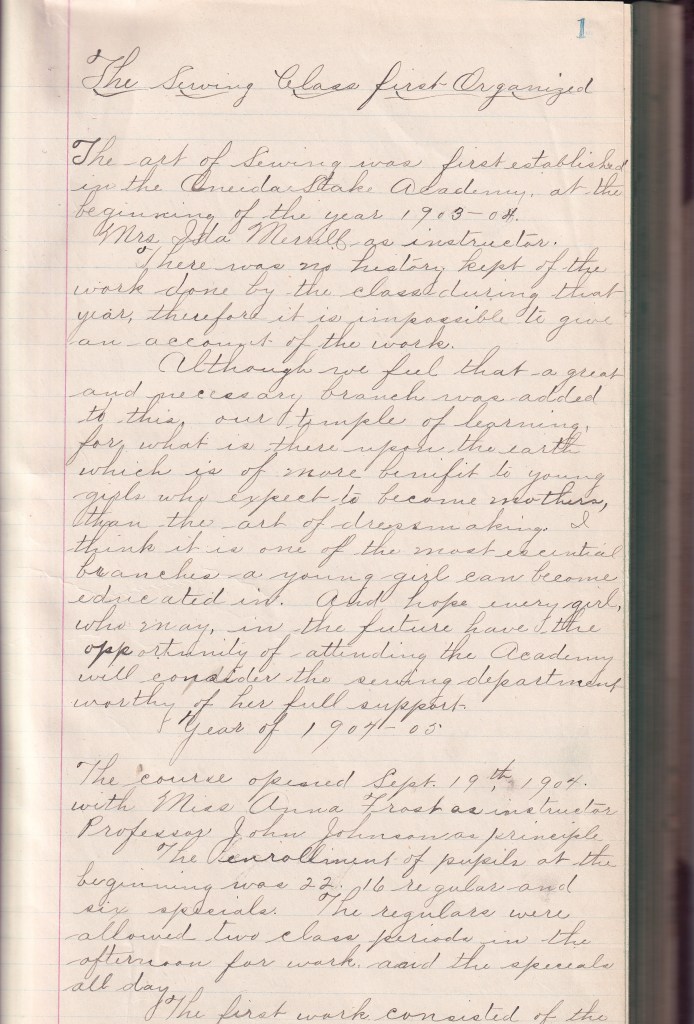
“The Sewing Class first Organized
The art of sewing was first established in the Oneida Stake Academy a t the beginning of the year 1903-1904. Mrs. Ida Merrill as instructor.
There was no history kept of the work done by the class during that year, therefore it is impossible to give an account of the work.
Although we feel that a great and necessary branch was added to this, our temple of learning, for what is there upon the earth which is of more benifit to young girls who expect to become mothers than the art of dressmaking. I think it is one of the most escential branches a young girl can become educated in. And hope every girl, who may, in the future have the opportunity of attending the Academy will consider the sewing department worthy of her full support.
Year of 1904-05′
The course opened Sept. 19th, 1904 with Miss Anna Frost as instructor. Professor John Johnson as principle.
The enrollment of pupils at the beginning was 22. 16 regular and six specials. The regulars were allowed two class periods in the afternoon for work and the specials all day.
The first work consisted of the
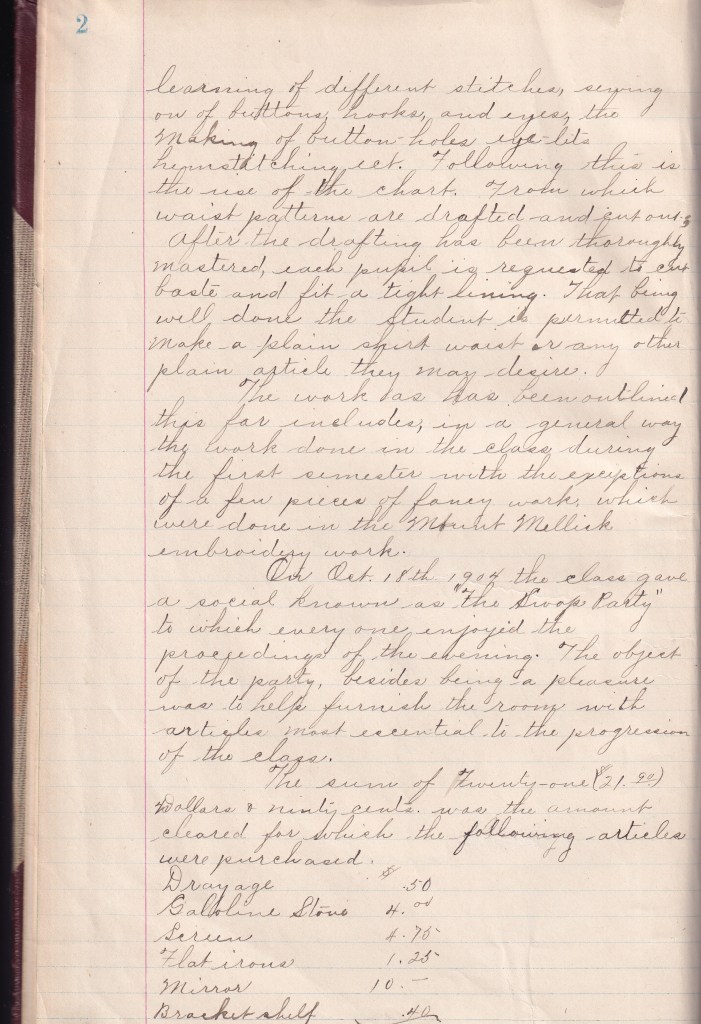
learning of different stitches, sewing on buttons, hooks, and eyes, the
Making of button-holes eye-lits hemstititching ect. Following, this is the use of the chart. From which waist patterns are drafted and cut out. Mastered, each pupil is requested to cut baste and fit a tight lining. That being well done the student is permitted to make a plain skirt waist or other plain article they may desire.
The work as has been outlined thus far includes, in a general way the work done in the class during the first semester with the exceptions of a few pieces of fancy work which were done in the Mount Mellick embroidery work.
On Oct. 18th 1904 the class gave a social known as ‘The Swap Party’ to which every one enjoyed the proceedings of the evening. The object of the party, besides being a pleasure was to help furnish the room with articles most escential to the progression of the class.
The sum of Twenty-one ($21.90) Dollars & ninety cents was the amount cleared for which the following articles were purchased.
Drapage $ .50
Galoline stove $4.00
Screen 4.70
Flat irons 1.25
Mirror 10.00
Bracketshelf .40
Total 21.90 even balance
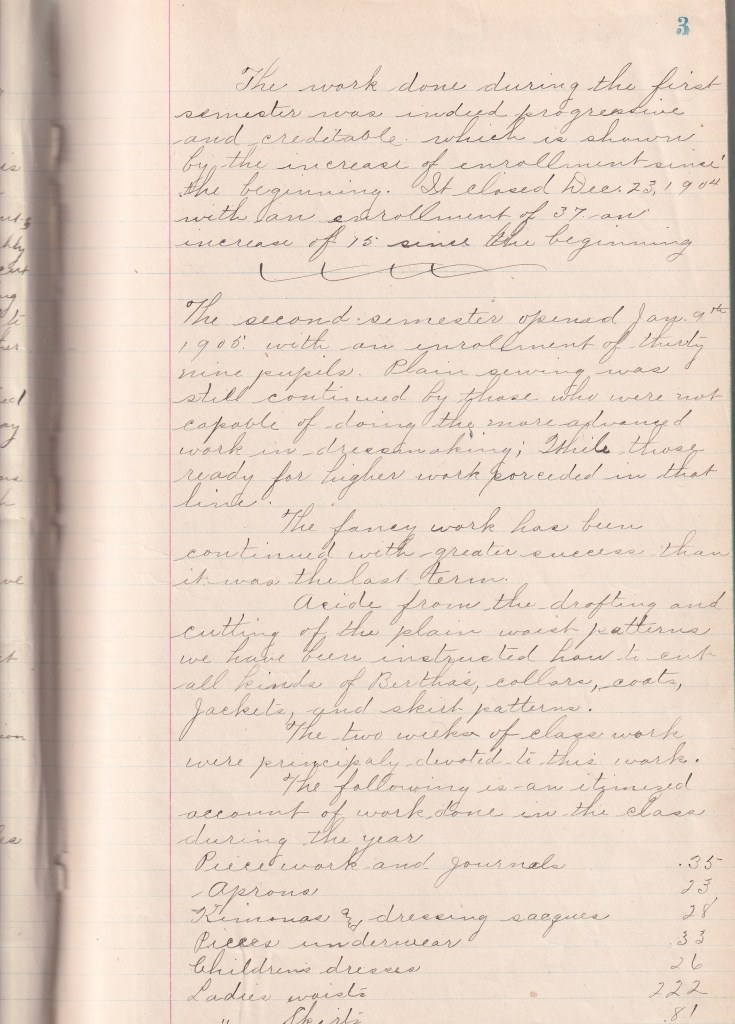
The work done during the first semester was indeed progressive and creditable which is shown by the increase in enrollment since Dec 23, 1904 with an enrollment of 37 – an increase of 15 since the beginning
SSSSSSSSSSSSSSSSSSSSSS
Of the second semester opened Jan 9th 1905 with an enrollment of thirty nine pupils. Plain sewing was still continued by those who were not capable of doing the more advanced work in dressmaking. While those ready for higher work porceded in that line.
The fancy work has been continued with greater success than it was the last term.
Aside from the drafting and cutting of the plain waist patterns we have been instructed how to cut all kinds of Bertha’s collars, coats, jackets, and skirt patterns.
The two weeks of class work were principaly devoted to this work.
The following is – an itemized account of work done in the class during the year.
Piece work and journals .35
Aprons .23
Ki…(?) and dressing sacques .28
Pieces underwear .33
Childrens dresses .26
Ladies waists 2.22
“ Skirts .81
“ Tailor made coats and jackets .18
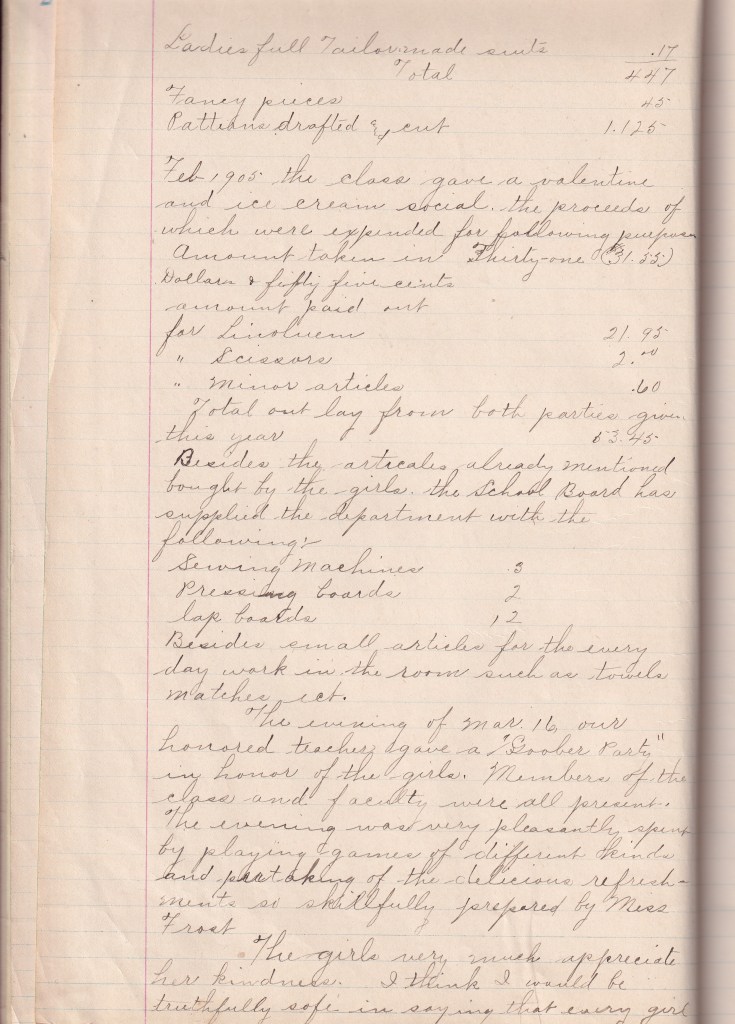
Ladies full Tailormade suits .17
Total 447 (4.47?)
Fancy pieces 45
Patterns drafted and cut 1.125
Feb 1905 the class gave a valentine and ice cream social. The proceeds of which were expend the following purposes
Amount taken in Thirty-one ($31.55) Dollars & fifty five cents
amount paid out
for linoleum (?) 21.95
“Scissors 2.00
“Minor articles .60
Total out lay from both parties given this year 63.45
Besides the articals already mentioned bought by the girls the School Board has supplied the department with the following:
Sewing Machines 3
Pressing boards 2
Lap boards 12
Besides small articles for the every day work in the room such as towels matches ect.
The evening of Mar 16 our honored teacher gave a “Goober Party” in honor of the girls. Members of the class and faculty were all present. The evening was very pleasantly spent by playing games of different kinds and pertaking of the delicious refreshments so skillfully prepared by Miss Frost.
The girls very much appreciated her kindness. I think I would be truthfully safe in saying that every girl
Ladies full Tailormade suits .17
Total 447 (4.47?)
Fancy pieces 45
Patterns drafted and cut 1.125
Feb 1905 the class gave a valentine and ice cream social. The proceeds of which were expend the following purposes
Amount taken in Thirty-one ($31.55) Dollars & fifty five cents
amount paid out
for linoleum (?) 21.95
“Scissors 2.00
“Minor articles .60
Total out lay from both parties given this year 63.45
Besides the articals already mentioned bought by the girls the School Board has supplied the department with the following:
Sewing Machines 3
Pressing boards 2
Lap boards 12
Besides small articles for the every day work in the room such as towels matches ect.
The evening of Mar 16 our honored teacher gave a “Goober Party” in honor of the girls. Members of the class and faculty were all present. The evening was very pleasantly spent by playing games of different kinds and pertaking of the delicious refreshments so skillfully prepared by Miss Frost.
The girls very much appreciated her kindness. I think I would be truthfully safe in saying that eve
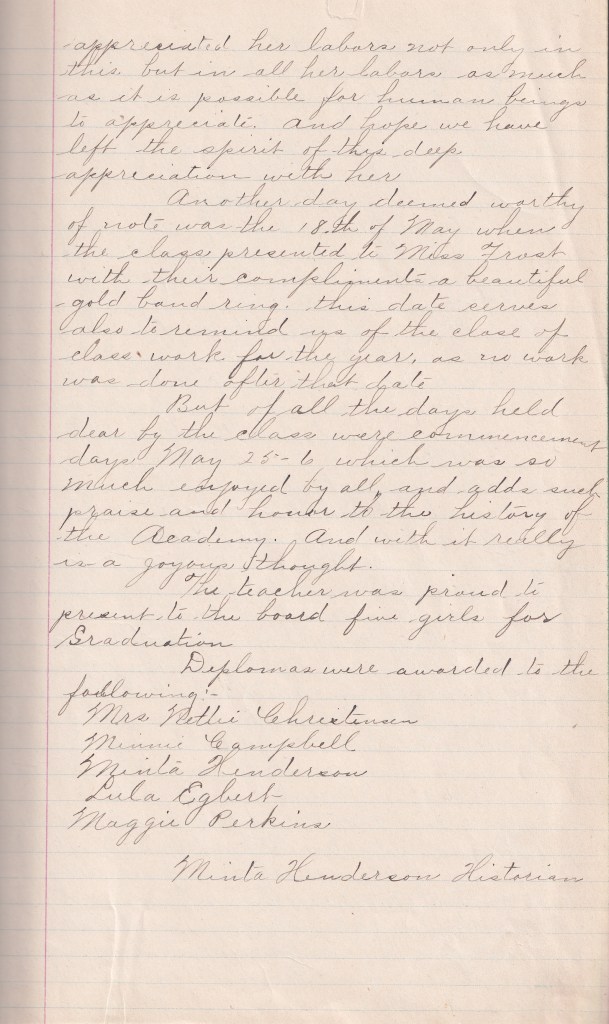
appreciated her labors not only in this but in all her labors as much as it is possible for human beings to appreciate and hope we have left the spirit of this deep appreciation with her.
Another day deemed worthy of note was the 18th of May when the class presented to Miss Frost with their compliments a beautiful gold band ring. this date serves also to remind us of the close of class work for the year, as no work was done after that date.
But of all the days held dear by the class were commencement days May 35-6 which was so much enjoyed by all and adds such praise and honor to the history of the Academy. And with it really is a joyous thought.
The teacher was proud to present to the board five girls for Graduation
Diplomas were awarded to the following:
Mrs Nettie Christensen
Minnie Campbell
Minta Henderson
Lula Egbert
Maggie Perkins
Minta Henderson Historian
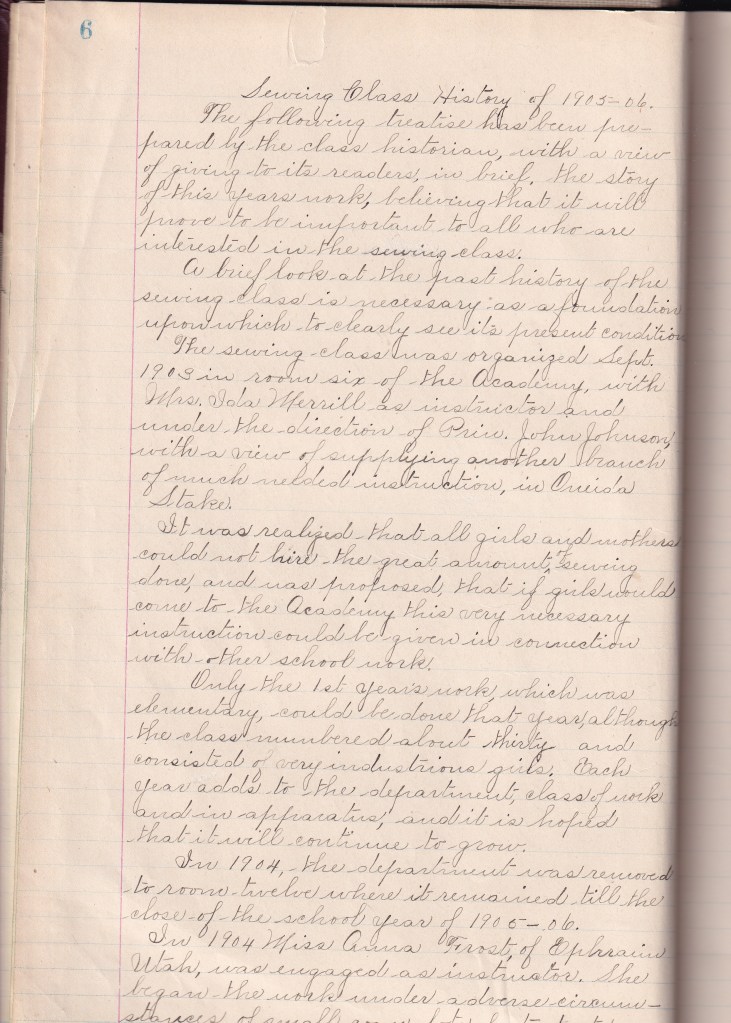
Sewing Class History of 1905-06
The following treatise has been prepared for the class historian with a view of giving to its readers, in brief, the story of this years work, believing that it will prove to be important to all who are interested in the sewing class.
A brief look at the past history of the sewing class is necessary as a foundation upon which to clearly see its present condition.
The sewing class was organized Sept. 1903 in room six of the Academy, with Mrs. Ida Merrill as instructor and under the direction of Prin. John Johnson, with a view of supplying another branch of much needed instruction, in Oneida Stake.
It was realized that all girls and mothers could not hire the great amount of sewing done, and was proposed, that if girls would come to the Academy this very necessary instruction could be given in connection with other school work.
Only the 1st year’s work, which was elementary, could be done that year, although the class numbered about thirty and consisted of very industrious girls. Each year adds to the department, class of work and in apparatus it is hoped that it will continue to grow.
In 1904 Miss Anna Fross, of Ephraim, Utah, was engaged as instructor. She began the work under adverse circumstances, of small room, lots of students, and little apparatus. A plan is being
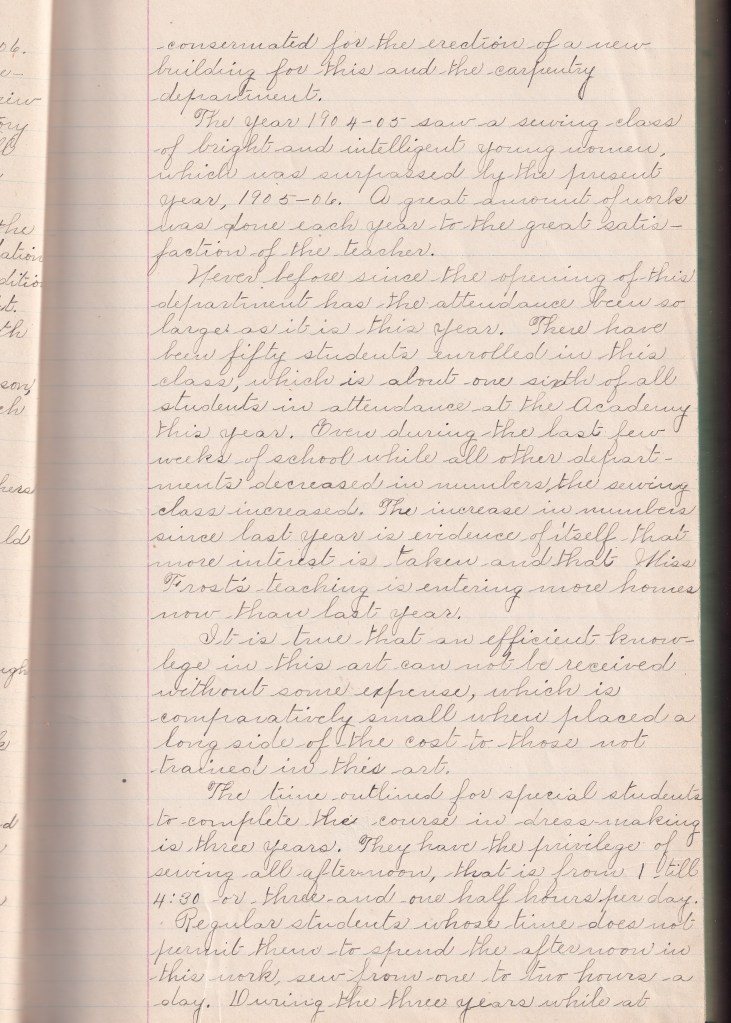
consermated (?} for the erection of a new building for this and the new carpentry department.
The year 1904-5 saw a sewing class of bright and intelligent young women which was surpassed by the present year 1905-06. A great amount of work was done and each year to the great satisfaction of the teacher.
Never before since the opening of this department has the attendance been so large as it is this year. There have been fifity students enrolled in this class, which is about one sixth of all students in attendance at the Academy this year. Even during the last few weeks of school while all other departments decreased in numbers the sewing class increased. The increase in numbers since last year is evidence of itself that more interest is taken and that Miss Frost’s teaching is entering more homes now than last year.
It is true that an efficient knowledge in this art can not be received without some expense, which is comparatively small when placed a long side of the cost to those not trained this art.
The time-outlined for special students to complete their course is in dressmaking is three years. They have the privilege of sewing all afternoon, that is from 1 till 4:30 – or- three-and – one- half hours per day. Regular students whose time -does not permit them to spend the afternoon in this work, sew from -one to two hours-a day. During the three years while at
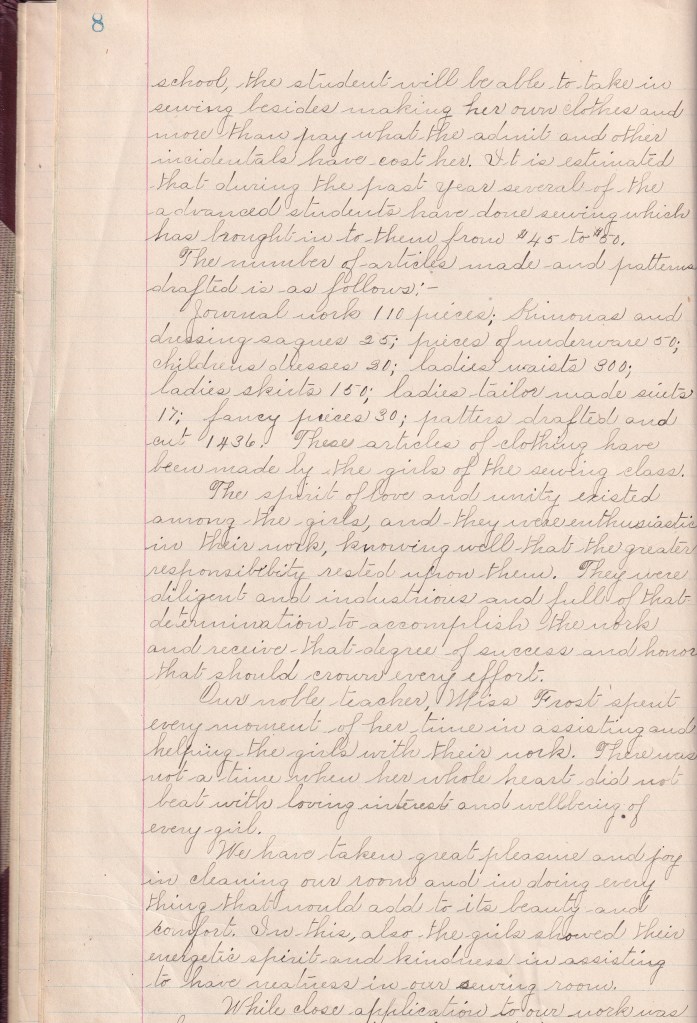
school, the student will be able to take in sewing besides making her own clothes and more than pay what the admit and other incidentals have cost her. It is estimated that during the first year several of the advanced students have done sewing which has brought to them from $45 to $50.
The number of articles made and patterns drafted is as follows:
Journal work 110 pieces; Kimono (?) and dressing saques 25; pieces of underware 50; childrens dresses 20; ladies waists 300; ladies skirts 150; ladies tailor made suits 17; fancy pieces 30; patters(patterns?) drafted and cut 1436. These articles of clothing have been made the girls of the sewing class.
The spirit of love and unity existed among the girls, they were enthusiastic in their work, knowing well that the greater responsibility rested upon them. They were diligent and industrious and full of that determination to accomplish the work and receive that degree of success and honor that should crown every effort.
Our noble teacher, Miss Frost spent every moment of her time in assisting and helping the girls with their work. There was not a time when her whole heart did not beat with loving interests and wellbeing of every girl.
We have taken great pleasure and joy in cleaning our room and in doing every thing that would add to its beauty and comfort. In this, also, the girls showed their energetic spirit and kindness in assisting to have neatness in our sewing room.
While close application to our work was always encouraged and insisted on, we did
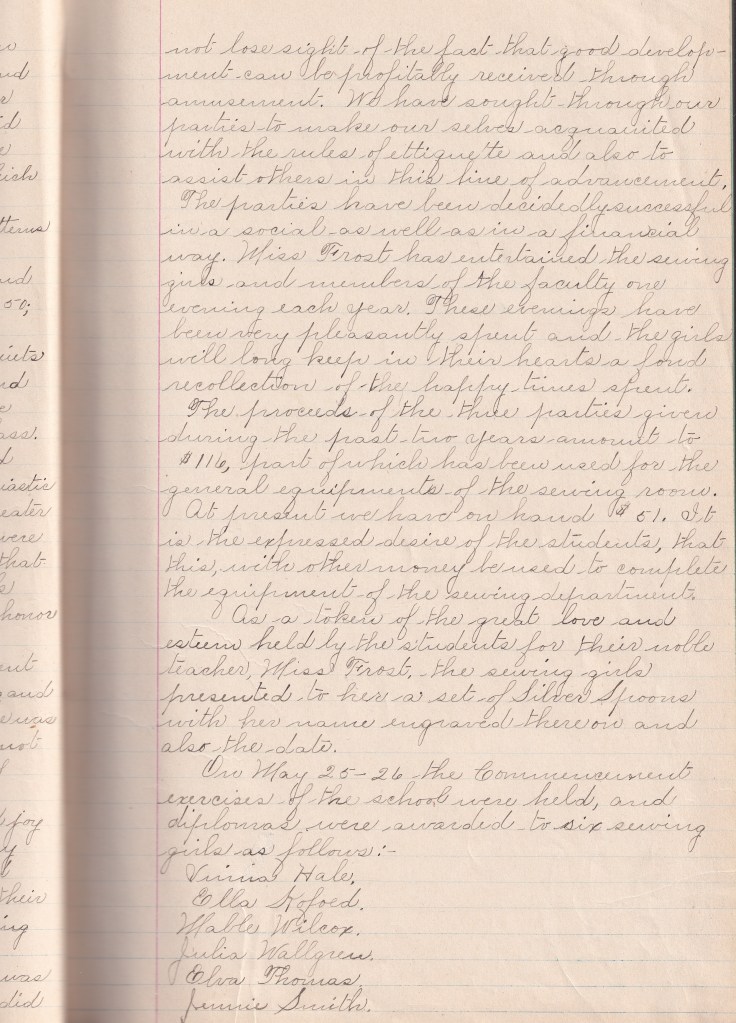
not lose sight-of-the fact that good development can be profitably received through amusement. We have sought through our parties to make ourselves acquainted with the rules of etiquette and also to assist others in this line of advancement. The parties have been decidedly successful in a social-as well as in a financial way. Miss Frost has entertained the sewing girls each year. These evenings have been very pleasantly spent and the girls will long keep in their hearts a fond recollection of the happy times spent. The proceeds of the three parties given during the past two years amount to $116, part of which has been used for the general equipments of the sewing room. At present we have on hand $51. It is the expressed desire of the students, that this, with other money be used to complete the equipment of the sewing department.
As a token of the great love and esteem help by the students for their noble teacher, Miss Frost, the sewing girls presented to her a set of Silver Spoons with her name engraved there on and also the date.
On May 25-26 the Commencement exercises of the school were held, and diplomas were awarded to six sewing girls as follows:
Vinnia Hale,
Ella Kofed,
Mable Wilcox,
Julia Walgreen,
Elva Thomas,
Jennie Smith.
In conclusion permit me to say that I have greatly enjoyed my labors as one of the sewing girls; and appreciate fully all the efforts of the students and especially of Miss Frost’s in my behalf.
I sincerely express the hope that the future years of the dress making department shall bring such a degree of success that has not yet come to this institution of learning.
Jennie Smith Historian
Sewing Class History of 1906-07.
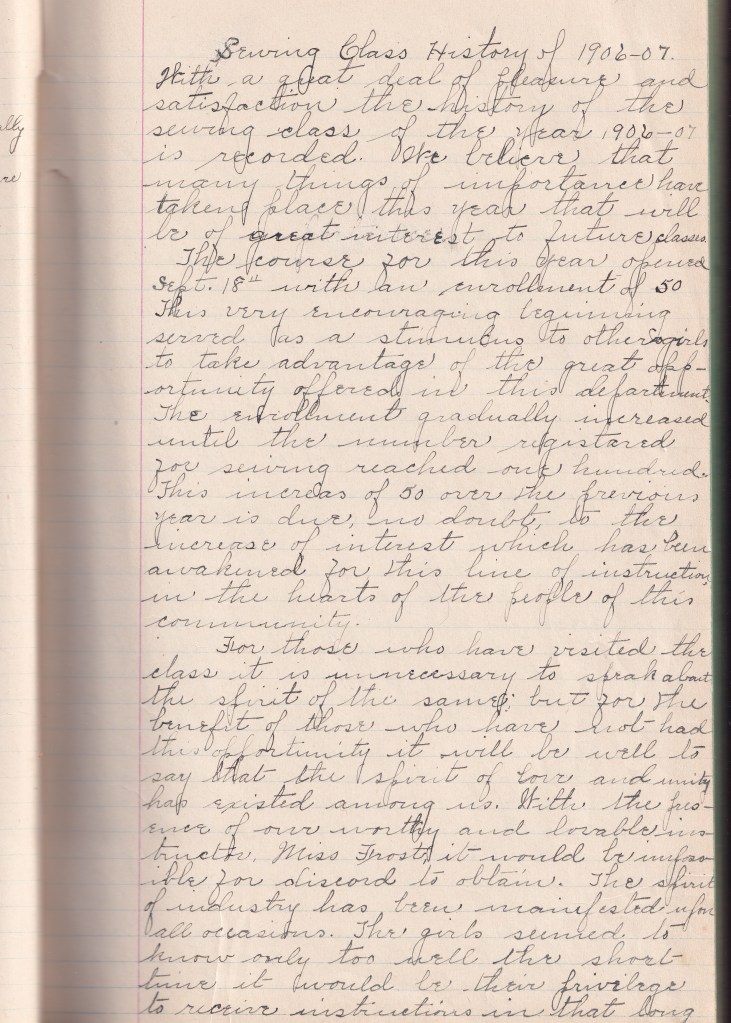
With a great deal of pleasure and satisfaction the history of sewing class of the year 1906-07 is recorded. We believe that many things of importance have taken place this year that will be of importance be great interest to future classes.
The course for this year opened Sept. 18th with an enrollment of 50. This very encouraging beginning served as a stimulus to other girls to take advantage of the great opportunity offered in this department. The enrollment gradually increased until the number registered for sewing one hundred. This increase of 50 over the previous year is due, no doubt to the increase interest which has been awakened for this line of instruction in the hearts of the people of this community.
For those who have visited the class it is unnecessary to speak about the spirit of the same but for the benefit of those who have not had this opportunity it will be well to say that the spirit of love and unity has existed among us. With the presence of our worth and lovable instructor, Miss Frost, it would be impossible for discord to obtain. The spirit of industry has been mainifested upon all occasions. The girls would be their privilege to receive instructions in that long
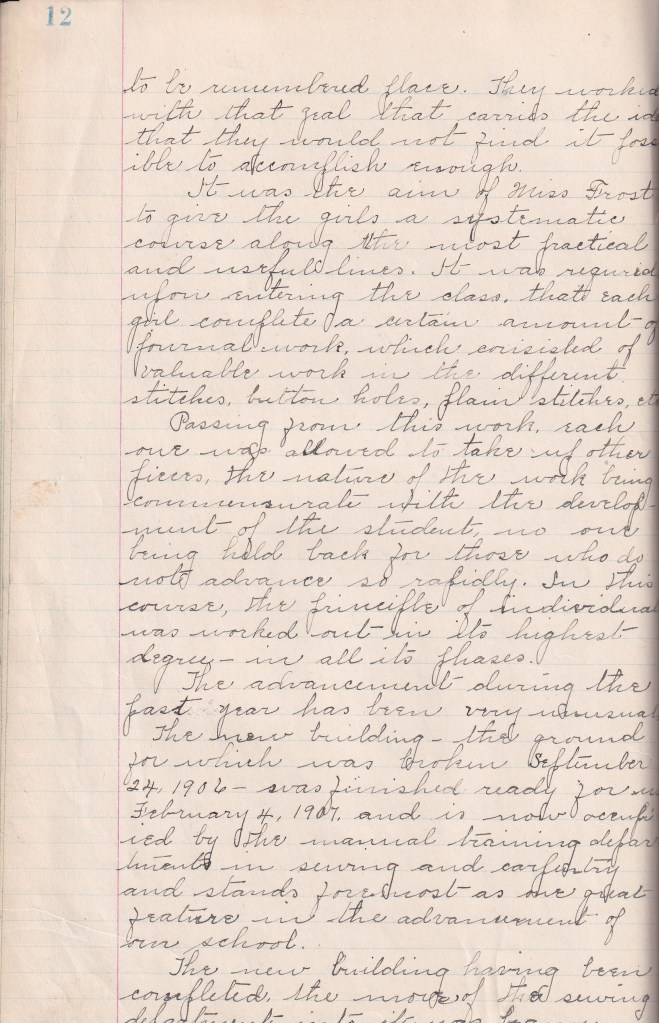
to be remembered place. They worked with that zeal that carries the idea that they would not find it possible enough to accomplish.
It was the aim of Miss Frost to give the girls a systematic course along the most practical and useful lines. It was required upon entering the class, that each girl complete a certain amount of journal work which consisted of valuable work in the different stitches, button holes, plain stitches, etc.
Passing from this work, each one was allowed to take of other piece, the nature of the work bring commensurate with the development of the student, no one being held back for those who do not advance so rapidly. In this course, the principle of individuality was worked out in its highest degree – in all its phases.
The advancement during the past year has been very unusual. The new building – the ground for which was broken September 24, 1906 – was finished ready for use February 4, 1907, and is now occupied by the manual training department in sewing and carpentry and stands foremost as one great feature in the advancement of our school.
The new building having been completed, the move of the sewing department into it was begun Tuesday Feb. 27, 1907. The remaining part
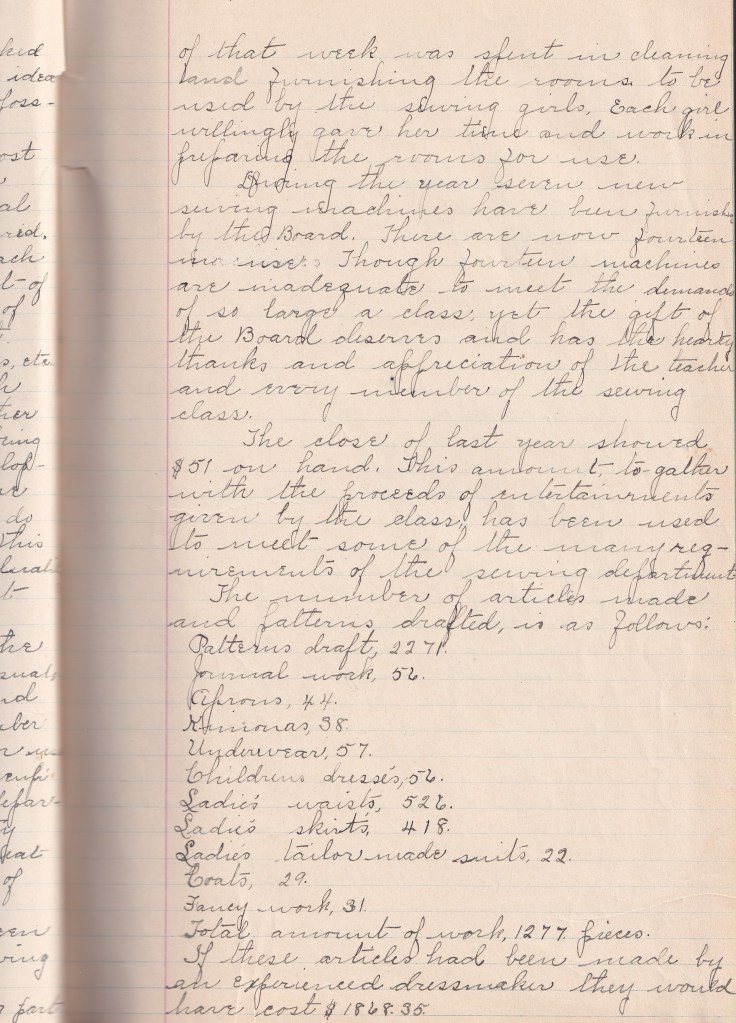
of that week was spent in cleaning and furnishing the rooms to be used by the sewing girls. Each girl willingly gave her time and work in preparing the rooms for use.
During the year seven new sewing machines have been furnished by the Board. There are now fourteen in use. Though fourteen machines are inadequate to meet the demands of so large a class, yet the gift of the Board deserves and has the hearty thanks and appreciation of the teacher and every member of the sewing class.
The close of the last year showed $51 on hand. This amount to-gather with the proceeds of entertainments given by the class, has been used to meet some of the many requirements of the sewing department.
The number of articles made and patterns drafted, is as follows:
Patterns draft, 2271.
Journal work, 56.
Aprons, 44.
Kimonas, 58.
Underwear, 57.
Childdrens dress, 56.
Ladies’ waists, 526.
Ladies’ skirts, 418.
Ladies tailor made suits, 22.
Coats, 29.
Fancy work, 31.
Total amount of work, 1277 pieces. If these articles had been made by an experienced dressmaker they have cost $1868.35.
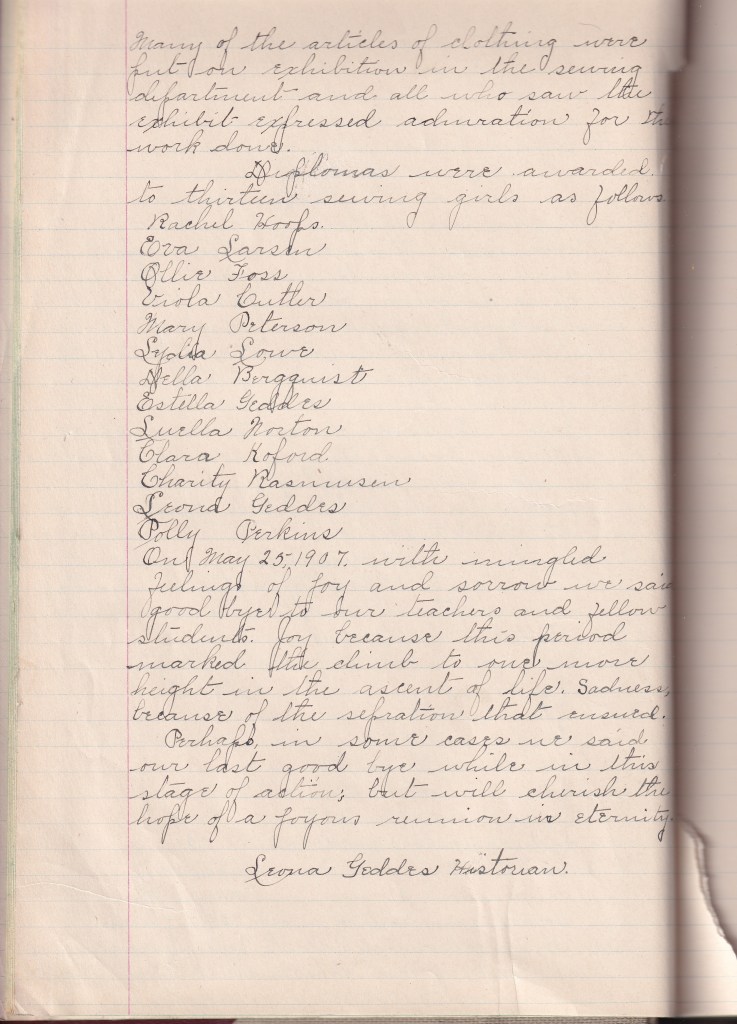
Many of the articles of clothing were put on exhibition in the sewing department and all who saw the exhibit expressed admiration for the work done.
Diplomas were awarded to thirteen sewing girls as follows.
Rachel Hoops
Eva Larsen
Ollie Foss
Viola Cutler
Mary Peterson
Lydia Lowe
Della Bergquist
Estella Geddes
Luella Norton
Clara Koford
Charity Rasmusen
Leona Geddes
Polly Perkins
On May 25, 1907, with mingled feelings of joy and sorrow we said good bye to our teachers and fellow students. Joy because this period marked the climb to one more height in the ascent of life. Sadness, because of the separation that ensued.
Perhaps in some cases we said our last good bye while in this stage of action, but will cherish the hope of a joyous reunion in eternity.
Leona Geddes Historian
 Angel Prairee